
Packaging Inspection Equipment: Match the Inspection Job
Match checkweighers, metal detectors, X-ray, vision and leak tests to packaging defects, then plan inspection positions, samples and rejection evidence.
Read guideGuides on how packaging film and machines work together, what checkweighers and metal detectors each verify, and how to investigate seal defects with evidence.
Packaging problems rarely come from the machine alone. A film that does not suit the forming shoulder, a seal that fails on one batch, or an inspection step that checks the wrong thing can stop a line or let a defective pack through. The guides in this section are for buyers, quality staff, production managers and engineers who need better questions about the materials that run on a machine and the inspections that follow it.
In every guide, parameters come from the specification, certificate or test record for the specific film, product and machine. The guides supply the questions and the structure for the record, not generic settings.
When both weight and metal inspection are already specified, the checkweigher and metal detector combo systems guide follows the pack through station order, weighing transfers, reject destinations and metallized-film verification.
Swipe sideways to see the other columns. The first column stays visible.
| Task or process step | What to decide | Guide |
|---|---|---|
| Matching an inspection job to equipment | Which checks address weight, contamination, visible features and leakage, and what evidence to retain | Packaging inspection equipment types |
| Adding end-of-line inspection | Whether you need weight verification, metal detection, or both, and how rejects are secured | Checkweighers vs. metal detectors |
| Responding to leaking or weak seals | How to contain, collect evidence, test and change one variable at a time | Seal defect investigation |
| Choosing or changing a film for a machine | Which film properties to confirm, and with whom, at each point from reel to cut-off | Packaging film compatibility |
| Switching to a reduced-carbon paper coating binder | Grade mapping, site change control and which carbon documents to request | BASF rPCF binder checks |
| Replacing foil with a metallic coating | Coating and topcoat system, press route and the evidence behind recycling claims | Stahl Senoprint press review |
| Comparing film-fed and premade pack formats | Which route suits the product and the film supply | VFFS vs. premade pouch machines |
| Planning inspection interfaces on a line | Signals, reject confirmation and communication with neighboring machines | Packaging line integration checklist |
| Putting material and inspection needs into a quote request | What information each supplier needs | Packaging machine RFQ checklist |
It does not cover:
Packaging inspection is not one machine. Each check answers a different question, and the equipment follows from the question. Start from the defects and hazards you need to control, then choose the method, not the other way round. The table maps common checks to the equipment that usually performs them and to the guide that covers each one.
Swipe sideways to see the other columns. The first column stays visible.
| What is checked | Question it answers | Typical equipment or method | Where it is covered |
|---|---|---|---|
| Pack weight | Is the pack within the weight limits set for the product? | In-line checkweigher with a reject device | Checkweighers vs. metal detectors |
| Metal contamination | Is there detectable metal in or on the pack? | Metal detector with a reject device | Checkweighers vs. metal detectors |
| Other dense foreign bodies | Are there contaminants a metal detector cannot find, such as glass or stone? | X-ray inspection, where the hazard analysis calls for it | Mentioned briefly in checkweighers vs. metal detectors |
| Visible features | Is the item, label, code or barcode present, correct and readable? | Machine vision station | Machine vision for packaging inspection |
| Seal appearance | Are there visible creases, product in the seal or a misaligned seal? | Visual check or vision station | Machine vision and seal defect investigation |
| Seal integrity and strength | Does the seal leak, and how much force does it take to open? | Off-line tests such as dye penetration, bubble, burst and peel tests | Seal defect investigation |
| Film suitability before running | Will this film run, track and seal on this machine? | Film specification review and a trial on the machine | Packaging film compatibility |
| Reject confirmation | Did the rejected pack actually leave the line? | Reject confirmation sensor and a locked reject bin | Line integration checklist |
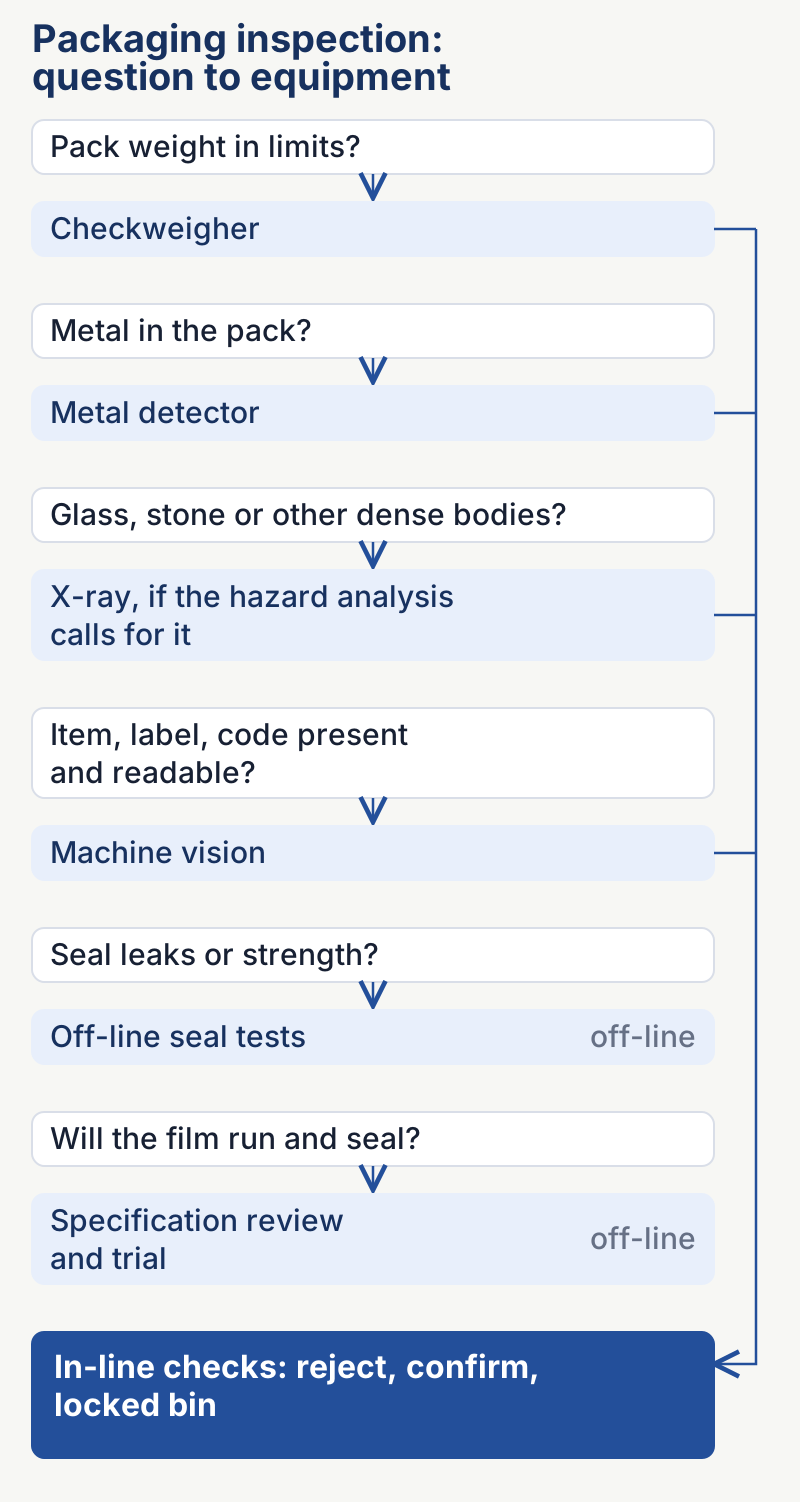
Two points follow from the map. First, the in-line machines answer narrow questions: a checkweigher says nothing about metal, a metal detector says nothing about weight, and a camera cannot tell whether a seal is leak-tight. Second, seal integrity and strength are mostly measured off-line on samples, so an in-line system does not remove the need for a test plan.
Whatever the equipment, the same five items make an inspection point usable. Use them as a starting checklist when you plan or review inspection on a line:
A data sheet can match the machine’s nominal range and the film can still drag, drift or seal inconsistently. The film path guide lists what to ask at each point and why a trial with your own product matters.
Roll-fed machines depend on the film for forming, friction and sealing, while premade pouches move some of those demands to the pouch maker. See the VFFS and premade pouch comparison when the format is still open.
They answer different questions: weight against a target, and detectable metal in the pack. The guide to inspection jobs explains how to decide from net-quantity rules and your hazard analysis.
Detection helps only if the pack leaves the line and stays out. Reject confirmation, locked bins and test records are part of the specification, and the line integration checklist covers how the signals reach the rest of the line.
Do not change settings first. Contain the product, record the lot, film batch and settings as found, then test and change one variable at a time, as in the seal defect investigation checklist.
Put material specifications, test methods, reject arrangements and acceptance tests in the inquiry so suppliers quote against the same terms. See the RFQ checklist.
The guide map follows a pack from material to release. The film is chosen and checked against the machine, the pack is formed and sealed, and then it is inspected. If inspection finds a defect, the seal defect investigation traces the cause, and the findings feed back to the film and to the forming and sealing step.
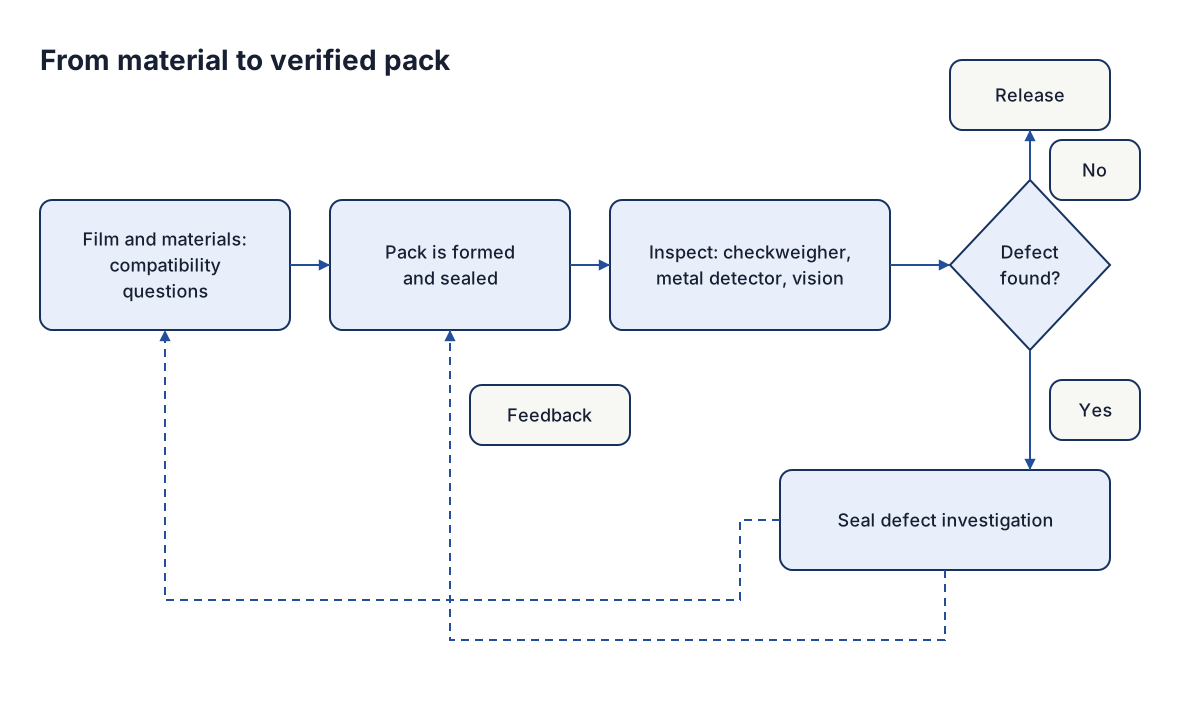
Start with the guide that matches your problem. Before a trial or a film change, read the film compatibility guide. When specifying end-of-line checks, read the guide on checkweighers and metal detectors, and the vision guide in the automation section for visible features. When product has already failed, go to the seal investigation first and keep suspect product contained while you collect evidence. The feedback path in the figure matters, because an investigation that ends at “adjust the sealer” without asking about the film, the product and the method tends to repeat.
Swipe sideways to see the other columns. The first column stays visible.
| Term | Meaning in these guides |
|---|---|
| Film path | The route of film from the reel through rollers, forming parts, sealers and cut-off |
| Sealing window | The range of conditions in which a film seals acceptably, as documented by the film supplier for that film |
| Registration mark | A printed mark that a sensor reads to position printed film |
| Coefficient of friction | A measure of how easily film slides over machine surfaces |
| Heat seal | A seal made by heating and pressing sealable layers together |
| Seal contamination | Product or dust in the seal area that interferes with sealing |
| Checkweigher | An in-line scale that verifies pack weight against a target |
| Metal detector | A device that detects metal contaminants in or on a pack |
| Reject confirmation | Evidence that a rejected pack left the line and cannot return |
| Containment | Isolating suspect product so it is not released while a cause is investigated |
Materials and inspection affect most other decisions. The packaging section shows where roll-fed and premade formats differ, which changes how much the film matters, and the flow wrapping guide explains wrap structures that depend on film behavior. Reject signals and camera integration are covered in the automation section. The plant operations section covers how recurring faults are recorded and reviewed, and the buying guides show how to write material and inspection requirements into a request for quotation.
Updated October 2026. Reviewed on October 8, 2026: task-to-guide entries, inspection-question mappings and the material-to-release feedback route. Figure 1 retains the inspection mapping; Figure 2 now separates the process steps and the feedback action. Detailed evidence remains in the linked guides.
Match checkweighers, metal detectors, X-ray, vision and leak tests to packaging defects, then plan inspection positions, samples and rejection evidence.
Read guide
Stahl unified LustreCoat and Senoprint metallic coatings. Separate the brand change from press compatibility, topcoat and recycling evidence.
Read guide
BASF announced rPCF paper coating dispersions. Examine grade mapping, mass-balance allocation, qualification and carbon-data verification gaps.
Read guide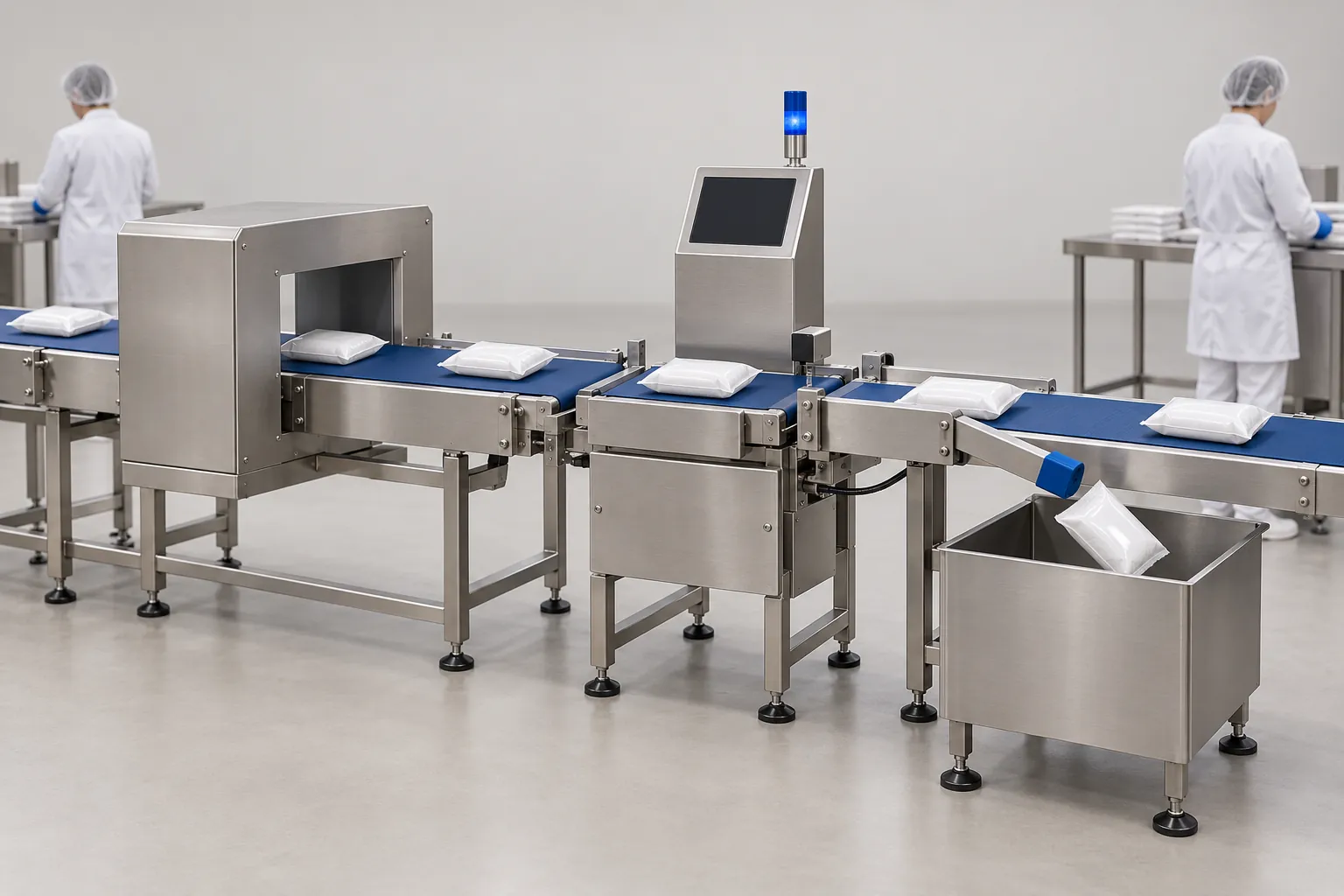
A checkweigher verifies package weight and a metal detector controls metal contamination. See why one cannot replace the other and how to plan rejects and records.
Read guide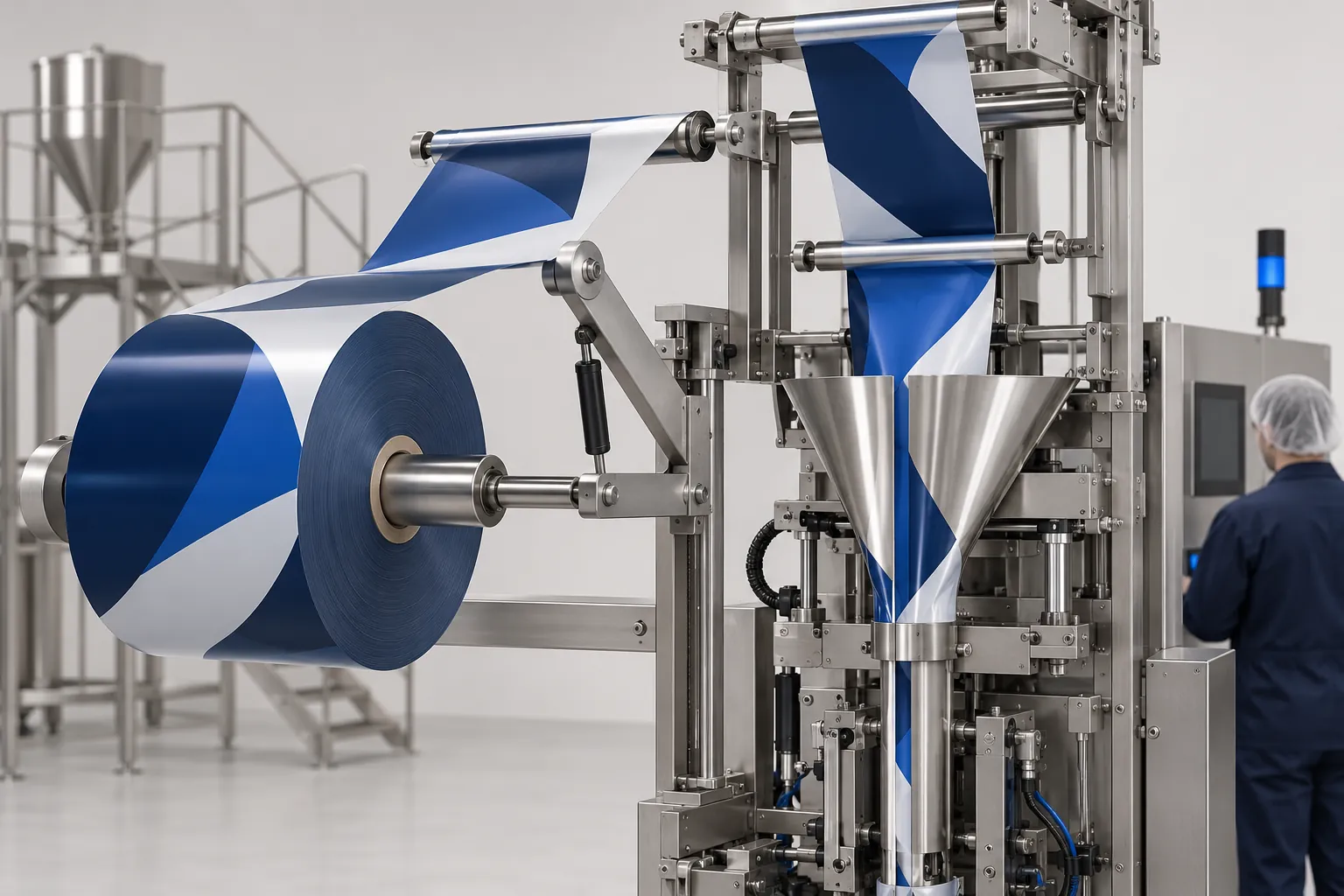
Follow the film path from reel to cut-off and list what to ask the film and machine suppliers about tension, friction, registration marks and sealing.
Read guide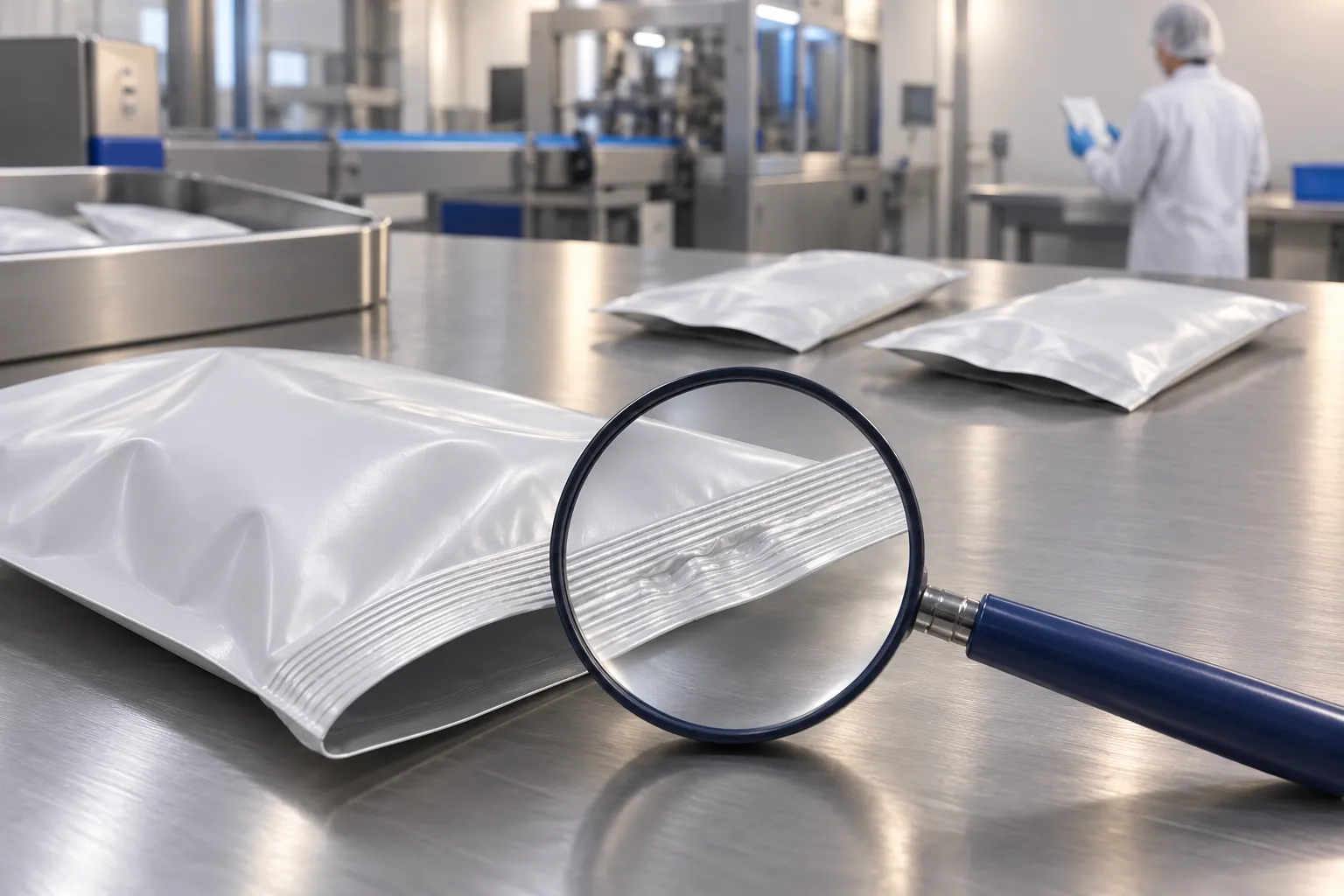
Investigate packaging seal defects by containing suspect product, collecting evidence, testing with agreed methods and changing one variable at a time.
Read guide
Plan checkweigher and metal detector combo systems around station order, pack transfers, reject routing and metallized-film detection limits.
Read guide