
BASF rPCF Paper Binders: Line and Documentation Checks
BASF announced rPCF paper coating dispersions. Examine grade mapping, mass-balance allocation, qualification and carbon-data verification gaps.

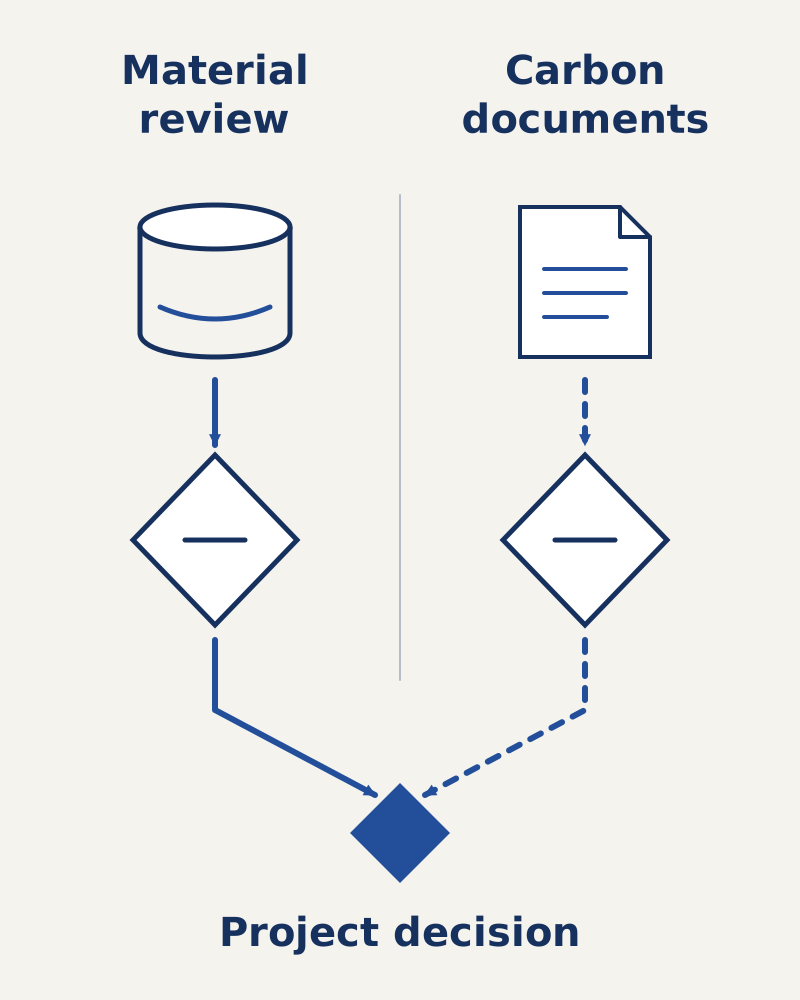
BASF announced reduced-PCF paper coating dispersions on September 23, 2026; separate the material change review from the carbon-data review before approving a switch.
Applies to: Paper and board coating teams considering an identified rPCF binder grade, including separate technical, supply and carbon-document reviews for the intended plant.
Confusing a lower binder footprint claim with recipe approval risks an undocumented material change. For a proposed switch, we recommend a material review under the site’s change-control process and a separate carbon-document review where reporting or customer claims are intended.
For engineers researching BASF paper coating dispersions, this page maps the announcement to product identity, coating operations and evidence handoffs. It focuses on the announced Ludwigshafen portfolio and the unanswered questions for a U.S. project. It does not verify a carbon reduction or decide whether a reporting framework accepts the proposed data.
What BASF announced
In its September 23, 2026 release, BASF announced reduced Product Carbon Footprint, or rPCF, paper coating dispersions produced at Ludwigshafen. It states approximately 20%–45% lower cradle-to-gate PCF than corresponding conventional BASF products, assessed case by case.
BASF says a specified share of conventional raw materials or utilities is replaced with lower-PCF alternatives, including renewable electricity and lower-PCF steam, and that share is allocated to rPCF products through mass balance. It says the manufacturing process is unchanged and presents the products as drop-in options without requalification. The release attributes TÜV Rheinland certification to conformity of BASF’s calculation methodology with Together for Sustainability guidance, not to each product’s reduction.
Scroll horizontally if needed to see all columns →
| Published statement | Separate project question |
|---|---|
| A range of PCF reductions | What value and baseline apply to the proposed grade? |
| Mass-balance allocation | What accounting boundary and allocation record are supplied? |
| Drop-in positioning | What is the site’s material-change review? |
| Methodology certification | What exactly does the certificate cover? |
Takeaway: Identify the proposed grade before interpreting either its technical or carbon-data scope.
Who is affected by a proposed switch?
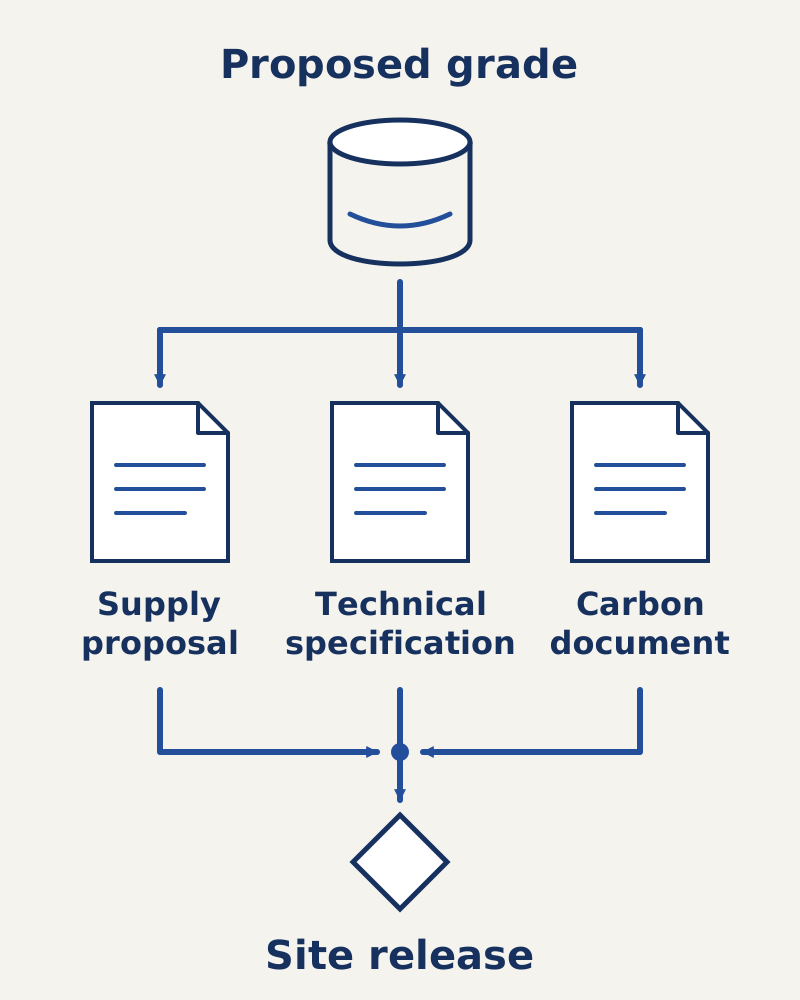
A coating team needs a material identity, while procurement and sustainability teams need a supply and data identity. Make those identities refer to the same proposed product before a purchasing decision.
Scroll horizontally if needed to see all columns →
| Team | Decision to prepare | Record to request |
|---|---|---|
| Coating technical lead | Whether the grade fits the approved application | Product mapping and technical documents |
| Production and quality | What change control and verification apply | Proposed change description and site review |
| Procurement | Whether the product can reach the intended plant | Location-specific proposal and supply conditions |
| Sustainability data owner | Whether the supplied PCF can be evaluated | Grade-specific PCF document and methodology scope |
| Downstream customer | What claims or data it will accept | Customer requirements and review response |
The materials and inspection hub locates the broader verification topics. If the project reaches packaging-machine scope, use the packaging overview to identify the affected equipment instead of describing every change as a filler or wrapper upgrade.
Ask each team to name the information it needs and the person who can approve it. A purchasing code, technical grade and PCF document should be traceable to one proposal. If the records use different names, request a supplier mapping rather than assuming they are equivalent.
Takeaway: Reconcile the product identity across technical, purchasing and carbon-data records.
What might change on the coating line?
Begin with the current approved grade and job, then ask BASF to describe the proposed substitution. The release does not identify the full set of available rPCF grades or provide a line-specific change specification.
Scroll horizontally if needed to see all columns →
| Review position | Proposed question | Evidence to preserve |
|---|---|---|
| Material receiving | What supplied product and revision are proposed? | Delivery identity and grade mapping |
| Storage and preparation | What instructions apply to the proposed grade? | Current supplier documents |
| Formulation control | Does the proposed grade map to the approved binder, and what does the supplier identify as changed or unchanged? | Written substitution description and approved recipe revision |
| Coating operation | If the technical sheet or mapped grade differs, which approved instructions need review? | Comparison of existing instructions and proposed grade documents |
| Quality release | What existing criteria need confirmation? | Site change-control decision |
| Downstream conversion | What customer or job evidence is required? | Identified samples and review scope |
These are suggested review positions, not assertions that all these operations will change. If the supplier’s written proposal says a condition is unchanged, preserve that statement with the relevant technical documents. Ask the site’s responsible team what verification is needed; do not use the supplier’s broad drop-in description as an instruction to skip the site review.
Use the format-changeover checklist to organize a changed job sequence and the preventive-maintenance checklist to assign review of affected instructions. Neither guide establishes chemical compatibility or prescribes coating settings.
Takeaway: Record the actual proposed substitution and let the site decide its verification scope.
Read the mass-balance claim without extending it
Treat BASF’s published percentage as an attributed product-data statement. Do not apply the portfolio range to every grade or to a finished package.
The announcement’s boundary is cradle to gate: it does not provide a complete footprint for a coated sheet, converted pack or customer distribution route. Request the proposed grade’s declared unit, boundary, reference product and calculation period before comparing records. If those fields differ from your existing data, ask the data owner to review the difference before drawing a reduction conclusion.
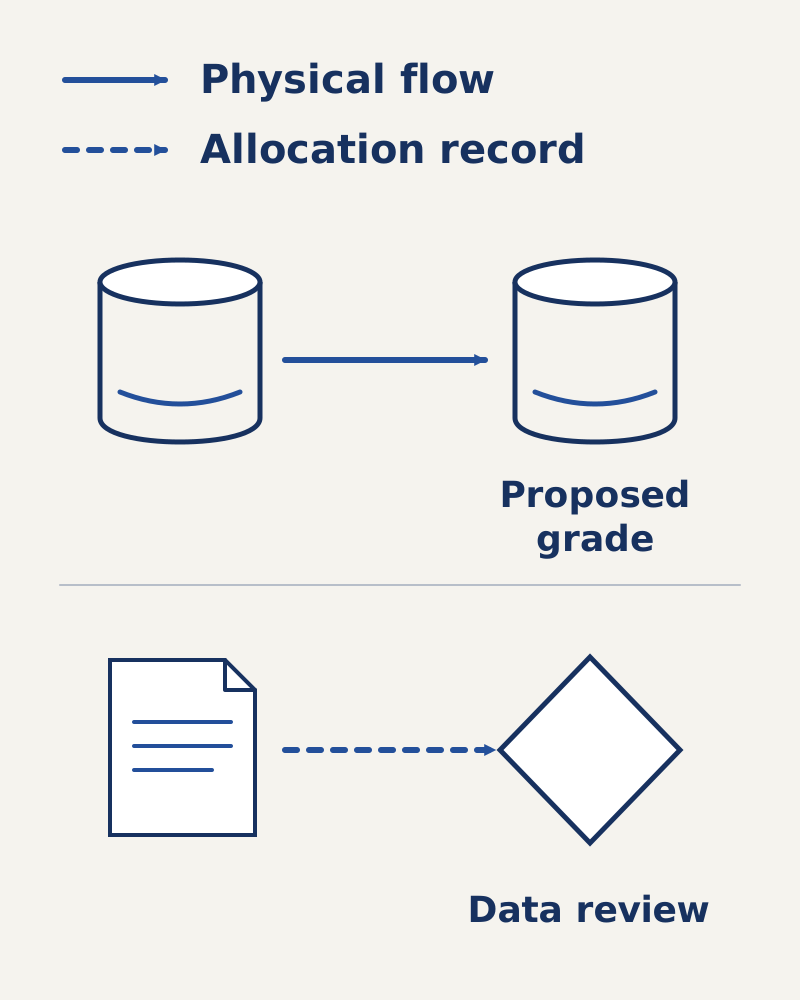
Mass-balance allocation in the release describes how lower-PCF contributions are assigned to products. It is not evidence that a particular delivered batch physically contains a stated share of the alternative inputs. Keep the allocation documentation separate from any physical-content statement you might need for another purpose.
Common mistake: Copying the upper end of a portfolio reduction range into the footprint of the final packaging. Request the grade-specific value, then have the responsible analyst assess how it relates to the product and reporting boundary under review.
Takeaway: Keep the percentage attached to its grade, comparator, boundary and allocation method.
Distinguish method certification from product and customer approval
Ask for the certificate scope and the product data separately. The release describes certification of the calculation method’s conformity with guidance; it does not supply an independently verified reduction for each proposed grade.
Scroll horizontally if needed to see all columns →
| Evidence object | Question for the reviewer |
|---|---|
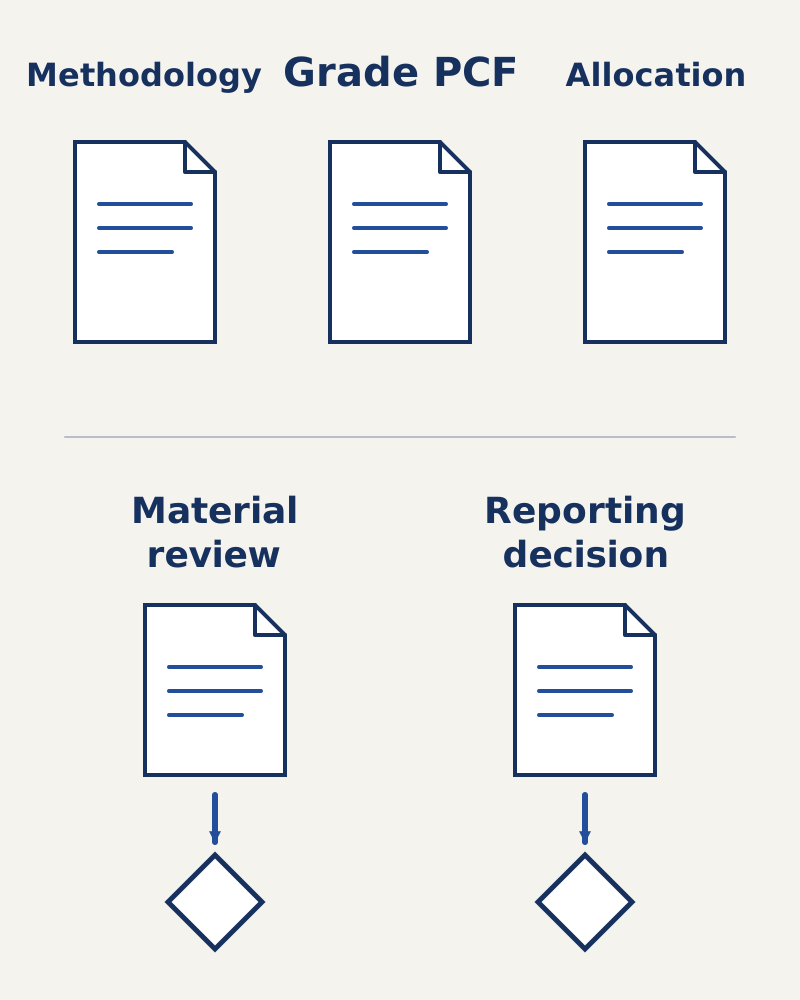
| Calculation methodology certificate | Which methodology, version and boundary are covered? |
| Proposed grade PCF document | Which product, unit, period and comparator does it identify? |
| Allocation documentation | What contribution is assigned and under which rules? |
| Site material review | What evidence supports the intended coating application? |
| Customer reporting decision | Does the recipient accept this data for this reporting use? |
Use “Scope 3.1” here only as the category named in BASF’s announcement, purchased goods and services. The announcement does not decide a customer’s inventory treatment or any external framework’s acceptance. Ask the responsible reporting reviewer to provide that decision and the rules on which it rests. This page offers no legal, assurance or accounting determination.
For technical evidence, FAT versus SAT explains how a wider equipment project can separate supplier demonstrations from site-dependent checks. Do not confuse a successful process demonstration with acceptance of carbon-accounting data.
Takeaway: Method conformity, grade data, application approval and reporting acceptance are separate evidence objects.
When can a U.S. project act?
Start a document enquiry where the proposed material fits the project. Confirm supply to the intended U.S. location before scheduling samples or production.
Scroll horizontally if needed to see all columns →
| Date or milestone | Evidence status | Practical action |
|---|---|---|
| September 23, 2026 | BASF announced the Ludwigshafen portfolio as available | Request a grade-specific proposal |
| October 8, 2026 | Our review cutoff | Record missing technical and carbon-data fields |
| U.S. supply, samples and delivery | Not established by the release | Obtain a location-specific response |
| Site and customer approval | Project-dependent | Agree owners and evidence before the change |
Do not convert availability at the named production site into confirmed U.S. delivery or an unchanged price. Ask for the supplied grade, origin, ordering conditions, sample timing and delivery proposal as part of the same enquiry. Preserve the proposal date when comparing it with a later technical or PCF document.
The supplier-evaluation guide and RFQ checklist are useful if a larger equipment scope is involved. Keep binder purchasing and reporting questions explicit rather than burying them inside an equipment enquiry.
Takeaway: Build the schedule from the proposed grade and destination, not a global availability statement.
Prepare the verification register
Give every unresolved question a closing document and an owner. Keep the engineering decision traceable even if the site concludes that the material review requires little physical work.
Scroll horizontally if needed to see all columns →
| Unresolved item | Ask whom | Document or decision to obtain |
|---|---|---|
| Which rPCF grade corresponds to the current binder? | BASF technical team | Written grade mapping |
| What PCF value applies to that grade? | BASF data owner | Grade-specific PCF document |
| What is the comparator and boundary? | Supplier and site analyst | Referenced baseline and method record |
| What changes in the supplied product? | Supplier and site quality team | Product documents and change description |
| What evidence does the customer accept? | Customer reporting or assurance reviewer | Written acceptance or unresolved requirements |
| Can the grade be supplied to the plant? | BASF commercial contact | Destination-specific proposal |
| How is the project released? | Site engineering and quality owners | Signed change-review record |
Use the line integration checklist when responsibilities span a wider plant project. If the change reaches inspection, the machine-vision guide helps state the specific inspection task rather than assuming an existing system verifies everything about a coating.
The total-cost guide helps organize equipment costs if the project adds capital scope. The announcement supplies no grade-specific price comparison here, so a claim of equal price or quantified savings has no place in the decision register.
Takeaway: A traceable review identifies the proposed grade, the evidence objects and the decision owners.
When this does not apply
This page does not calculate a final package footprint, verify actual emissions reductions, compare suppliers or approve a reporting claim. It also does not establish a particular branded grade as part of the rPCF portfolio.
Our recommendation is to prepare two linked reviews: technical suitability and carbon-document suitability. If either lacks the identified grade or the relevant scope, keep that question open. A supplier statement about an unchanged process can inform the technical review without deciding the customer’s approval requirements.
Takeaway: Approve only the specific material change and data use for which the project has evidence.
Frequently asked questions
How to calculate a product carbon footprint?
The GHG Protocol Product Standard provides an accounting framework: define the product and scope, collect inventory data, calculate attributable greenhouse-gas emissions and report the result with its method and limitations. This is not a calculation tool. For this binder, BASF’s stated boundary is cradle to gate; obtain the actual grade document rather than calculating from the portfolio percentage.
What is mass balance in sustainability?
In BASF’s release it is an allocation approach for lower-PCF raw materials and utilities. The announced allocation is not proof of a particular alternative-input share in every delivered batch.
What do scope 3 emissions include?
GHG Protocol’s Scope 3 guidance covers upstream and downstream value-chain emissions. Purchased goods and services is the category BASF names for this binder announcement. Whether a particular supplied allocation is acceptable in your inventory remains a separate decision under the method and requirements you use.
For package-format context, the packaging guides identify the equipment decisions that are separate from this material review.
Method and sources
Primary source: BASF’s September 23, 2026 release, including its cradle-to-gate and case-by-case footnote, reread October 8. All portfolio, reduction, allocation and certification statements are attributed to BASF. Media rewrites do not independently validate the effect. Station checks and document handoffs are editorial recommendations; we performed no material tests or carbon calculations.
Additional methodology sources: GHG Protocol Product Standard and Scope 3 calculation guidance, reviewed October 8, provide the bounded FAQ definitions. They do not confirm acceptance of BASF’s particular allocation data.
Update history
- : First published.
Next steps

Packaging Line Integration Checklist: Interfaces to Confirm Before Ordering
Checklist of mechanical, electrical, signal, communication, safety and utility interfaces to settle before ordering a machine for a packaging line.
Read guide
FAT vs. SAT for Packaging Equipment: Defining Acceptance Criteria
Compare factory and site acceptance tests for packaging machines, and learn how to write acceptance criteria that both buyer and supplier can verify.
Read guide
Packaging Machine RFQ Checklist: Information Suppliers Need
A reusable blank RFQ template for packaging machines in nine sections, with the reason suppliers need each item and a list of commonly missed details.
Read guide