
About RE Digital Editions
RE Digital Editions is an online publication operated by DeltaSpark, publishing practical guides to packaging equipment and production-line systems.
RE Digital Editions is an online publication operated by DeltaSpark. We publish practical explanations and buying guides for people who specify, purchase, integrate, operate, or maintain packaging equipment and production-line systems.
We cover filling and dosing, sealing and wrapping, pouch and carton packaging, automation, inspection, and plant operation. The content is organized around the questions a buyer or plant team has to answer: what a machine does, which requirements decide whether it suits the job, how it connects to the rest of the line, and what to confirm before an order is placed.
Each guide is meant to be read before a purchase decision, a specification meeting, a commissioning plan, or a maintenance review. The pages therefore use plain definitions, stated conditions, and lists of questions instead of product promotion. If we cannot support a statement with an identifiable source, we leave it out or say that the evidence is incomplete.
What we cover
The site has five sections. Each has a hub page that lists its guides and shows how they relate.
- Packaging covers machine types and the choices between them, such as vertical form-fill-seal versus premade pouch machines, dosing methods, pack formats, and end-of-line equipment.
- Automation covers controls, actuation, machine vision, and the interface checks needed when a machine joins an existing line.
- Plant Operations covers finding bottlenecks, preventive maintenance, and format changeover, with an emphasis on keeping useful records.
- Materials and Inspection covers film and material compatibility, inspection equipment, and seal defect investigation.
- Buying Guides covers the documents and decisions around an order: request-for-quotation contents, acceptance testing, and total cost of ownership.
Topics outside packaging equipment, line automation, and plant technology are out of scope. We do not publish product rankings, and we are not a manufacturer, a laboratory, a certification body, or an engineering design firm.
Who the guides are for
Several kinds of readers often work on the same project from different sides, and the guides are written for each of them.
| Reader | Typical task | What we provide |
|---|---|---|
| Equipment buyers | Define requirements, compare options, prepare a quotation request and acceptance conditions | Specification templates, conditional comparisons, lists of documents to request from suppliers |
| Plant and production managers | Check capacity, changeover, downtime, and maintenance constraints | Line interface tables, methods for recording data, operating frameworks |
| Mechanical, electrical, and automation engineers | Understand operating principles, interfaces, and technical limits | Functional breakdowns, parameter definitions, and sources that can be checked |
| Maintenance and quality staff | Organize routine care, first-piece checks, and abnormal-event records | Checklist frameworks that defer to the machine manual, and defect evidence tables |
A guide can serve more than one group, but each is written for a specific reader doing a specific task.
How a guide is structured
Guides follow the same order, so the same kind of information is in the same place each time. Figure 1 shows the blocks.
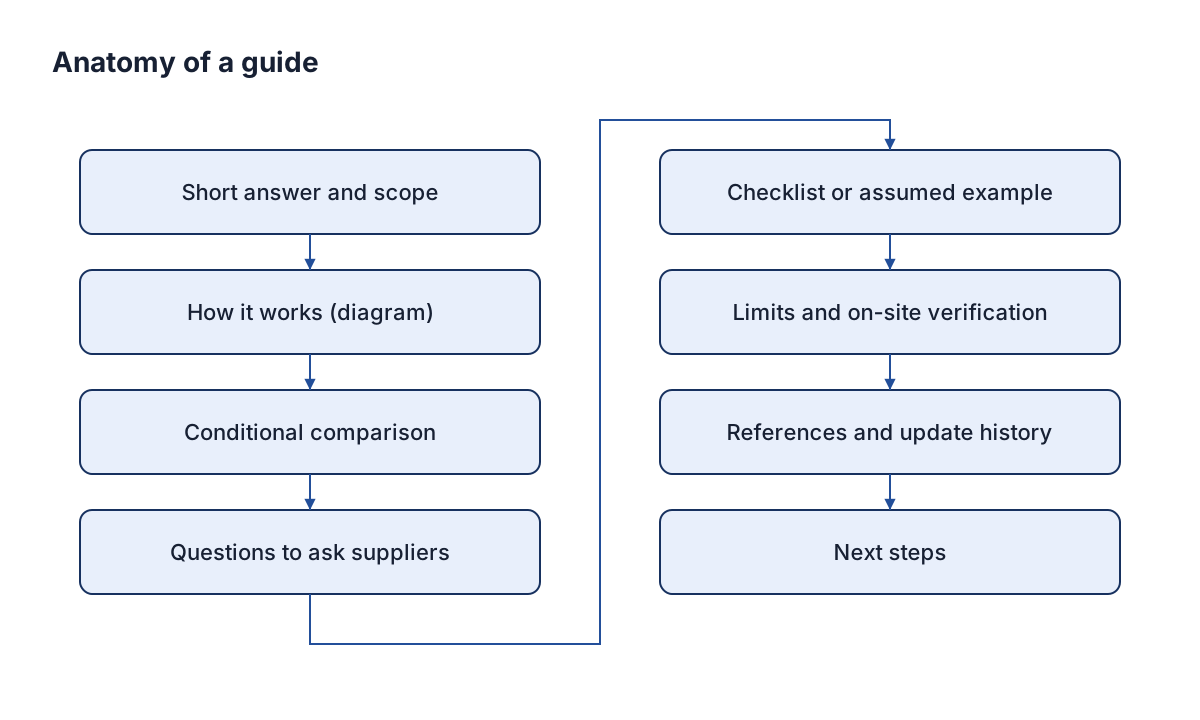
A guide opens with a short, conditional answer to the question in its title. It states which equipment and situations it covers and which it does not. A short explanation of the operating principle follows, usually with a schematic figure that uses the same terms as the text.
Next comes a comparison table that sets out when each option tends to suit, based on stated conditions and not a general verdict. A list of questions to ask suppliers names the documents and data to request, so quotations can be compared on the same basis. Then there is either a usable checklist or a worked example whose numbers are labeled as assumed and illustrative.
The limits section says what the guide cannot settle and what must be tested with real product and material on the actual machine. The guide ends with its references, described by scope, with a record of substantive changes, and with links to the guides that usually follow from the decision at hand.
Where to start
New readers can start with these pages:
- Packaging machine types gives an overview of the main machine families and how they differ.
- The packaging machine RFQ checklist lists what to define before asking suppliers for quotations.
- The packaging line integration checklist covers the interfaces to confirm when a machine joins a line.
- The preventive maintenance checklist sets out a framework for routine care that defers to the machine manual.
- FAT versus SAT for packaging equipment explains the two acceptance stages and what each can establish.
The rules for writing and correcting guides are in the Editorial Policy. The Commercial Disclosure explains how ownership, supplier, sponsorship, and referral relationships are handled.
How we develop our content
Under our editorial policy, we work from identifiable sources: equipment documentation, manufacturer specifications, relevant standards, technical publications, and research. Supplier claims are kept apart from our own analysis, important assumptions are explained, and gaps are named where the evidence is incomplete. Supplier specifications are not presented as independently verified test results.
Unless an article describes a documented test and its method, read it as research and editorial analysis, not a hands-on product review. The guides do not replace the applicable machine manual, a site-specific risk assessment, or qualified engineering advice.
Historical reference material
The Technical Library is separate from the current equipment guides. Historical resources carry their original title, source, and date where those can be verified, and newly written reference pages show their own publication dates. Historical material is reproduced only within the scope of the applicable permission, and original credits are kept where required.
RE Digital Editions is not affiliated with the former operators of this domain or the original publishers of the historical resources referenced here. A reference or permitted reproduction does not imply their endorsement of DeltaSpark or this website.
Ownership and commercial relationships
DeltaSpark operates this publication. The Commercial Disclosure page describes which relationships we disclose and how. Relevant ownership, supplier, sponsorship, or referral relationships are disclosed in the affected content. Paid placements are labeled as such and are not presented as editorial testing.
Corrections and substantive updates are recorded on the relevant page.