
Commercial Disclosure
How RE Digital Editions and its operator DeltaSpark disclose ownership, supplier, sponsorship and referral relationships.
RE Digital Editions is operated by DeltaSpark.
This page defines what we treat as a commercial relationship, how disclosures are worded, and where they appear on a page. Read it with the Editorial Policy, which covers how guides are researched, labeled, and corrected, and the About page, which describes the publication and its sections.
What counts as a commercial relationship
A relationship is commercial when it could reasonably affect how a reader weighs what a page says about a company, brand, or product. Five cases call for disclosure:
- A brand discussed in an article is operated by DeltaSpark (ownership or common operation).
- DeltaSpark distributes or resells a brand or product that an article discusses (distribution or agency).
- A company pays for content, a placement, or a link (sponsorship).
- DeltaSpark receives a fee when a reader takes a specific action after following a link (referral fees).
- A section relies on specifications or other information supplied by a manufacturer.
An ordinary citation is not a commercial relationship, and neither is an editorial decision to cover a type of machine. A link to a standards body, a regulator, a manual, or a manufacturer’s published documentation, used as a source, does not by itself mean any payment or arrangement exists.
How relationships are disclosed
When a guide involves a specific commercial relationship, the disclosure goes in the affected content, close to the relevant text or link, and not only on this page. We do not claim that DeltaSpark has no supplier relationships. Instead, each relationship is disclosed where it applies. The wording depends on the facts, and the table lists the situations we have planned for with the wording we use.
| Situation | Wording |
|---|---|
| Same operator | “This article discusses [Brand], which is also operated by DeltaSpark.” Used only when the facts match. |
| Distribution relationship | “DeltaSpark is a distributor of [Brand/Product].” We do not describe a mere mention of a product as a formal agency. |
| Sponsored content | “Sponsored content paid for by [Company].” |
| Referral fees | “DeltaSpark receives a referral fee when [the actual triggering event].” We describe the real trigger, for example a lead or a purchase, and do not mix the two. |
| Specifications from a manufacturer | “Specifications in this section are supplied by [Manufacturer] and have not been independently tested by this publication.” |
The text in square brackets is replaced with the real brand, company, or event. If none of these situations fits, we describe the actual relationship in plain words instead of forcing it into a template.
Where disclosures appear
Figure 1 shows where disclosures sit on a page. A disclosure box near the top, below the title, byline, and dates, covers relationships that apply to the whole article. Labels in the body sit beside the link or specification they concern.
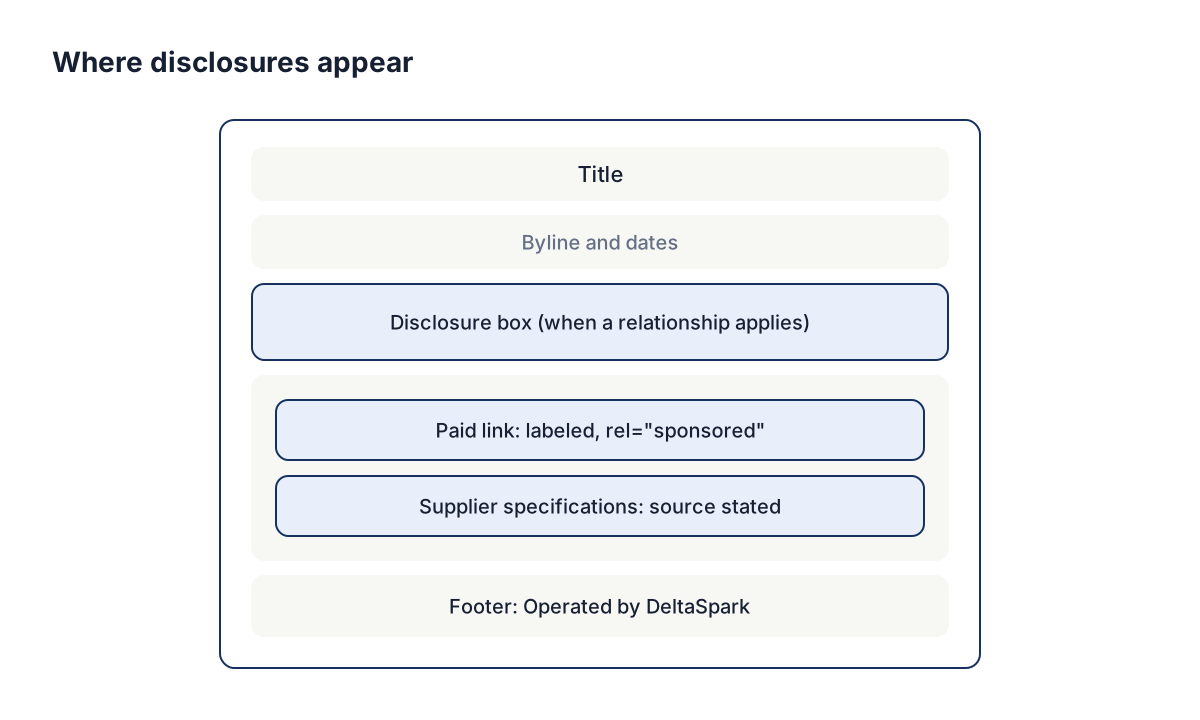
A disclosure is a labeled note near the top of the article or next to the link it concerns. The footer line “Operated by DeltaSpark” appears on every page. It states who runs the site and does not replace a disclosure that applies to specific content.
Paid and affiliate links
Paid placements and paid links are marked with rel="sponsored" and labeled for readers. Paid content is never presented as editorial testing, and payment does not change what we say about whether a test was carried out.
A citation or outbound link to a source is not a paid link just because it points off the site. Plain references do not get rel="sponsored", and links that involve payment always do.
Supplier specifications
Specifications supplied by a manufacturer are attributed to that manufacturer, with the source stated. They are not our measurements and not the result of a test by this publication. When a guide uses supplier figures, it keeps the units, materials, and conditions the supplier gave and says the figures have not been independently tested. Guides that compare machine types do so on stated conditions, as the Editorial Policy describes, and not according to who supplies the information.
Enquiries
RE Digital Editions does not offer enquiry or quote forms and does not handle sales enquiries for machinery suppliers. Messages to the publication are editorial correspondence, such as corrections and source suggestions.
Reporting a concern
If you think a page describes a commercial relationship inaccurately, or fails to disclose one that applies, contact the RE Digital Editions editorial team through the Contact page. DeltaSpark, which operates the publication, receives these editorial corrections. Corrections to disclosures follow the same process as other corrections under the Editorial Policy. They are recorded in the affected page’s update history when they change what a reader would conclude.
Current status
Some guides name manufacturers and their machines as examples and cite the manufacturers’ public documentation as sources; the blister packaging machines guide, for instance, draws on Sepha’s published FAQ. Naming a brand this way is a citation, as described above, not a commercial relationship. The guides published so far contain no paid placements, paid links, sponsored content, or referral links. Readers can check this by reading the guides. Updated October 2026. If that changes, the affected pages will carry the disclosures described above and this page will be updated. Page-level disclosure, not a blanket statement here, lets a reader tell which relationships apply to which content. The About page covers how the guides themselves are produced.