
Blister Packaging Machines: Types and Supplier Questions
Compare blister machine workflows, forming routes and quote boundaries, with a practical checklist for tablet, food and pharmaceutical packaging projects.
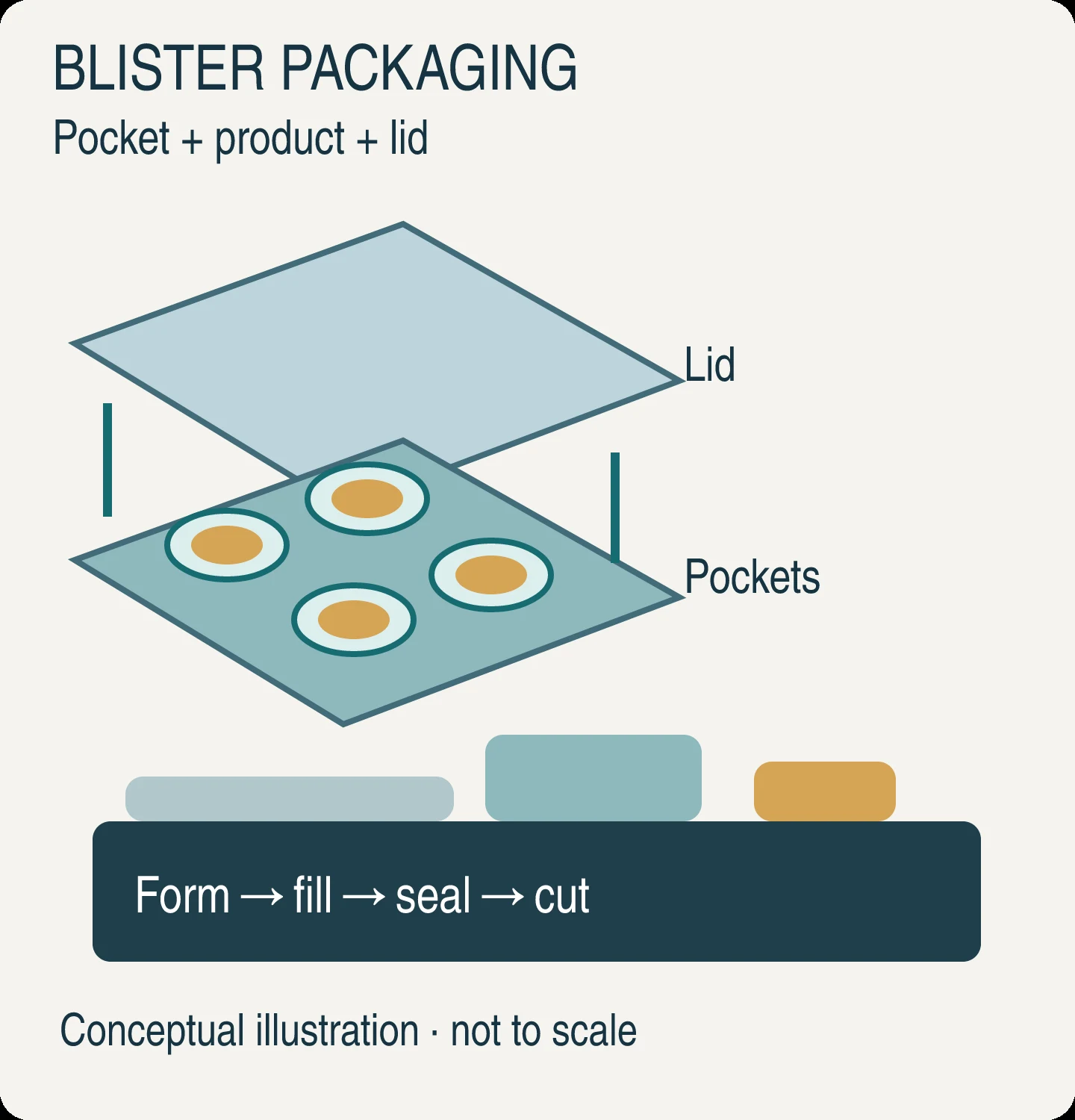
A blister packaging machine makes or accepts shaped pockets, loads the product and joins a lid to the pocket material. An integrated machine can also code and cut the packs. Choose by the approved pack structure, product handling and required workflow—not the label small, tabletop or automatic alone.
Applies to: An equipment-selection guide for formed-pocket packs. It is not an operating procedure, a pharmaceutical compliance assessment or a container-closure integrity test method.
A cheap blister machine can become an expensive purchase if its quotation leaves out the feeder, a second pack format or the documents needed to accept it. Start with a pack drawing and a written division of work. Then compare what each supplier will actually deliver.
This guide explains the equipment choices within the packaging-machine family. It draws on public equipment documentation; we have not operated or tested the machines discussed. The diagrams are original editorial schematics, not drawings of a machine offered for sale.
Key takeaways
- Thermoforming and cold forming use different pocket-forming routes; both still need a compatible closure process.
- Tabletop describes size and layout. It does not tell you who fills the pockets or transfers the pack.
- Compare accepted finished packs under the same product, material and staffing conditions.
- Separate the base machine from tooling, inspection, documentation and site services in the quotation.
- Pharmaceutical references identify topics for a qualified project team to assess; they do not certify a machine.
How the blister machine turns materials into a pack
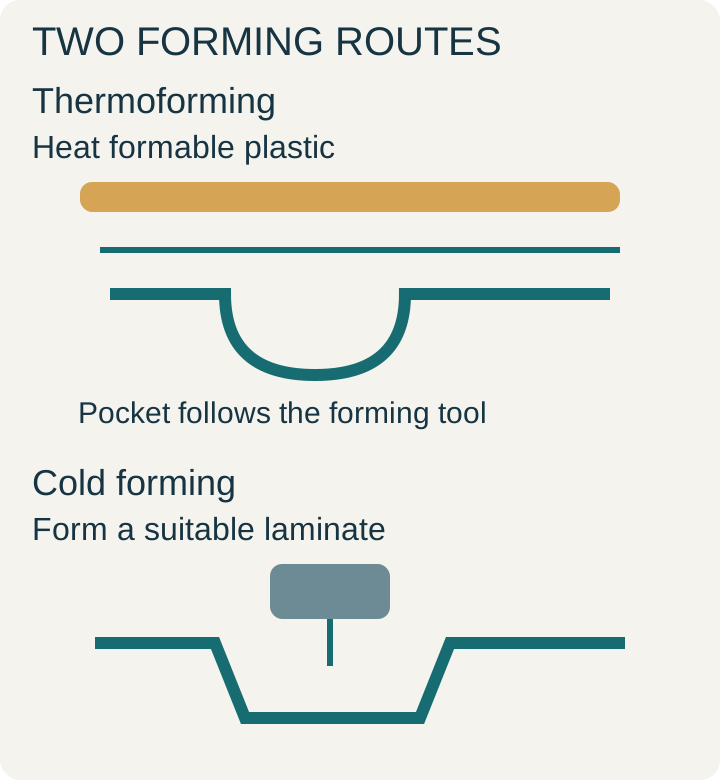
In a thermoforming route, a formable plastic web is heated before pockets are made. Product enters those pockets, a compatible lid is applied and sealed, and the web is divided into finished packs. The DPP-250 operation manual describes PVC heating and forming, feeding, sealing and cutting; its coding features are configuration-dependent. A DPP-80 service manual also separates forming heat from sealing heat. Neither document establishes settings for another machine or material.
Cold forming uses a different forming material and tooling route. The historical DPP-260A manual describes drawing a cold-form foil into a cavity with matched tooling, without the plastic-web preheating step. That describes this forming function, not a complete machine setup. Sepha’s current EZ Blister product documentation explicitly offers both thermoforming and cold forming, followed by sealing and cutting. Confirm the selected route in the supplier’s tooling and material proposal. Do not assume a machine supplied for one route can change to the other without different parts or options.
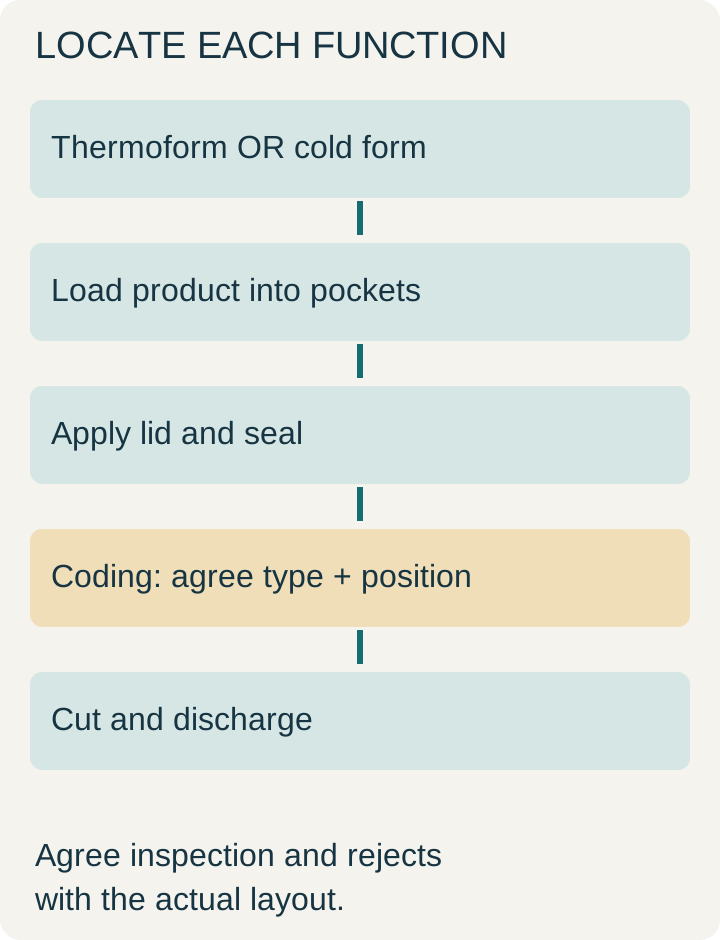
A useful supplier drawing identifies where the forming material enters, where product is presented, how the lid arrives and how rejects leave. Coding may be embossing or a separate printing system; its position depends on the design. Avoid treating a six-box process sketch as a compulsory physical arrangement.
Ask the material supplier and machine builder to work from the same specification. The film and machine compatibility guide explains why a material name alone is insufficient. Where a product is wrapped without individual formed pockets, the flow-wrapping comparison covers a different equipment decision.
Takeaway: Approve the pack structure and forming route before comparing equipment layouts.
Manual, tabletop and automatic describe different things
These labels overlap. A small tabletop machine may perform forming and sealing with powered tools while an operator loads and transfers the work. An automatic machine may still rely on people for replenishment, changeovers and handling exceptions. Ask for a step-by-step demonstration of the proposed work cycle.
| Quotation label | What to establish | Evidence to request |
|---|---|---|
| Hand operated or manual | Which actions the operator performs; which actions use heat, air or powered movement | Demonstrated work cycle and staffing assumptions |
| Tabletop or small batch | Whether forming, filling, sealing and cutting share one workstation or separate steps | Bench layout, utilities and handling plan |
| Semi-automatic | Where product placement and pack transfer remain manual | Responsibility marked at each transfer |
| Automatic integrated machine | Scope of feeding, web transport, inspection, rejects and discharge | Proposed configuration and representative-product trial |
Sepha describes its EZ Blister as a semi-automatic tabletop machine with separate forming, sealing and cutting operations. That is a useful counterexample to the assumption that “tabletop” means a complete automatic line. It is one manufacturer’s configuration, not a definition of all small machines.
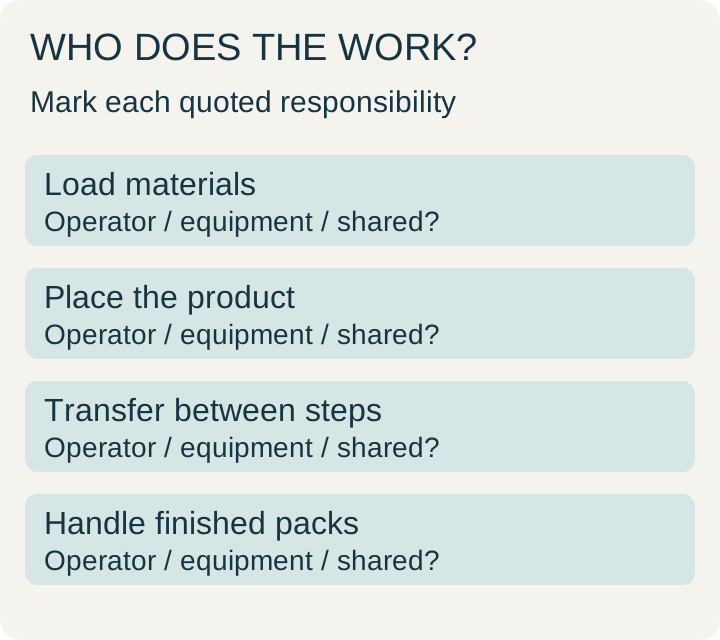
For a production proposal, specify the number of accepted packs required over an agreed run, the pack drawing, materials, staffing and treatment of stops. Do not convert a headline cycle rate into finished output without knowing how many packs the tool produces and what work the cycle includes. The three historical manuals reviewed contain model-specific parameter tables, but this guide does not reproduce those numbers as current buying specifications.
Use the line bottleneck guide when matching upstream supply and downstream capacity. Plan format changes with the changeover checklist, including the parts and records that change with each pack.
Takeaway: Compare complete work cycles and accepted output, rather than machine labels or unqualified speed claims.
Product and pack questions for tablets, food and pharmaceutical work
A cavity that fits the product is only the start. Give the supplier representative samples and explain what makes a damaged or unacceptable unit. Record the material specification and artwork revision alongside the product information so a successful trial can be traced to the exact combination tested.
| Project | Questions for the trial or proposal | Record to retain |
|---|---|---|
| Tablets or capsules | How are units presented and checked? What happens to empty pockets, double fills or broken product? | Product samples, cavity drawing and agreed reject demonstration |
| Food | What are the product’s size variation, stickiness or crumbs? How will contact surfaces be cleaned between the proposed products? | Product range, cleaning responsibility and approved pack materials |
| Pharmaceutical production | Which documents will support the site’s qualification and package assessment? Who reviews and approves them? | Document list, revision control and named project responsibilities |
| Several pack formats | Which forming, sealing, cutting and feeding parts change? Are they included for every format? | Format matrix and priced parts list |
These are purchasing questions, not findings that a proposed machine is suitable. In particular, a pharmaceutical application in a brochure does not prove suitability for a specific drug product; a food application does not establish the acceptability of every contact material or cleaning method.
If blister packs will enter cartons, specify the handoff rather than leaving it implicit. The cartoner and case-packer comparison distinguishes those downstream tasks. The line integration checklist helps assign transfer, signal and reject responsibilities.
Takeaway: Make the trial represent the difficult product and pack conditions you expect to purchase against.
What belongs in a comparable quotation
There is no defensible universal blister packaging machine price in the sources reviewed. Request a priced scope against one written specification. A lower base-machine number is not necessarily a lower installed-project cost.
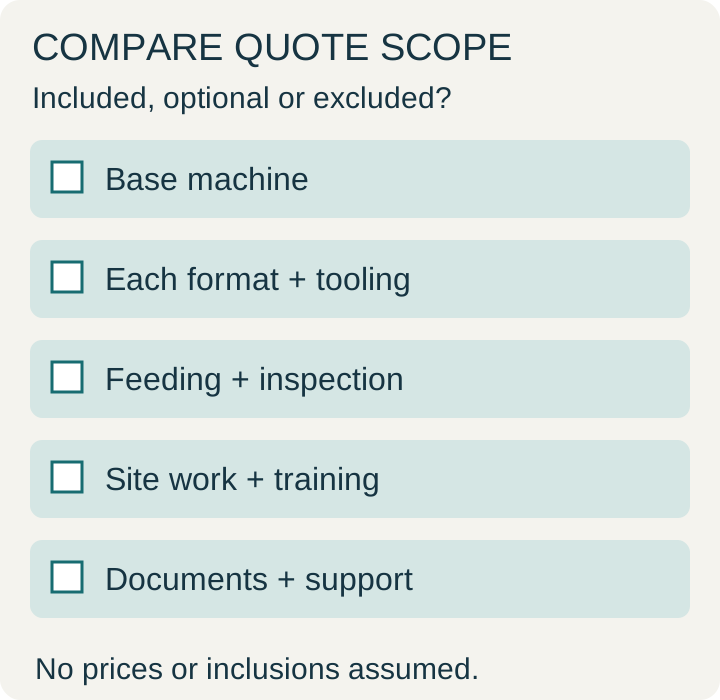
| Quote heading | Ask the supplier to identify |
|---|---|
| Base equipment | Exact model, forming route and configuration revision |
| Format parts | Number of complete tool sets, feeders and change parts included |
| Materials and trials | Who supplies sample materials, product and trial quantities |
| Coding and inspection | Included devices, required options and reject handling |
| Installation | Delivery boundary, utilities, commissioning and operator training |
| Documentation and support | Manuals, drawings, agreed qualification support, spares and service exclusions |
Use the packaging-machine RFQ checklist to send the same information to every bidder. Carry the agreed conditions into factory and site acceptance planning. Neither an attractive sample pack nor an empty machine demonstration resolves the entire acceptance scope.
Takeaway: Ask what each quote includes, excludes and assumes before comparing its total.
Pharmaceutical document review: sources and boundaries
Ask the site’s quality and regulatory team to identify which references apply to the product, market and activity. Useful starting points are EU GMP Annex 15, Qualification and Validation, and 21 CFR 211.94, Drug product containers and closures. These have different scopes: qualification and validation in medicinal-product GMP, and drug-product containers and closures respectively. They are not generic machine approval labels.
For package references, the official public preview identifies USP <671>, Containers—Performance Testing, for packaging systems used with oral dosage forms. USP <1207>, Package Integrity Evaluation—Sterile Products, concerns sterile-product package integrity; its numbered subchapters are <1207.1>, <1207.2> and <1207.3>. That sterile-product scope should not be silently extended to every tablet blister.
The USP <671> preview and USP <1207> official Spanish preview identify topics and chapter numbers. We have not reviewed the full subscription chapters or used them to specify a test method. Obtain the applicable current edition through the project’s authorized standards access.
For purchasing, agree who supplies the operating manual, machine and utility drawings, material-contact information, format records and any requested qualification documentation. Name the reviewer and approval stage. This is a document-planning list, not a statement that those records alone satisfy a legal obligation. Seal-integrity methods and acceptance limits are outside this article.
Takeaway: Define the document package with the responsible project team; do not accept a broad compliance phrase as its substitute.
FAQ: questions from manufacturers’ public support material
The questions below are adapted from Sepha’s public FAQ, rather than presented as independent buyer-survey results. Its answers describe its own equipment. Our purchasing implications should be checked against the machine actually quoted.
Who fills the pockets on a tabletop machine?
Sepha describes manual filling in its EZ workflow. For your trial, record whether the same operator fills, transfers and checks packs, or whether these tasks need separate staff. A machine-only demonstration leaves that labor boundary unresolved.
Can a separate cutter be purchased instead of a complete machine?
Sepha’s FAQ says it has no separate off-the-shelf cutter. If you already own forming and sealing equipment, ask prospective suppliers about the exact interface before budgeting a standalone cutter.
Does coding mean printed artwork?
Not necessarily. Sepha distinguishes embossed digits from printed text or images. Bring an approved artwork sample showing which information changes by batch and which stays fixed. Ask the supplier to identify what its quoted coder can reproduce; an expiry-code option does not establish variable graphics capability.
Which documents can the equipment supplier provide?
Sepha lists manuals and qualification-related documents among its offerings. Ask when a sample document can be reviewed and whether the final version will identify the supplied serial number and configuration. Agree who updates it after a format or control change; another supplier’s documentation package may differ.
Can one machine use different blister materials?
Sepha lists several material families for its range. Request confirmation against your exact forming and lidding specifications and tooling. A family name is not approval of every grade.
Is a deblistering machine the same purchase?
No. Sepha separates packaging from deblistering, which removes contents from existing packs. Describe whether you are making new packs or recovering product before requesting equipment.
Sources, method and next steps
This article and its diagrams were prepared with AI assistance and checked against the sources below. They do not represent hands-on machine testing.
We checked the DPP-80 Service Manual, including its parameter and operating-procedure sections, and a publicly readable DPP-250 Operation and Maintenance Manual mirror, including its characteristics, technical data and operating procedure. A third historical DPP-260A operation manual, publicly indexed original-text mirror, separately describes hot and cold forming, their tooling, and model-specific parameter tables. We read those relevant sections in the public index; we did not obtain a complete downloadable manual from its manufacturer. The documents’ dates and applicability to a current supplier configuration are not established. They support the description of functions, not operating settings or present-day performance promises.
Current configuration examples come from Sepha’s EZ Blister product page and FAQ. Those are manufacturer statements, not our tests. The current cold-forming option is documented on the product page, with the historical DPP-260A manual supporting the distinct forming principle. None of these sources establishes that every blister machine supports both routes. No supplier ranking or market-price estimate is offered.
Prepare a pack drawing, representative product and materials, a format list and a written acceptance plan before seeking comparable quotations. For alternatives outside formed-pocket packaging, return to the machine-types overview.
Takeaway: Use this guide to prepare the supplier discussion, then replace generic descriptions with records for the exact proposed configuration.
Update history
- : First published.
Next steps
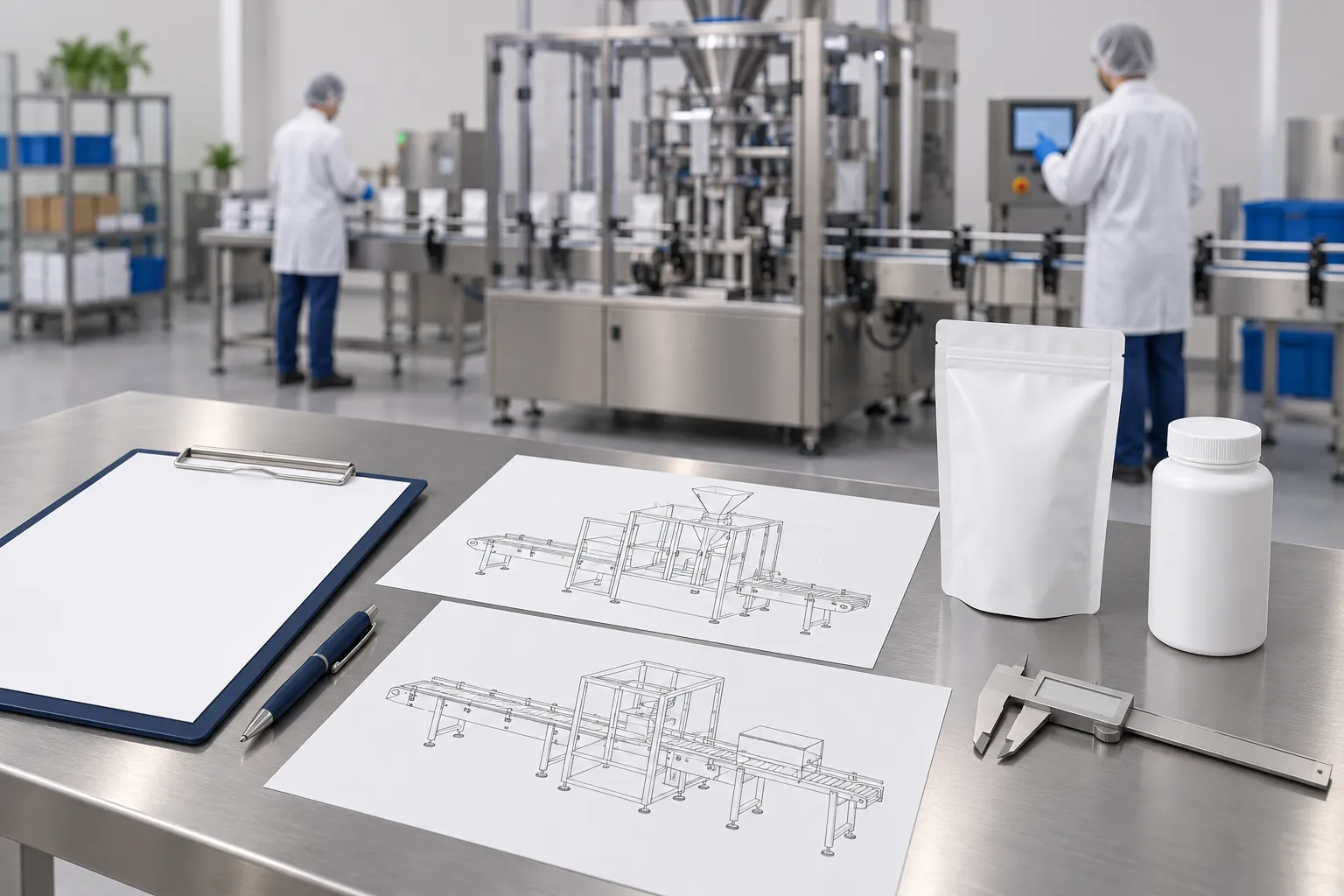
Packaging Machine RFQ Checklist: Information Suppliers Need
A reusable blank RFQ template for packaging machines in nine sections, with the reason suppliers need each item and a list of commonly missed details.
Read guide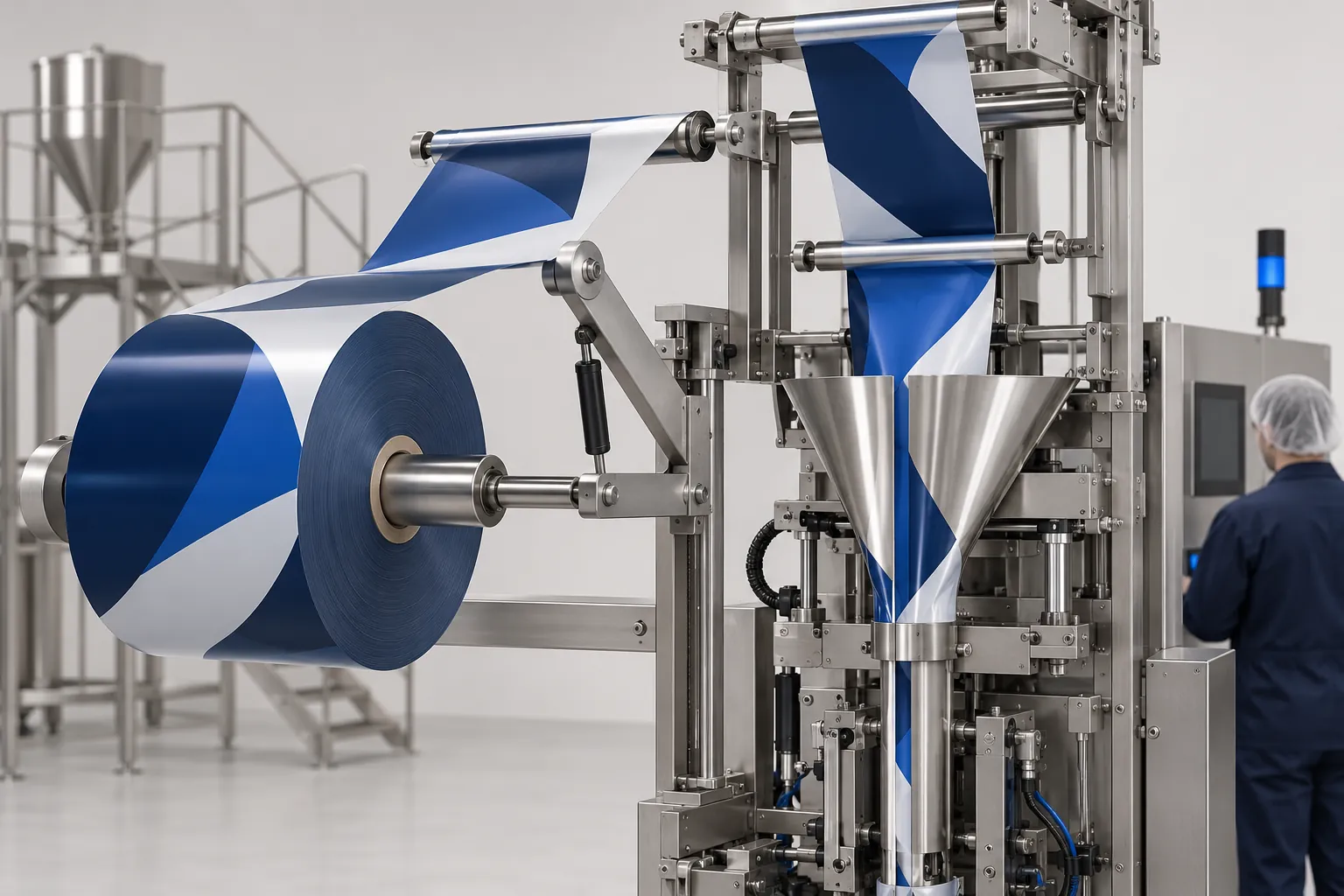
Packaging Film Compatibility: Questions Beyond Film Thickness
Follow the film path from reel to cut-off and list what to ask the film and machine suppliers about tension, friction, registration marks and sealing.
Read guide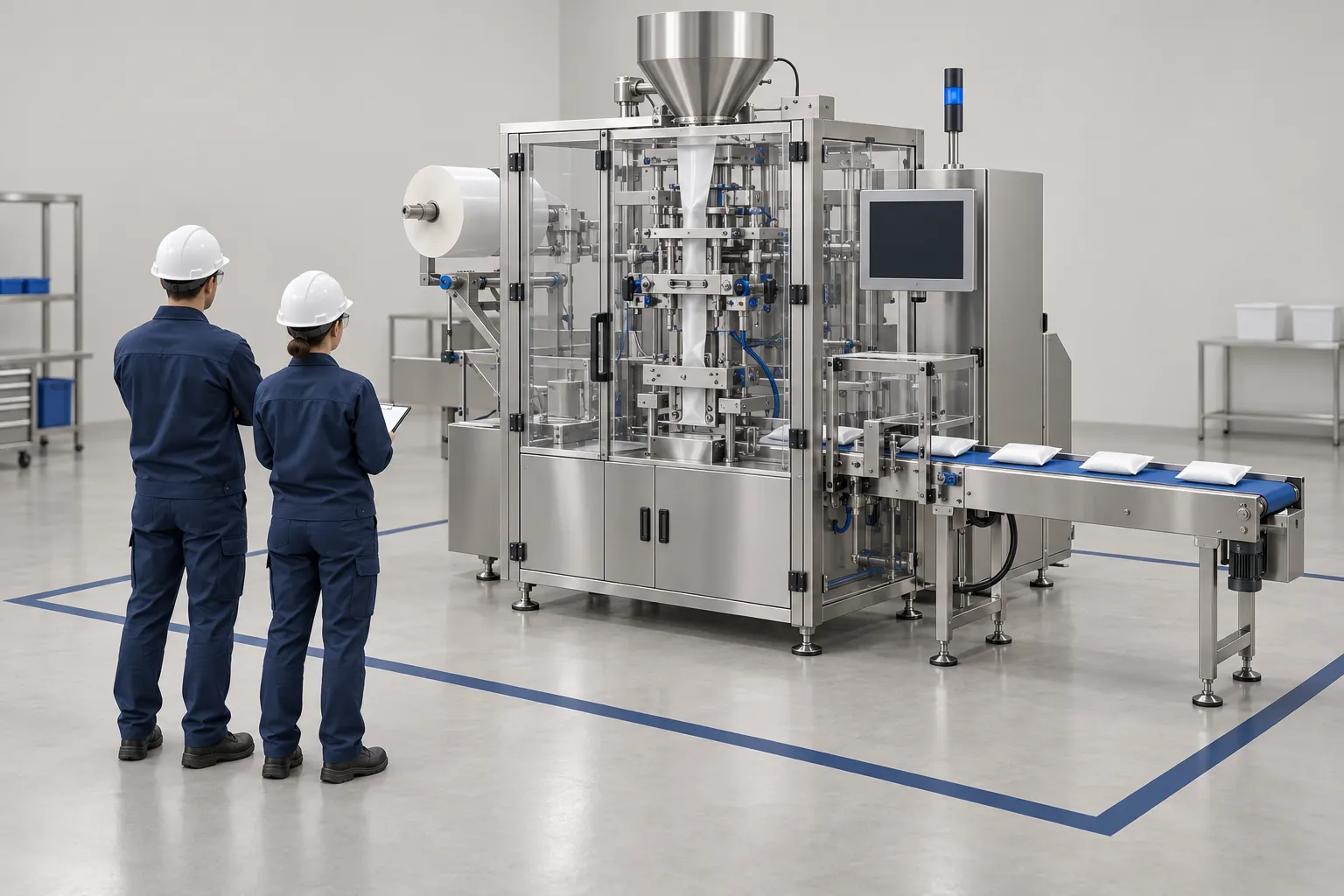
FAT vs. SAT for Packaging Equipment: Defining Acceptance Criteria
Compare factory and site acceptance tests for packaging machines, and learn how to write acceptance criteria that both buyer and supplier can verify.
Read guide