
Packaging Film Compatibility: Questions Beyond Film Thickness
Follow the film path from reel to cut-off and list what to ask the film and machine suppliers about tension, friction, registration marks and sealing.
A film is compatible with a machine when it runs through every point on the film path, from reel to cut-off, within ranges that the film supplier documents for that specific film and the machine supplier confirms for that specific machine. Thickness alone does not settle this; friction, tension, registration marks and the sealing window each need their own answer, backed by a certificate or a trial.
Applies to: Covers roll-fed flexible film on form-fill-seal and flow-wrapping machines. Does not cover premade pouches, rigid or thermoformed packaging, or machine-specific settings, and gives no numeric values for any film.
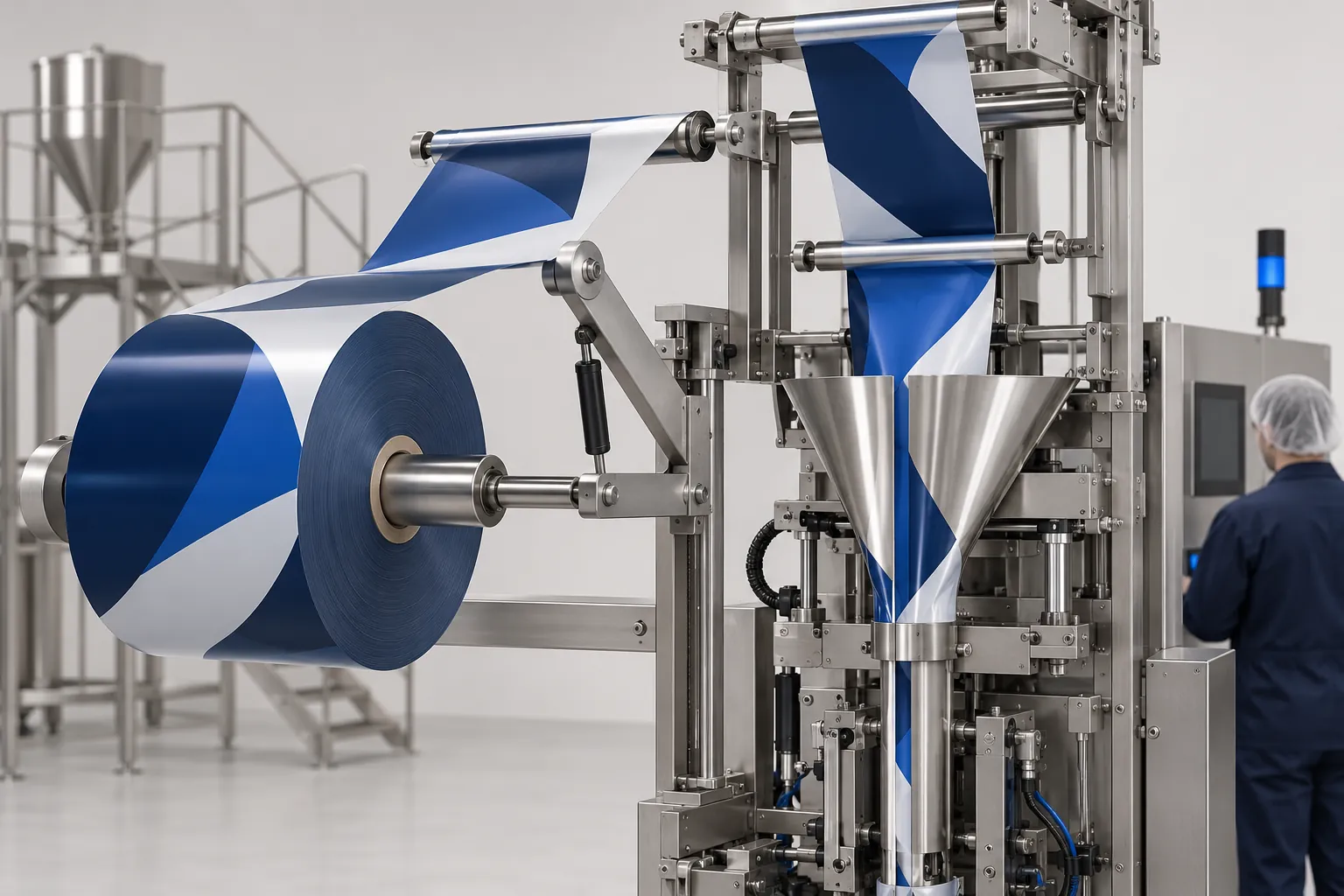
Poor film compatibility wastes film and can send packs back for rework. Thickness is one input; reel fit, tension, friction, registration and sealing behavior also need to match the machine.
Follow the film path to compare supplier documents with trial observations. This guide supplies questions and a record, while product-specific limits come from the approved specification and trial plan.
Swipe sideways to see the other columns. The first column stays visible.
| Input | Evidence to retain | Use in the decision |
|---|---|---|
| Reel and core | Roll drawing, winding direction, lot certificate | Check unwind fit and handling |
| Tension | Film limits and machine adjustment range | Check tracking without stretching |
| COF | Surface, method and test conditions | Compare film sliding behavior |
| Registration mark | Artwork and sensor requirements | Check cut/seal position |
| Seal layer and window | Film data and agreed pack tests | Check the sealing process |
| Trial | Product, speed, observations and sign-off | Confirm the intended configuration |
The film path
For paper-coating binder substitutions, the BASF rPCF review separates material approval from the carbon documents; a lower-PCF statement does not establish machine compatibility.
The Stahl Senoprint scope analysis explains why a paper-and-board coating announcement cannot establish suitability for a plastic-film application.
The SunDance coffee pouch specification review separates artwork changes from valve location, pouch geometry and material questions.
Figure 1 shows the points where the film meets the machine. At each one, a property of the film meets a feature of the machine.
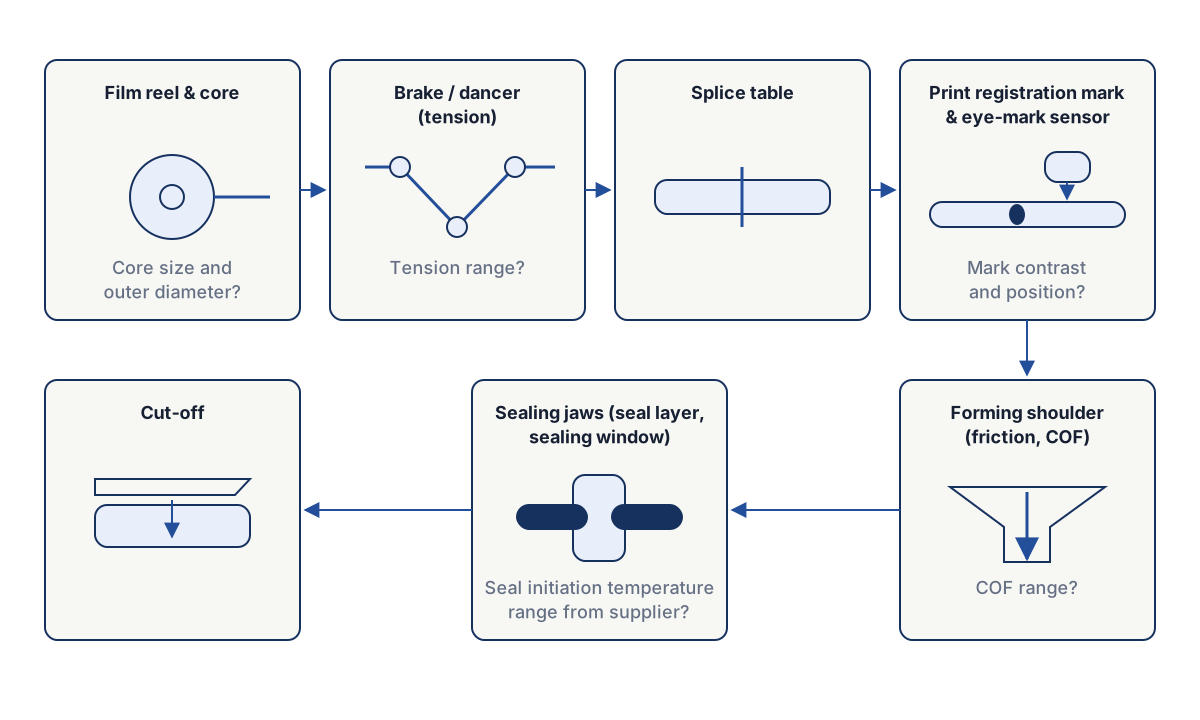
The same path applies, with variations, to vertical form-fill-seal (VFFS) machines (see the comparison of VFFS and premade pouch machines) and to horizontal flow wrappers (see flow wrapping vs. overwrapping). Stick-pack machines add a narrow web and often several lanes from one reel, which changes how reel width and tension matter (see stick packs vs. sachets). On a flow wrapper, where the splicer, registration sensor and coder sit on this path is shown station by station in the guide to the inside of a horizontal flow wrapper.
Film reel and core
The reel is where the machine and the film supplier first have to agree. The core inner diameter, the maximum outer diameter, the reel width, the unwind direction (printed side in or out) and the reel weight all have to fit the unwind shaft and the machine’s reel handling. A reel wound with loose or uneven edges can telescope or wander as it unwinds, and no machine setting fully corrects that.
Takeaway: Confirm roll fit before loading the trial reel.
Brake and dancer (tension)
The unwind brake and the dancer arm keep tension on the film as the reel diameter and the machine’s draw speed change. Films differ in how much tension they tolerate before they stretch, neck down or distort the printed pattern. Thin or highly stretchable films, and laminates with a soft layer, can behave differently from stiffer ones. The film supplier should document the tension range the film can take, and the machine supplier should state the range the brake and dancer deliver.
Takeaway: Record the film limit and the machine range side by side.
Splice table
When one reel ends, the next is joined to it, either by a manual splice or by an automatic splicer. The splice has to pass the registration sensor, the forming shoulder and the sealing jaws. Ask which splice tape or method the film supplier supports. A splice that adds thickness or a different surface can seal poorly or catch on the shoulder.
Takeaway: Include a reel join in the agreed trial observations.
Print registration mark and eye-mark sensor
On printed film, a sensor reads a printed mark to place the cut and seal in the right position relative to the artwork. The mark needs enough contrast against its background, the right position on the web and a clean area around it. Reverse-printed films, metallized layers and glossy surfaces can all change what the sensor sees. The film supplier controls the mark’s ink and position, and the machine supplier knows the contrast and size the sensor needs.
Takeaway: Check the printed trial mark against the installed sensor.
Forming shoulder (friction, COF)
On a VFFS machine the film is pulled over the forming shoulder and down the tube. The friction between the film surface and the metal, and between the film and the pulling belts, decides whether the film feeds smoothly or sticks, jerks or wanders. The coefficient of friction (COF) describes this, and the film supplier may specify a static and a kinetic value for each side of the film. ASTM D1894 is a commonly cited method for measuring it and covers static and kinetic coefficients of friction of plastic film and sheeting. Ask which method and conditions the supplier used, since friction depends on temperature, additives and the age of the film.
Takeaway: Retain the surface and test conditions with each COF value.
Sealing jaws (seal layer, sealing window)
At the sealing jaws, the sealant layer on the inside of the film is heated and pressed together. The sealing window is the range of conditions in which the film forms a good seal without being damaged. The film supplier should state the seal initiation temperature range and the sealing window for that film’s sealant layer, and the machine supplier should say what its jaws, heating system and dwell control can deliver. A peel-type test usually checks seal strength, and ASTM F88 describes a test method for the seal strength of flexible barrier materials. In an inquiry, cite the method and not a number. The acceptance value comes from your own product and shelf-life requirements.
Takeaway: Agree finished-pack acceptance tests before changing jaw settings.
Cut-off
The knife or the sealing-and-cutting jaws separate the finished bag. A film with a tough or stretchy structure, or a thickness or layer combination the cutting system has not run before, may tear, leave a stringy edge or cut unevenly. Check this in a trial, since specifications rarely describe it.
Takeaway: Retain a cut-edge sample from the trial.
What can go wrong, and what to ask
The table collects the questions for each point. Treat it as a starting list and adapt it to your film and machine.
Swipe sideways to see the other columns. The first column stays visible.
| Point on the film path | What can go wrong | Question for the film supplier | Question for the machine supplier |
|---|---|---|---|
| Film reel and core | Core does not fit the unwind shaft; outer diameter or weight exceeds the machine’s capacity; reel telescopes or wanders | What are the core inner diameter, maximum outer diameter, reel width and reel weight for this film, and how is it wound? | What core sizes, outer diameters, reel widths and weights does the unwind accept? |
| Brake / dancer (tension) | Film stretches, necks down or distorts print; tension swings as the reel empties | What is the permitted tension range for this film, and does it differ by structure or thickness? | What tension range do the brake and dancer deliver across the reel, and how is it adjusted? |
| Splice table | Splice sticks at the shoulder, opens at the seal or loses registration | Which splice method and tape do you support for this film? | Which splice methods does the machine support, and how does it handle the splice at the sensor and the jaws? |
| Print registration mark and eye-mark sensor | Mark is missed or misread; cut and seal drift from the artwork | What are the mark size, position, color and contrast against its background, and how are they controlled? | What mark size, contrast and clear area does the sensor need, and can it be adjusted for this film? |
| Forming shoulder (friction, COF) | Film drags, jerks, sticks or tracks to one side; static builds up | What are the static and kinetic COF values for each surface, which method (for example ASTM D1894) and conditions were used? | What surface finish and coating does the shoulder, tube and pulling system have, and what friction range suits it? |
| Sealing jaws (seal layer, sealing window) | Weak seals, channel leaks, wrinkles, burn-through | What is the seal initiation temperature range and sealing window for the sealant layer, and how was seal strength tested (for example ASTM F88)? | What jaw type, heating, pressure control and dwell control are available, and how are they verified? |
| Cut-off | Torn, stringy or uneven cut; film sticks to the knife | Is there any known behavior of this structure with the cutting method used? | What cutting method is used, and has it been run with this film structure? |
Information to request from suppliers
These documents let you verify the answers in the table above.
From the film supplier
- The current technical data sheet or material specification for the specific film grade, with the structure and which side is sealant and which is print.
- A batch certificate or certificate of analysis for the lot you will receive, showing the properties the supplier measures and the test methods used.
- Friction values (static and kinetic) for each surface, with method and conditions.
- Seal initiation temperature range and sealing window for the sealant layer, with the test method.
- Tension limits, recommended splice method and storage conditions.
- For food contact, a declaration or other document that addresses the relevant food contact material rules for your market (for example, the EU framework in Regulation (EC) No 1935/2004), as applicable.
From the machine supplier
- Unwind, brake and dancer capacities and adjustment ranges.
- Eye-mark sensor requirements.
- Forming shoulder and tube material, finish and available sizes for the film width and bag size.
- Sealing jaw type, temperature control, pressure control and the way each is verified.
- A statement of which films, in terms of structure and surface, the machine has been configured for, and any limits the supplier knows about.
- A trial offer using the film and product you plan to run, so compatibility is shown rather than assumed.
Record supplier specifications as the supplier’s statement, and keep your own trial results separate.
Choosing film that runs on an automated machine
When a product moves onto an automated packaging machine, or an existing flexible packaging machine gets a new film, the choice of packaging is also a choice about machine behavior. A film is a good candidate when its documented properties fall inside the ranges the machine supplier confirms, and when a trial at your speed with your product shows that it runs. The points below sit alongside the film path above and concern the material itself.
Properties that decide machinability
- Friction and slip. COF on each surface, measured by a stated method such as ASTM D1894. Film suppliers adjust it with slip additives, so ask whether the value holds across the temperature range in your plant.
- Static. Static charge makes film cling to metal and attract powder into the seal area. Some films contain antistatic additives; ask whether yours does and how long the effect lasts in storage.
- Stiffness. A film needs enough stiffness to track over rollers under tension and enough pliability to wrap around the forming shoulder and tube. Data sheets often report secant modulus by ASTM D882 as a stiffness indicator.
- Flatness and winding. Curl, baggy areas and uneven winding cause drift that machine settings cannot fully correct. Ask how the supplier controls winding tension and roll quality.
- Sealant behavior. The seal initiation temperature, the width of the sealing window and hot tack, which is the strength of a seal while it is still hot. On a vertical machine, product drops onto a bottom seal that has just been made, so hot tack matters there. ASTM F1921/F1921M-12(2023) covers instrumented hot-tack testing of thermoplastic polymers and blends forming the sealing surfaces of flexible webs, before the seal cools to ambient temperature. It does not cover manual non-instrumented procedures or supply a universal acceptance limit.
- Storage. Temperature and humidity in storage can change slip and cause blocking, where film layers stick together on the reel.
One film supplier’s data sheet shows how these points appear in practice. The Oben Group OPP SealFilm SA technical data sheet, listing SA 15, SA 17, SA 20 and SA 30 (Rev. March 2024; accessed October 8, 2026) describes an additive package of slip and antistatic agents formulated for machinability, reports kinetic COF by ASTM D1894 and secant modulus by ASTM D882, and gives storage conditions to avoid blocking (supplier source). It is cited here as an example of the document type, not as a recommendation of the film.
Typical values are not a specification
The same data sheet states that its information is based on the supplier’s laboratory tests, is intended for reference only and does not constitute a specification, and that the user is responsible for testing the film for the intended application. Many data sheets work the same way. A typical value tells you what the supplier usually measures; a specification states limits that each delivered lot must meet. For the properties that decide machinability on your line, ask which values are specified with limits, and which test results will appear on the certificate for each lot.
Takeaway: Ask which values are contractual lot limits.
Trial sequence for a material change
A change of film structure, film supplier or sealant, including a move to a different material family for recyclability, should be treated as a new material on the machine, even when the thickness is unchanged.
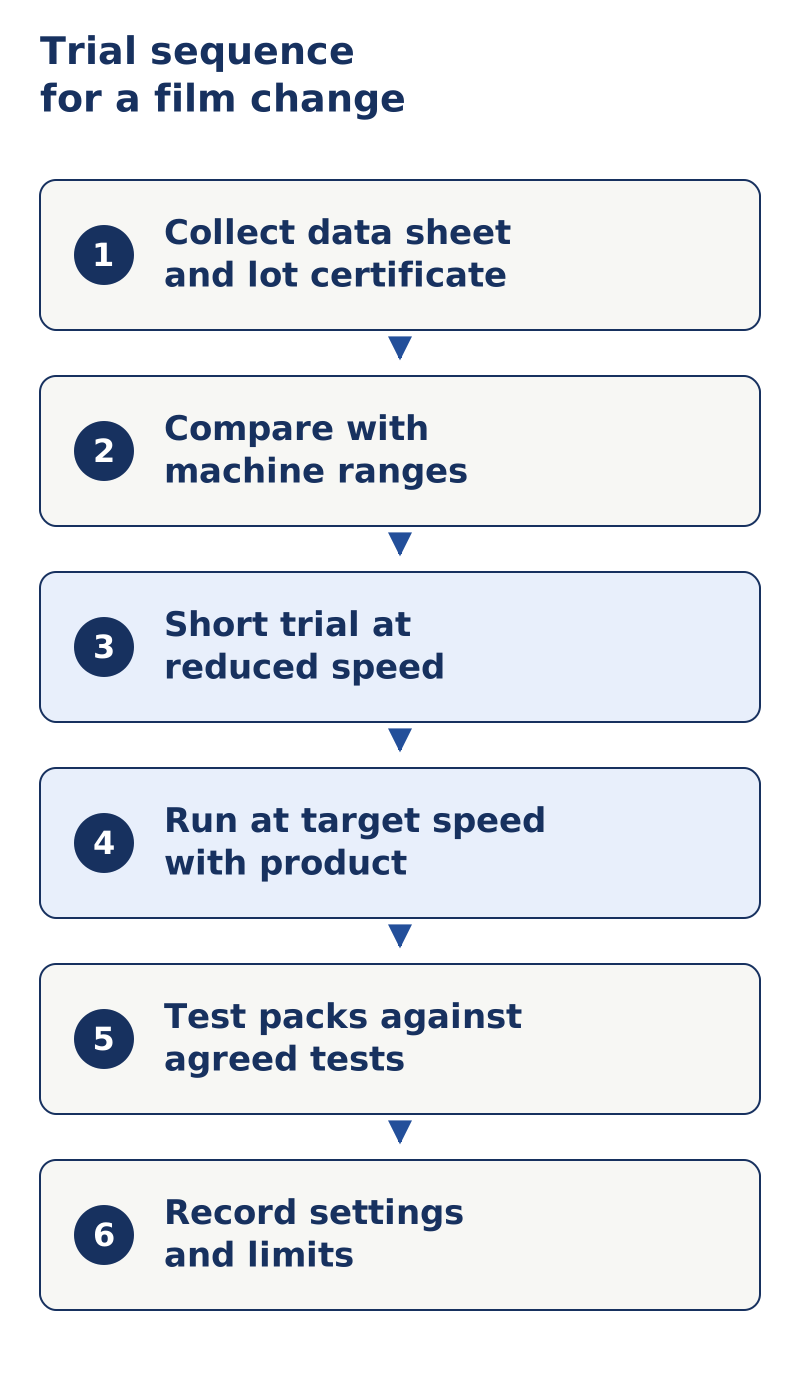
Copy one record for each film lot and machine configuration; attach observations and actual results.
Swipe sideways to see the other columns. The first column stays visible.
| Step | Observation / trial entry | Acceptance source / sign-off |
|---|---|---|
| 1. Documents | Grade, structure, lot and certificate: ________ | Approved film specification: ________ |
| 2. Compare ranges | Reel, tension, sensor, forming, sealing fit: ________ | Machine limits / reviewer: ________ |
| 3. Reduced-speed trial | Tracking, marks and seals observed: ________ | Trial plan / result: ________ |
| 4. Target-speed trial | Product, speed, conditions and waste: ________ | Production target / result: ________ |
| 5. Pack tests | Method, samples and test results: ________ | Product acceptance specification: ________ |
| 6. Close trial | Settings, limits and unresolved issues: ________ | Authorized acceptance / signature: ________ |
Questions to settle with both suppliers before the trial: which machine settings are expected to change, who supplies trial reels and in what quantity, and who decides whether the result is acceptable. If the trial produces seal failures, keep the evidence and follow the seal defect investigation checklist before changing settings.
A pre-trial checklist
- The film’s technical data sheet is on file and matches the structure you intend to buy.
- The batch certificate for the trial reels is on file.
- Reel core, outer diameter, width and weight have been confirmed against the unwind.
- Tension range from the film supplier is compared with the machine’s range.
- Registration mark has been checked against the sensor requirement, on the actual trial reel.
- COF values and test method are documented, and the machine supplier has seen them.
- Sealing window from the film supplier has been shared with the machine supplier.
- Splice method has been agreed.
- Acceptance tests (for example seal strength by an agreed peel test, and leak testing where relevant) and their pass criteria are written down before the trial.
- The trial uses your product, your pack size and the speed in packs per minute you actually need.
If seals fail during or after the trial, record and test the evidence before changing anything, as described in the seal defect investigation checklist.
Limits and on-site verification
This guide gives questions, not values. The right tension, friction coefficient, sealing temperature and dwell time depend on the specific film structure, the product, the pack size, the machine and the environment. Keep one approved specification and trial plan as the acceptance basis.
Even with complete documents, run a trial with the film, the product and the machine in the configuration you intend to use. A trial shows what paper cannot: how the film behaves at your speed, with your product in the seal area, at the humidity and temperature of your plant. ASTM D1894 and ASTM F88 are written for laboratory conditions on prepared specimens, so their results describe the specimens and not the full behavior on the machine.
Adjusting the unwind, the forming shoulder or the sealing jaws means working near moving reels, belts and heated jaws. Guarding for these areas should come from a risk assessment under a method such as ISO 12100, reviewed by qualified personnel. Keep guards and interlocks in place while adjusting, and isolate energy before any intervention.
Related decisions
When film compatibility is part of an equipment purchase, put the film specification, test methods and trial terms into the RFQ checklist so every supplier quotes against the same material.
Method and source review
This review uses public method scopes and a manufacturer’s document example, not an independent film test. Scope and source review: October 8, 2026.
- ASTM F1921/F1921M-12(2023), Scope §§1.1–1.3: instrumented hot-tack methods for the specified sealing materials. Agree a product-specific acceptance basis; the public scope is not the full procedure.
- Oben Group, OPP SealFilm SA, Rev. March 2024, pp. 1–2: additive description, COF and modulus methods, storage guidance and the explicit “reference, not specification” boundary. This is a manufacturer statement and a document example, not a film recommendation.
The trial record is an editorial structure to retain observations, test evidence and authorized acceptance. It adds no generic machine settings.
References
- ASTM D1894-24 — Standard Test Method for Static and Kinetic Coefficients of Friction of Plastic Film and Sheeting — ASTM International
- ASTM F88/F88M-23 — Standard Test Method for Seal Strength of Flexible Barrier Materials — ASTM International
- Regulation (EC) No 1935/2004 of the European Parliament and of the Council of 27 October 2004 on materials and articles intended to come into contact with food and repealing Directives 80/590/EEC and 89/109/EEC — European Parliament and Council of the EU (EUR-Lex)
- ISO 12100:2010 — Safety of machinery — General principles for design — Risk assessment and risk reduction — ISO
Update history
- : First published.
- : Removed the unsupported thickness frequency claim, clarified the hot-tack scope, identified the film data sheet, and added vertical stations and a trial record.
- : Added a section on choosing packaging film that runs on an automated packaging machine: machinability properties, typical values versus specifications, and a trial sequence for a material change.
Next steps

Packaging Seal Defects: An Evidence-Based Investigation Checklist
Investigate packaging seal defects by containing suspect product, collecting evidence, testing with agreed methods and changing one variable at a time.
Read guide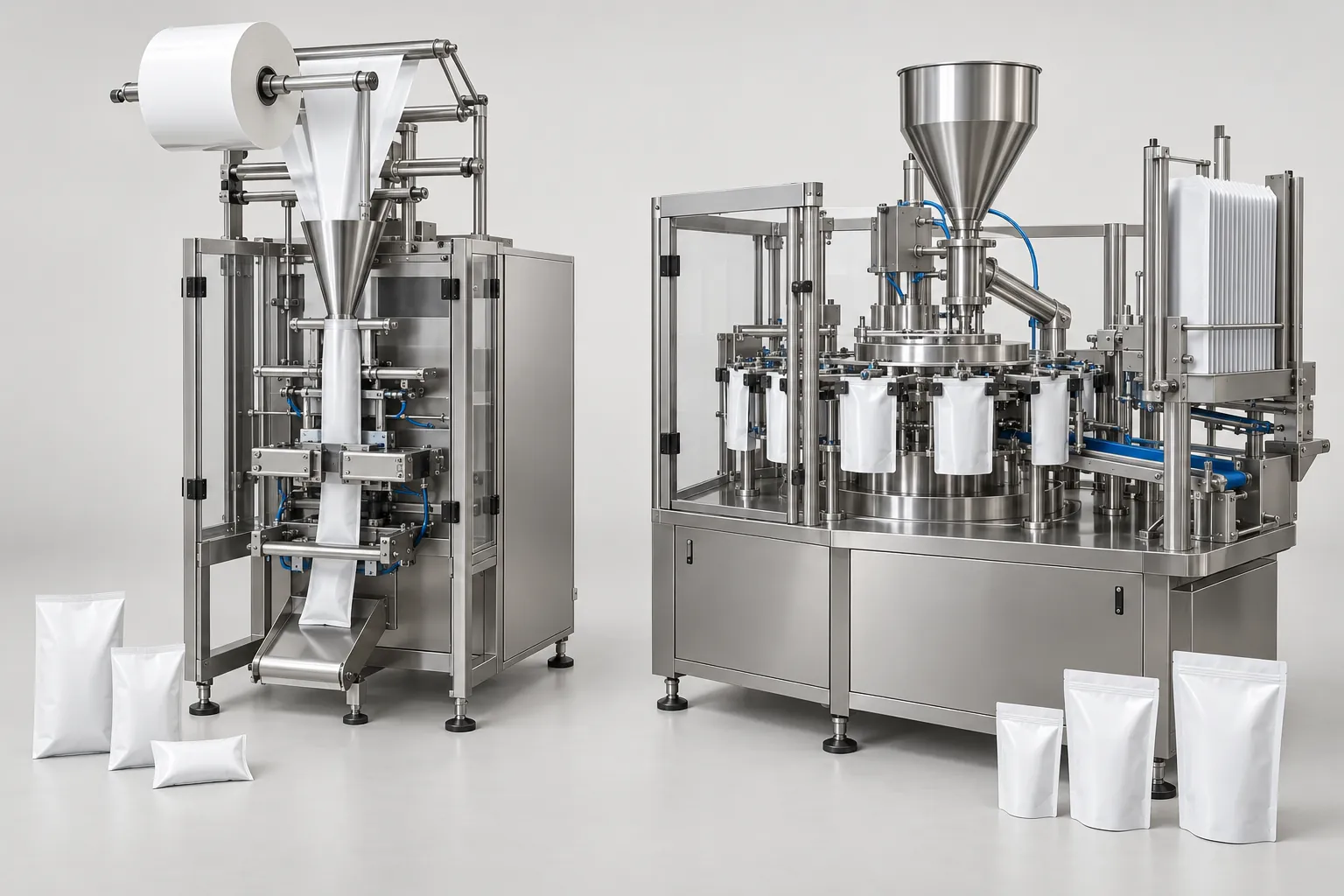
VFFS vs. Premade Pouch Machines: How to Choose
Compare VFFS and premade pouch machines by bag style, product, changeover, film or pouch supply, appearance, footprint and staffing, with questions for suppliers.
Read guide
Packaging Machine RFQ Checklist: Information Suppliers Need
A reusable blank RFQ template for packaging machines in nine sections, with the reason suppliers need each item and a list of commonly missed details.
Read guide