
Stahl Senoprint: Press Changes and Evidence to Request
Stahl unified LustreCoat and Senoprint metallic coatings. Separate the brand change from press compatibility, topcoat and recycling evidence.

Stahl announced its global Senoprint metallic coatings portfolio on September 14, 2026; review the full coating and protective-topcoat system against your substrate, press and customer specification.
Applies to: North American legacy LustreCoat users and paper/board converters assessing a specified metallic coating/topcoat system; other substrates need a separate application response.
An unreviewed metallic finish substitution risks a rejected press job. Following Stahl’s Senoprint announcement, we recommend reviewing the coating and protective-topcoat system against the substrate, press and customer specification before a production substitution.
For engineers following Stahl Senoprint metallic coatings, the useful distinction is between a brand change and an approved process change. This page maps the announcement to press stations and missing documents, especially for North American users of the former LustreCoat range. It does not independently validate coating performance or regulatory claims.
What Stahl announced
On September 14, 2026, Stahl announced a worldwide Senoprint portfolio, bringing North America’s LustreCoat and EMEA’s established Senoprint range under the aligned brand, as described on its product page. It describes metallic silver and gold finishes, UV-based and water-based formulations, and a matched protective topcoat. Its stated application focus is paper and board.
The company presents the system as an inline alternative to hot or cold foil application. Its release names sheetfed, screen, flexo and narrow-web applications; its product page also lists gravure and offset. Treat this broader list as a question for the application team rather than extending every formulation to every press.
Scroll horizontally if needed to see all columns →
| Announced item | Engineering question it opens |
|---|---|
| Unified product branding | Which existing codes and documents map to the new range? |
| Metallic coating plus topcoat | Which matched system is proposed for this job? |
| UV and water-based choices | Which route matches the press and substrate? |
| Inline application | What process scope replaces the present finishing step? |
Takeaway: The announcement identifies a candidate system, not an approved replacement for a specific press job.
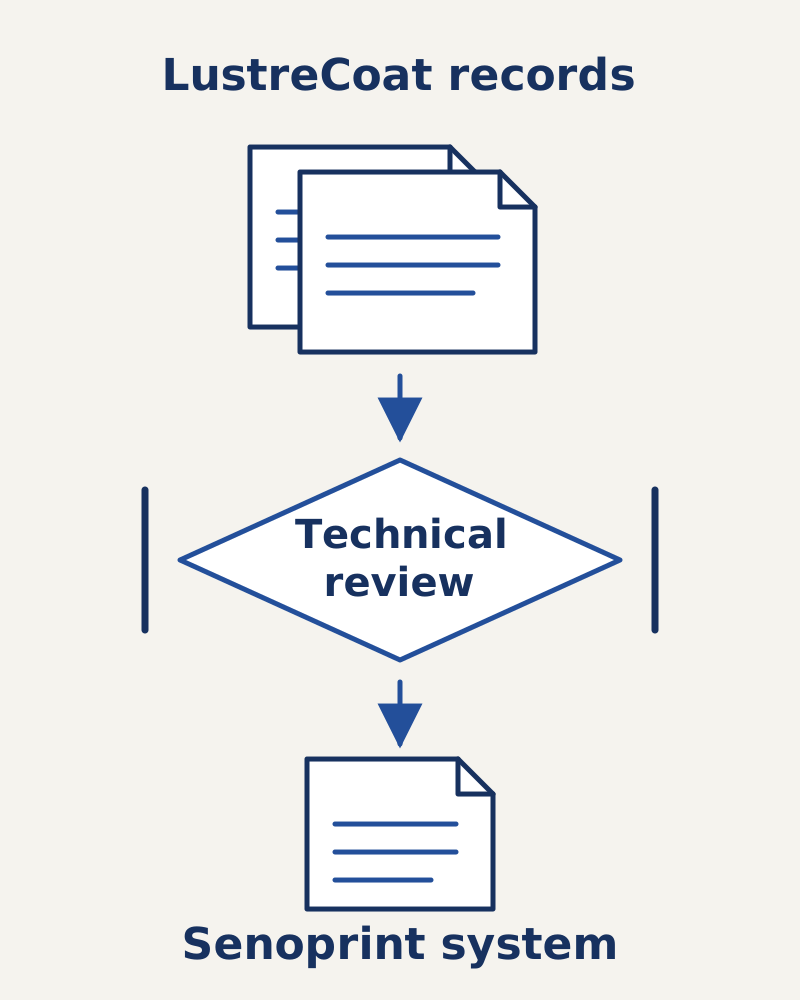
Who should review the change?
Assign separate owners for product identity, press performance and customer requirements. A new brand name alone does not answer whether an existing approved application is technically unchanged.
Scroll horizontally if needed to see all columns →
| Reader or situation | Review focus | Document to request |
|---|---|---|
| North American LustreCoat user | Identity and revision mapping | Old-to-new product list and change notice |
| Paperboard converter considering foil substitution | Full finishing sequence | Proposed coating/topcoat specification |
| Label printer | Substrate and press-route match | Application-specific technical response |
| Brand packaging team | Appearance and end-use requirement | Approved sample and customer criteria |
| Export project team | Claims applicable to destination and package | Specific supporting documents for review |
Use the materials and inspection hub to locate the related verification topics. Keep the commercial branding decision separate from the site’s material approval. If a supplier states that only the name changed, request the identification and document trail needed to preserve that distinction in the approved-material record.
Ask what happens to legacy stock, ordering codes and the revision of technical data sheets. Record the proposed transition against an actual job and product, rather than assuming every existing LustreCoat item has the same successor or the same formulation.
Takeaway: Reconcile names and technical identities before deciding the scope of production review.
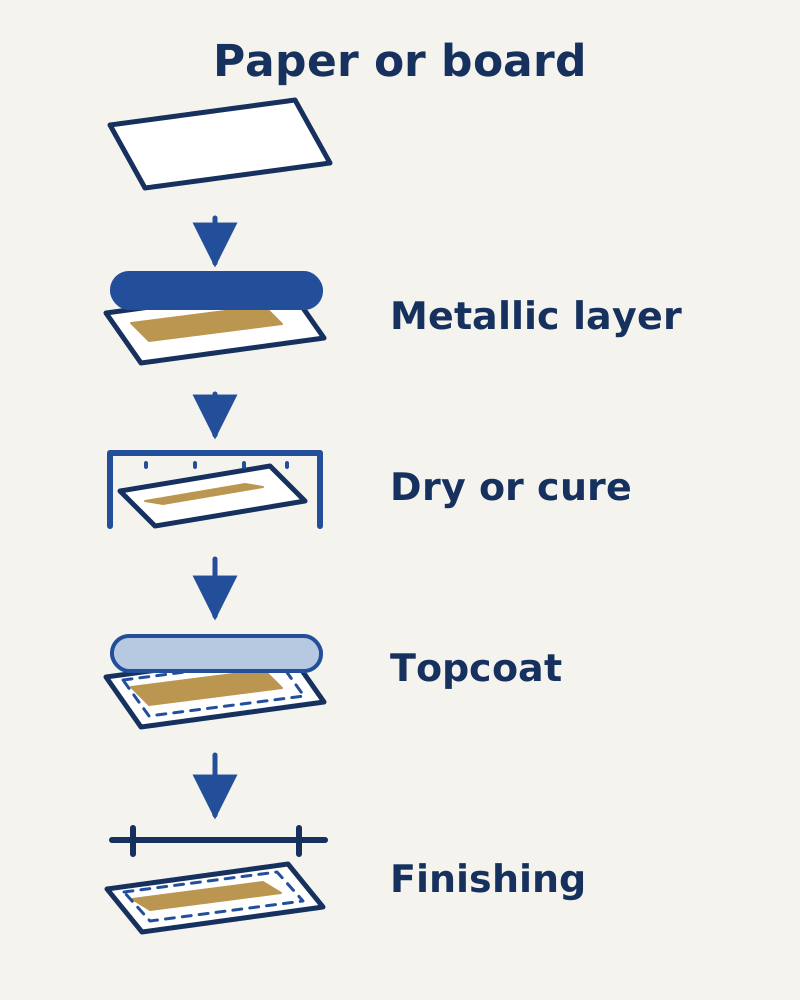
Map the proposed system across the press
Review the whole process, including the protective topcoat. Do not evaluate the metallic layer while leaving its companion layer and downstream handling outside the trial scope.
Scroll horizontally if needed to see all columns →
| Process position | Suggested review question | Record to preserve |
|---|---|---|
| Substrate feed | What paper or board is within the proposed scope? | Grade and surface specification |
| Metallic application | What product and application route are proposed? | Technical sheet and application-team response |
| Drying or curing | What conditions does the matched system require? | Supplier guidance and press review |
| Protective topcoat | Which companion product and sequence apply? | Named system and revision |
| Subsequent print and finishing | What work follows the coating? | Actual job sequence and sample observations |
| Finished-package review | What appearance and use criteria apply? | Agreed customer sample and evaluation record |
These questions form an editorial trial map, not a prescription for press settings. Ask the qualified application team to define trial conditions. Retain the proposed conditions with the sample record, so that a visually acceptable sample is not later applied to a different material or route without review.
For organizing a changed process, the line integration checklist provides a useful responsibility boundary. The format-changeover checklist helps record what changes between jobs. Neither guide establishes compatibility of a particular coating.
Takeaway: Review the coating, topcoat and subsequent operations as one proposed job sequence.
Resolve the process-scope difference in the official material
Ask for a written answer for the exact formulation, substrate and press. The product page’s longer process list is not a complete grade-by-grade compatibility matrix.
Record which source introduced each candidate route and the date it was reviewed. Put the supplier’s application response next to the route you actually intend to use. If the response refers to a different formulation or substrate, keep that difference unresolved until the supplier closes it.
Common mistake: Reading a portfolio-level application list as approval for every product in the portfolio. A useful trial brief identifies the material and the equipment together. Generalizing from one successful sample to another press would require a new assessment of the changed conditions.
Where a project is considering a plastic film substrate, do not extend the paper-and-board announcement by analogy. The film and machine compatibility guide can help organize substrate questions, but it does not establish that Senoprint is suitable for that application.
Takeaway: Close the route question with an application-specific response and identified technical documents.
Plan the comparison with the existing finishing route
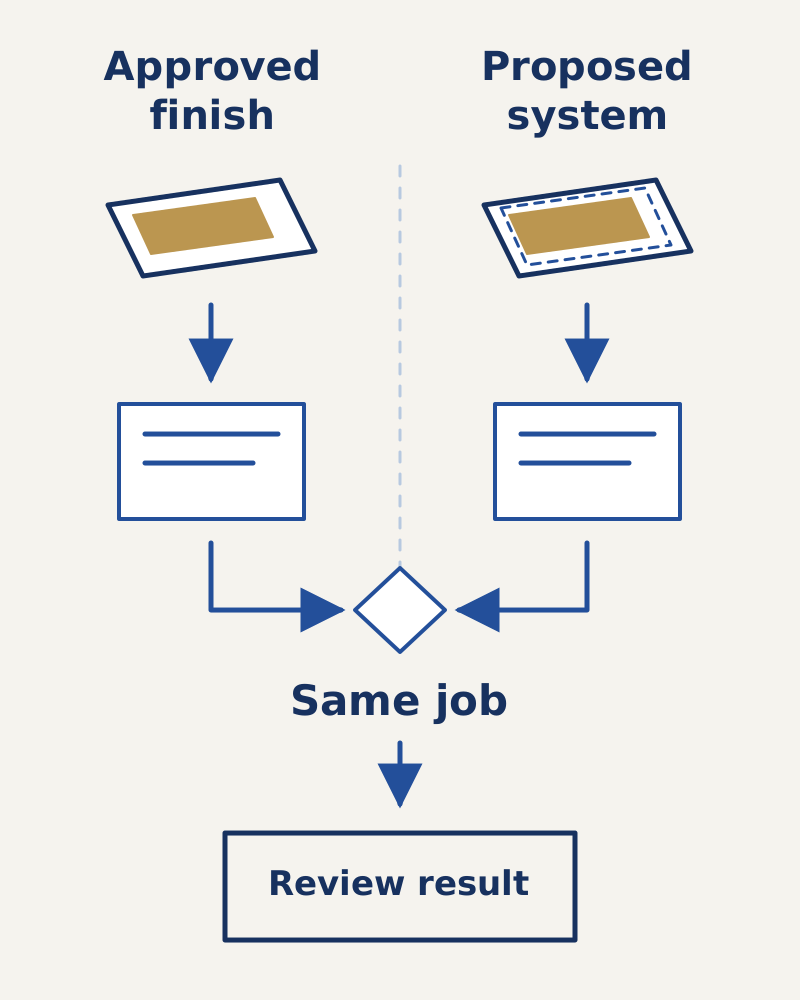
Use the current approved job as the comparison reference. Set the requested appearance and functional checks before asking whether the alternative is acceptable.
Keep the job’s substrate, artwork, finishing sequence and customer use visible in the trial plan. Ask the responsible reviewers what evidence they need for appearance, abrasion or handling. These are proposed review topics, not numerical performance claims or prescribed universal tests.
If the objective includes process simplification, describe which present steps the proposal would remove and which it would add. Include setup, maintenance and quality-review work in that description. Use the total-cost guide to organize a consistent project boundary if equipment scope changes; there is no public cost-saving calculation in this article.
If a camera inspects an affected printed feature, ask for a check of that feature under the proposed finish. The machine-vision guide helps describe the inspection task. Record observed readability and appearance separately from the coating supplier’s general claims.
Takeaway: Compare the finished job and the full process scope, not a coating name against a foil name.
When is action required?
The reviewed material gives no customer deadline to switch products. Treat a proposed order, job change or document revision as the practical trigger for review.
Scroll horizontally if needed to see all columns →
| Date or milestone | What is known | Suggested action |
|---|---|---|
| September 14, 2026 | Stahl published the announcement | Log the portfolio and brand change |
| September 15–17, 2026 | Display dates named in the release | Treat as past announcement context |
| October 8, 2026 | Our source review cutoff | Request missing application documents |
| First affected order or job | Not established by the announcement | Agree a product-specific transition review |
Do not derive a compliance deadline from the coating release. If a customer needs a claim for a destination market, ask the responsible compliance reviewer to identify the applicable obligations and evidence for the exact package. This article supplies no legal interpretation or regulatory implementation date.
For a wider equipment project, supplier evaluation and the RFQ checklist help organize due diligence and responsibility. They do not replace material qualification.
Takeaway: Tie action to your affected product or job, with any regulatory question reviewed separately.
Which claims need separate verification?
Stahl’s descriptions of de-inking, paper recycling and regulatory design intent remain supplier statements. The product page describes indirect food-contact suitability as application- and product-specific assessment. Neither description approves a reader’s finished package. Stahl names REACH, GIO, PPWR and U.S. TSCA as requirements it engineers formulations to meet. Those statements describe supplier design intent; the reviewed texts supply no independent PPWR determination or third-party recycling/de-inking result for the reader’s package.
Scroll horizontally if needed to see all columns →
| Unresolved question | Who can clarify it | Evidence to request |
|---|---|---|
| Legacy formulation or code changed? | Stahl technical and ordering teams | Mapping and revision notice |
| Exact press/substrate combination supported? | Stahl application team | Product-specific recommendation |
| Paired topcoat and trial conditions? | Application team and press owner | Matched system documents |
| Recycling and de-inking evidence? | Stahl and project sustainability reviewer | Test method, sample construction and result |
| Indirect food-contact use? | Supplier and qualified compliance reviewer | Application-specific documentation |
| Named regulatory claims, including PPWR | Supplier and qualified destination-market reviewer | Formulation, intended package/use, destination and exact claim covered by supporting documents |
| Finished-job acceptance? | Converter and customer quality teams | Agreed criteria and trial record |
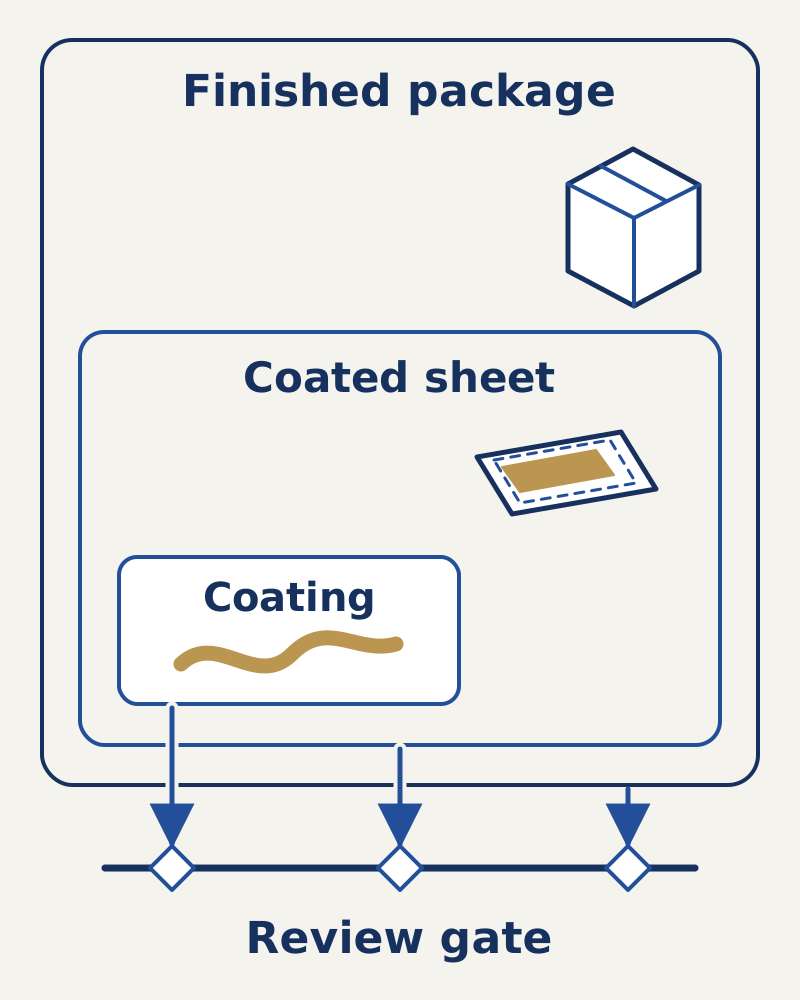
Ask whether evidence concerns the coating, the coated sheet or the finished package. Keep those scopes explicit when documenting a claim. A formulation-level statement cannot supply all the evidence for a converted package with additional materials and processing steps.
Use FAT versus SAT if equipment demonstrations enter the scope. Use the preventive-maintenance checklist to assign review of the instructions for any affected equipment. Do not convert a material review into undocumented cleaning or operating instructions.
Takeaway: Require evidence whose object and conditions match the claim the project intends to make.
When this does not apply
This article does not establish a food-contact approval, independent recyclability result, regulatory certification or universal substitute for foil. It does not claim that a coating portfolio is approved for plastic-film flexible packaging.
Our recommendation is to request a matched coating/topcoat proposal and a controlled comparison for the actual paper or board job. If the job’s substrate or process is outside the reviewed material, obtain a specific application response before proposing a substitution.
Takeaway: Keep approval at the level of the identified material, process and end use.
Frequently asked questions
What metallic foil prints are available?
This article concerns a coating route that Stahl presents as an alternative to foil application. Ask for identified coated samples and the proposed system; do not use it as a catalogue of foil-printing products.
What printer is used for foiling?
The source material does not specify equipment for a reader’s foil job. For Senoprint, request an application-specific response for the existing press, substrate and coating/topcoat system.
How much does foil printing cost?
No comparable price or cost-saving data is supplied in the reviewed announcement. Keep the current finishing sequence and proposed process scope consistent when requesting quotations.
For package-format context, the packaging guides identify the equipment decisions that are separate from this material review.
Method and sources
Primary sources: Stahl’s September 14, 2026 global portfolio announcement and metallic-coatings product page, reviewed October 8. These are supplier statements, not independent performance verification. The process-list difference is retained as a clarification question. Station maps, trial suggestions and document requests are our editorial recommendations.
Related reading: machine vision helps define inspection tasks; material compatibility organizes the information needed for substrate review.
Update history
- : First published.
Next steps
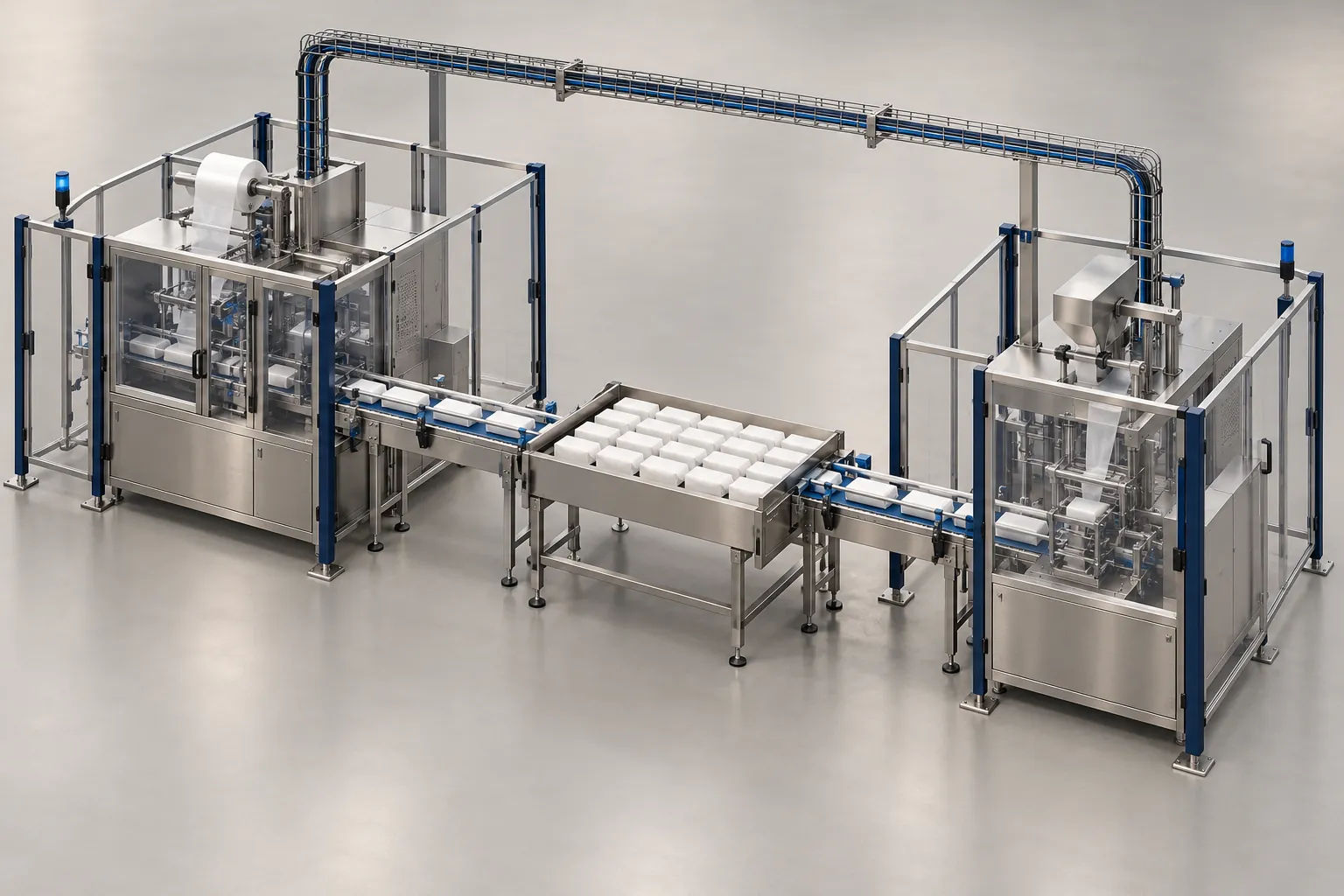
Packaging Line Integration Checklist: Interfaces to Confirm Before Ordering
Checklist of mechanical, electrical, signal, communication, safety and utility interfaces to settle before ordering a machine for a packaging line.
Read guide
FAT vs. SAT for Packaging Equipment: Defining Acceptance Criteria
Compare factory and site acceptance tests for packaging machines, and learn how to write acceptance criteria that both buyer and supplier can verify.
Read guide
Packaging Machine RFQ Checklist: Information Suppliers Need
A reusable blank RFQ template for packaging machines in nine sections, with the reason suppliers need each item and a list of commonly missed details.
Read guide