
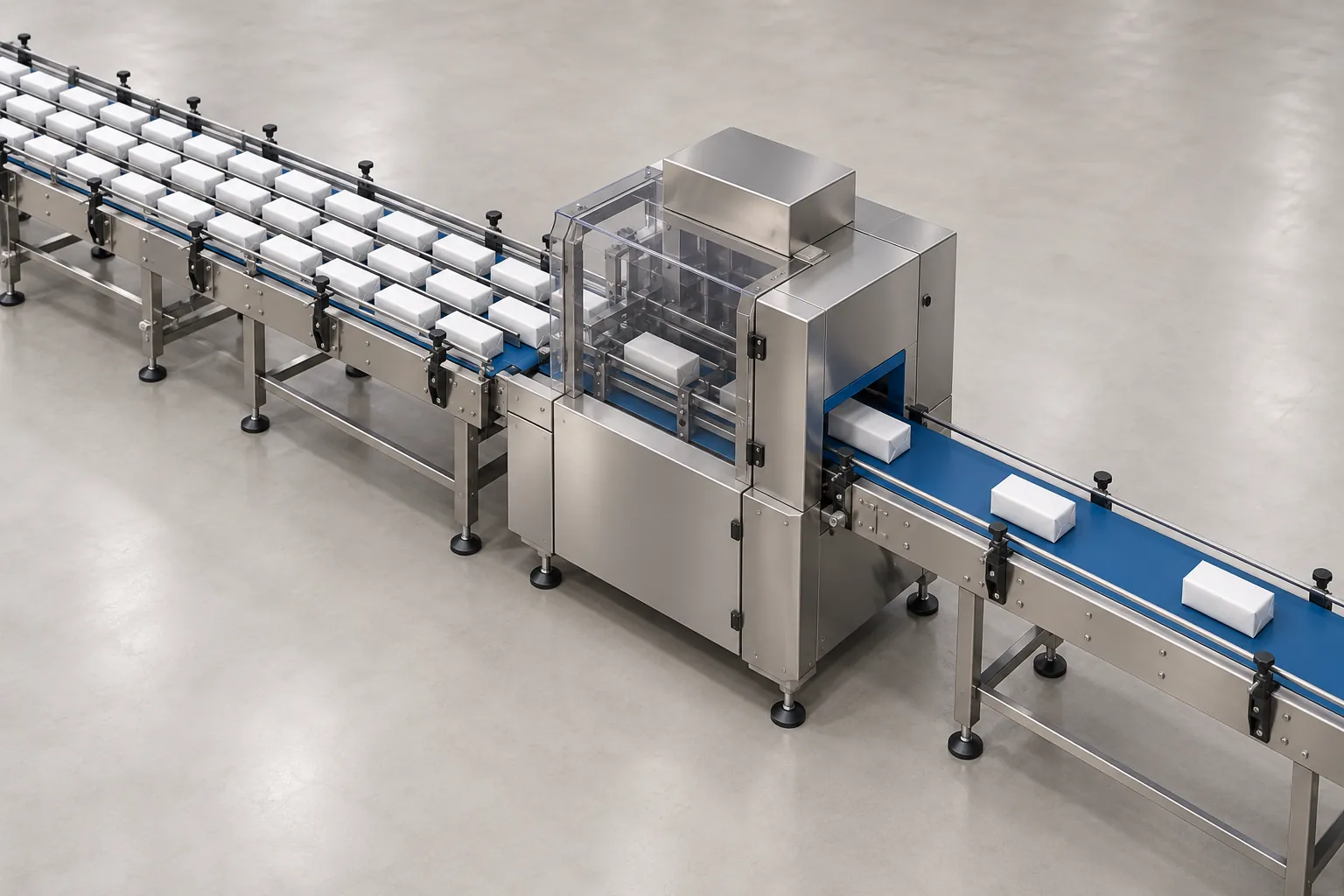
Finding Packaging Line Bottlenecks with Basic Production Data
Identify candidate packaging-line constraints using four analysis groups, measured good-pack counts and running rates, with a worked example and copyable shift log.
Read guideGuides for running packaging lines: finding bottlenecks from machine state data, building a maintenance checklist and controlling changeovers.
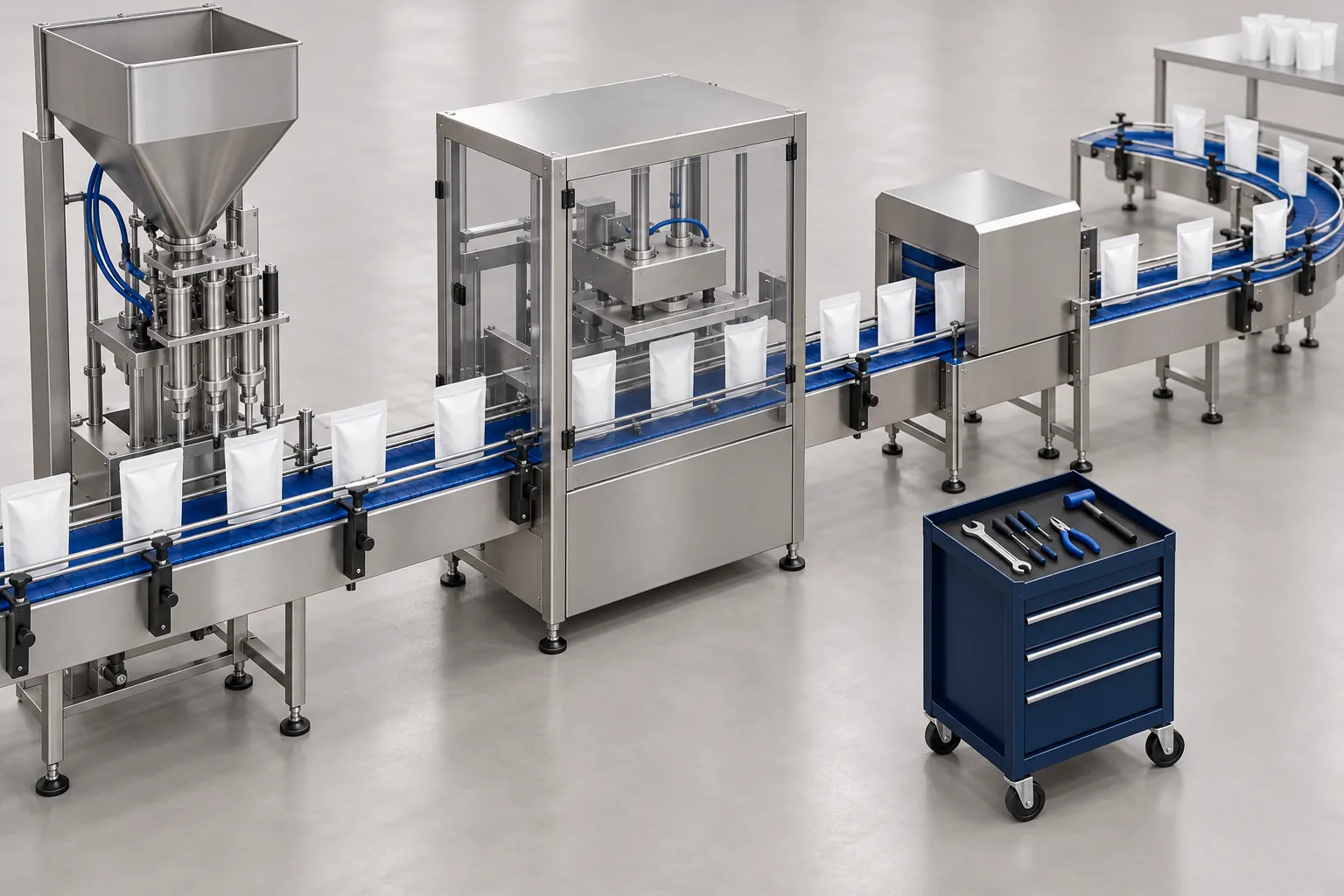
A packaging line’s output depends on how it is run, maintained and changed over between products once it is installed. Plant and production managers, maintenance and quality staff, and engineers use these guides to see where time is lost, keep machines reliable, and switch formats without mix-ups or long stops.
The guides offer methods and templates to adapt to your site. They give no machine-specific settings, intervals or safety procedures. Those come from the machine manual, your site risk assessment and qualified people.
It does not cover machine selection (see the packaging section), control and interface design (see automation), seal and material investigations (see materials and inspection), or machine-specific service procedures and safety instructions.
Swipe sideways to see the other columns. The first column stays visible.
| Task or process step | Output to retain | Guide |
|---|---|---|
| Line output is below target | State record with a candidate constraint and counts | Finding packaging line bottlenecks with basic production data |
| Starting or revising a maintenance plan | Maintenance task table with method, trigger and isolation procedure | Building a site-specific preventive maintenance checklist |
| Switching product or pack size | Changeover record with settings and first-off result | Packaging format changeovers: what to record and verify |
| Defining signals and data for line reporting | Which machine states and counters each machine should publish | Packaging line integration checklist |
| Investigating repeat seal faults | Whether the cause sits in material, machine, product or method | Seal defect investigation |
| Weighing maintenance and downtime in a purchase | How operating and maintenance cost enter the decision | Packaging machine total cost of ownership |
Record running, starved, blocked and down time per machine over several shifts. The pattern across the line, not the nameplate speed, points to the constraint. The bottleneck guide works through an assumed example.
From the OEM manual, your own failure history, the site risk assessment and the list of critical spares, not from a generic template. The preventive maintenance guide gives the task-list columns and the review loop.
Fix the sequence, move preparation outside the stop where it is safe to do so, and record settings, recipe version, material lots and the first-off result. The changeover guide gives the sequence and a record template.
State and counter data have to be specified before purchase. The line integration checklist lists the signals and data points to ask for.
The roles of cartoners and case packers differ, and each has its own stop patterns. The cartoner versus case packer guide explains what each does.
Maintenance effort, changeover time and downtime are ongoing costs. The total cost guide shows how they sit alongside the purchase price.
Plant operations run as a loop rather than a sequence. You measure where time is lost, maintain the machines that cause it, change over formats in a controlled way, and review the records to see whether the changes helped. The guide map shows the four steps and the guide for each.
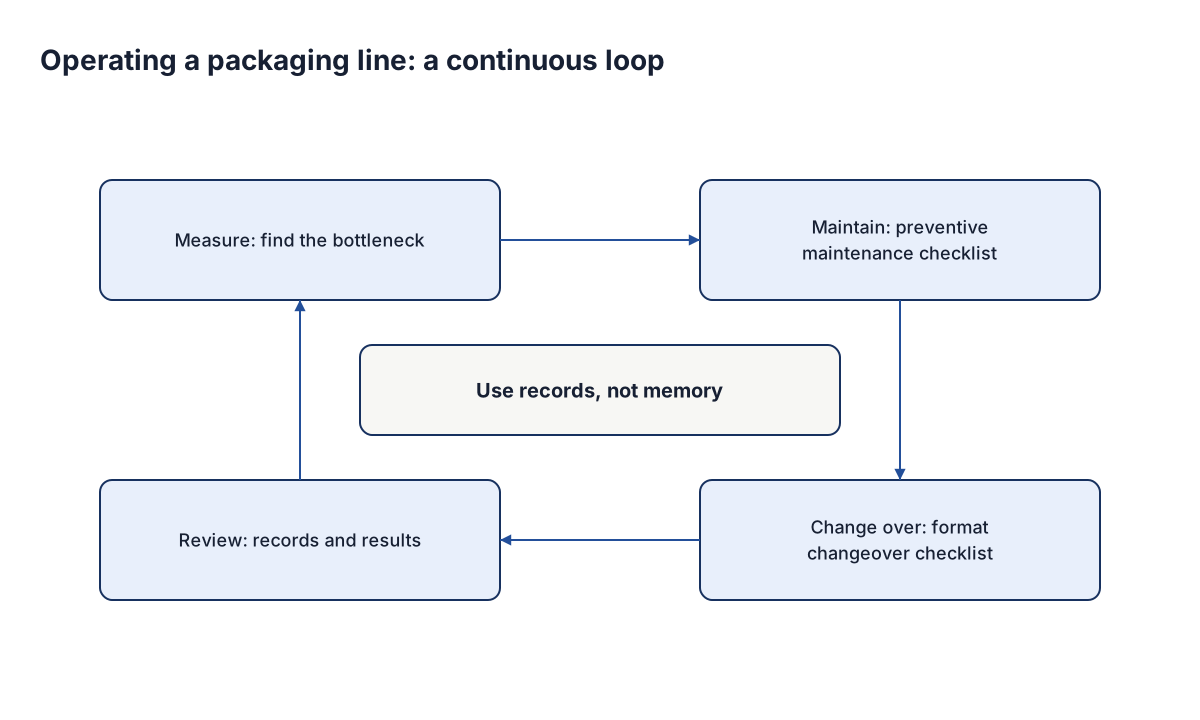
If you are starting from nothing, begin with measurement. Without per-machine state times, maintenance and changeover effort tends to go to the most visible machine, not the one that limits the line. If you already collect data, start with the guide that matches your largest recurring loss. Use records, not memory, at every step. A stop that nobody wrote down cannot be reviewed, and a changeover setting that lives in one operator’s head leaves with that person.
Follow the loop: measure with the bottleneck guide → build the maintenance task list → record the format changeover → review shifts and counts.
Swipe sideways to see the other columns. The first column stays visible.
| Term | Meaning in these guides |
|---|---|
| Bottleneck | The machine or step that limits the output of the whole line |
| Running, starved, blocked, down | Machine states: producing, waiting for product, unable to pass product on, or stopped by a fault or stop |
| OEE | Overall equipment effectiveness, a measure that combines availability, performance and quality |
| Preventive maintenance | Planned tasks done to reduce the chance of failure, based on the manual, history and risk assessment |
| Critical spare | A part whose failure would stop the machine and whose lead time or availability makes holding it worthwhile |
| Changeover | The work between the last good pack of one product or format and the first good pack of the next |
| SMED | A method of moving changeover work from the stopped machine to the time while it is still running |
| External and internal work | Work that can be done while the machine runs, and work that needs it stopped |
| First-off check | The inspection of the first packs after a change, before normal production is released |
| Line clearance | Removing the previous product, material and printed items so they cannot mix into the next run |
Operating results often trace back to earlier choices. The packaging section explains why different machine types stop in different ways, and the automation section covers the signals that make state data possible. Repeated seal problems belong in the materials and inspection section, where the film compatibility guide helps separate a material cause from a machine cause. When downtime, maintenance and changeover must be weighed in a purchase, the buying guides bring them into the cost comparison.
Identify candidate packaging-line constraints using four analysis groups, measured good-pack counts and running rates, with a worked example and copyable shift log.
Read guide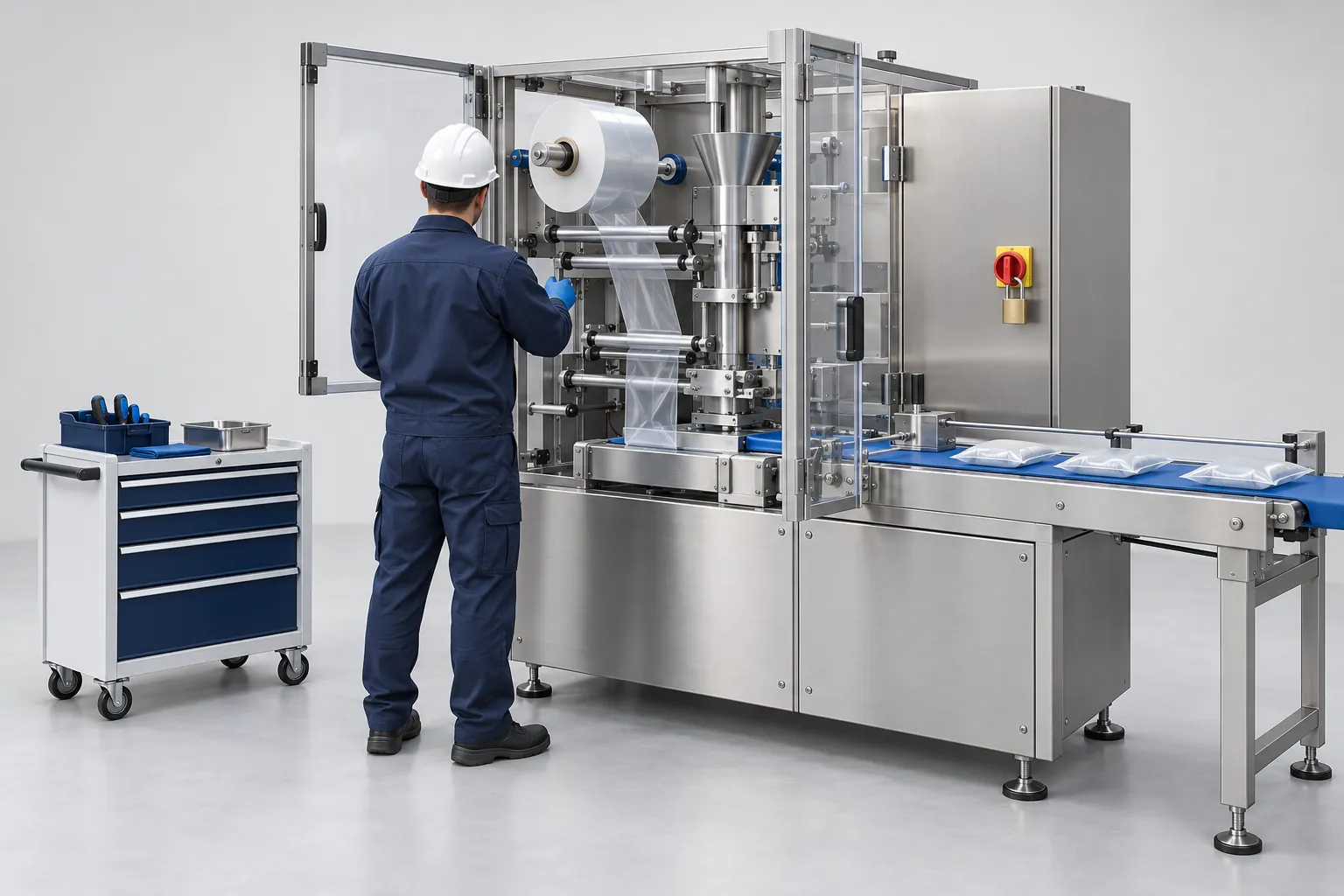
Build a preventive maintenance checklist for packaging machines from OEM manuals, failure history, risk assessment and critical spares, with a task list.
Read guide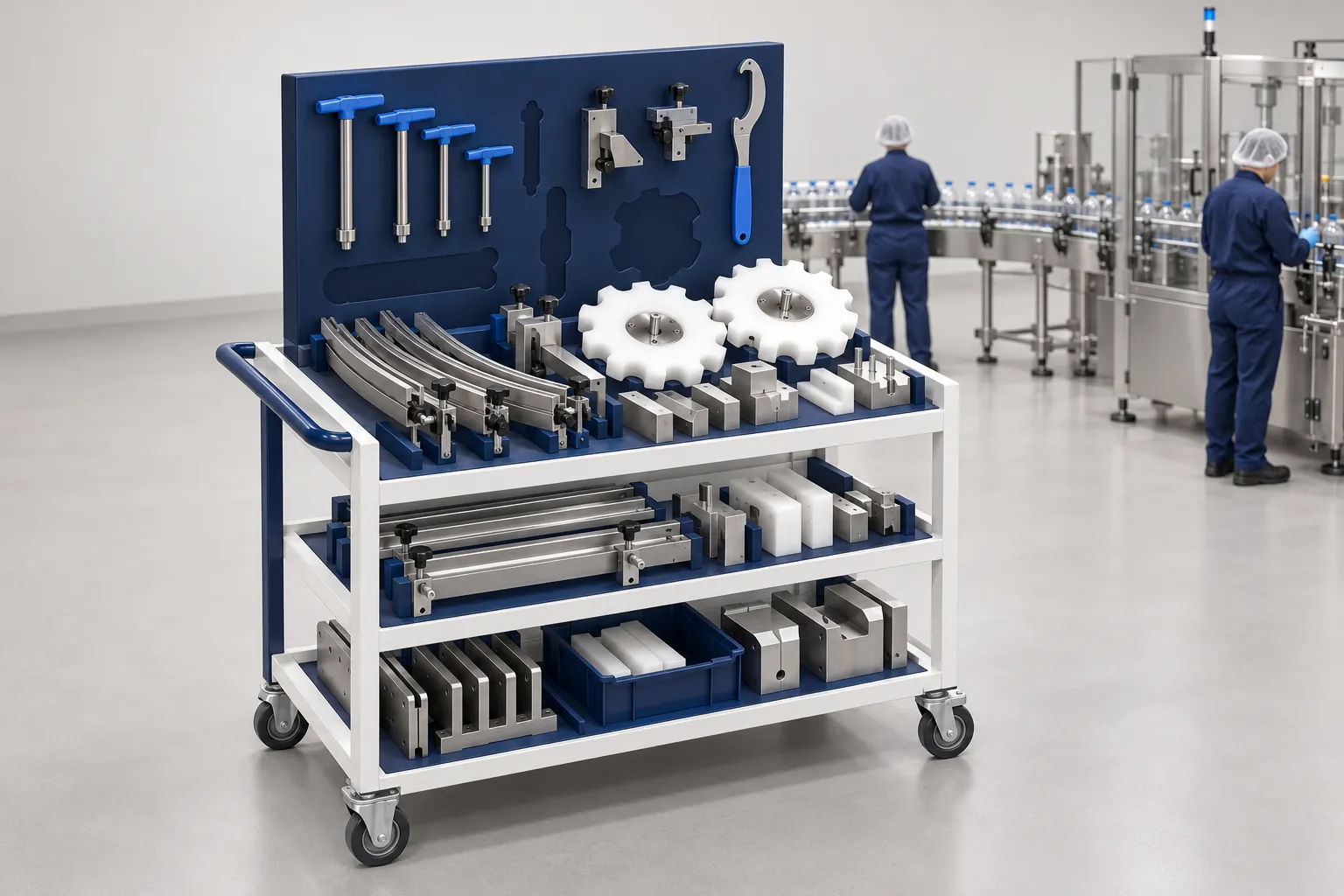
A format changeover checklist: seven steps from preparation to run monitoring, a record template, and the SMED idea of external versus internal work.
Read guide