
Packaging Machine Preventive Maintenance: Building a Site-Specific Checklist
Build a preventive maintenance checklist for packaging machines from OEM manuals, failure history, risk assessment and critical spares, with a task list.
A usable preventive maintenance checklist is built per machine from four inputs: the OEM manual, your failure history, the site risk assessment and a list of critical spares. Intervals and energy isolation steps come from the manual and the risk assessment, not from a generic template.
Applies to: Covers building and reviewing a preventive maintenance task list for packaging machines and line equipment in a plant. Does not give machine-specific intervals, torque values, lubricants or isolation procedures, which belong to the OEM manual and the site's own procedures.
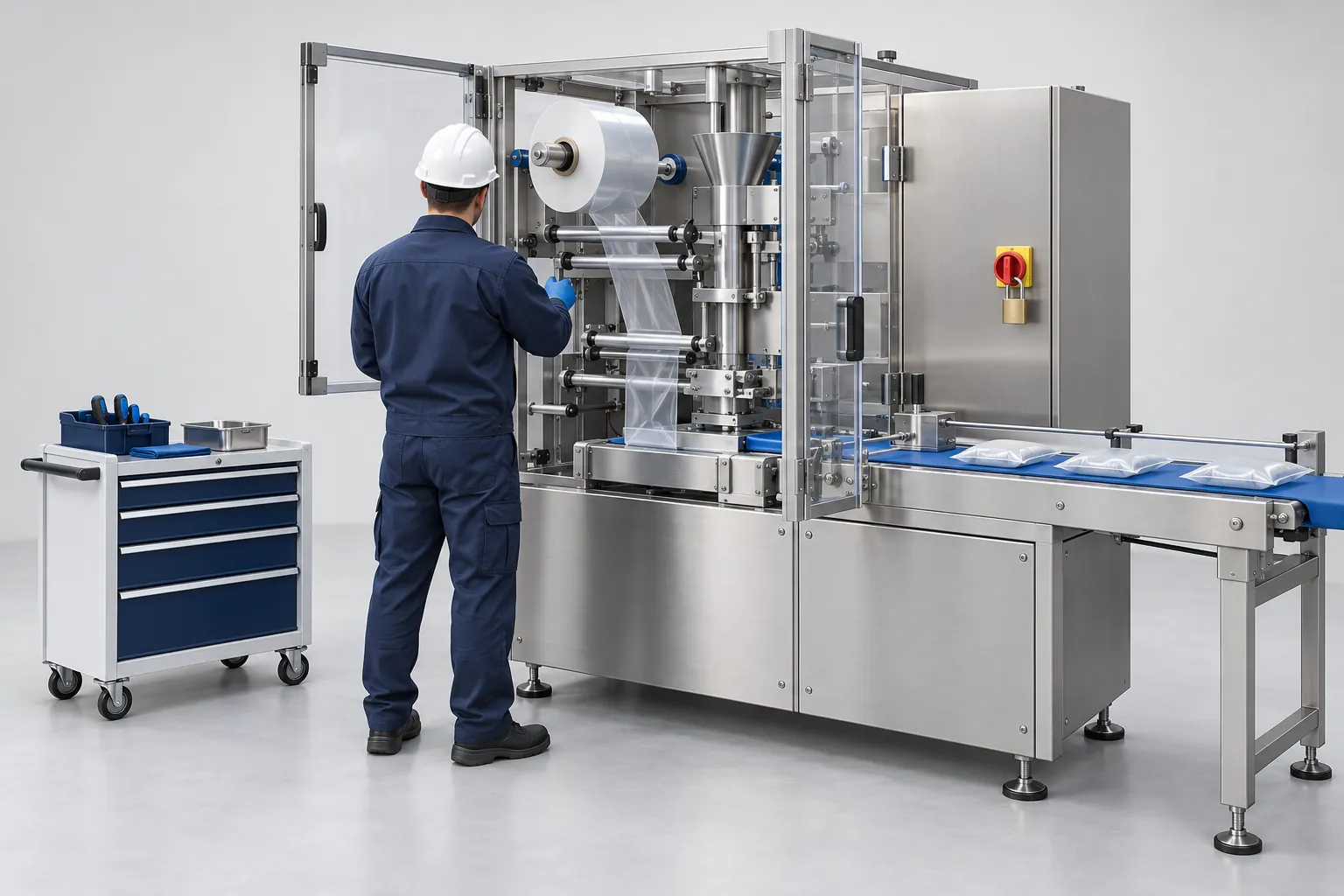
Generic maintenance checklists downloaded from the internet tend to fail in the same way. They list tasks every machine “should” have, attach a frequency no one can trace to a source, and get filled in by habit until a failure shows they missed something that mattered. A checklist works when each line traces to a reason and the list is reviewed against what actually breaks.
Start with four inputs: the matching OEM manual, machine failure history, site risk assessment and critical-spares list. Each task needs eight fields: component, task, method, interval basis, skill, energy isolation/procedure, acceptance criterion and record. Go to the blank task record or component examples.
How a site-specific checklist is built
Preventive maintenance means planned work done to reduce the likelihood of failure or degradation, as distinguished from corrective work done after a fault. Maintenance terminology references such as EN 13306 define these terms, which helps when a plant, a supplier and a service contractor need to use the same words.
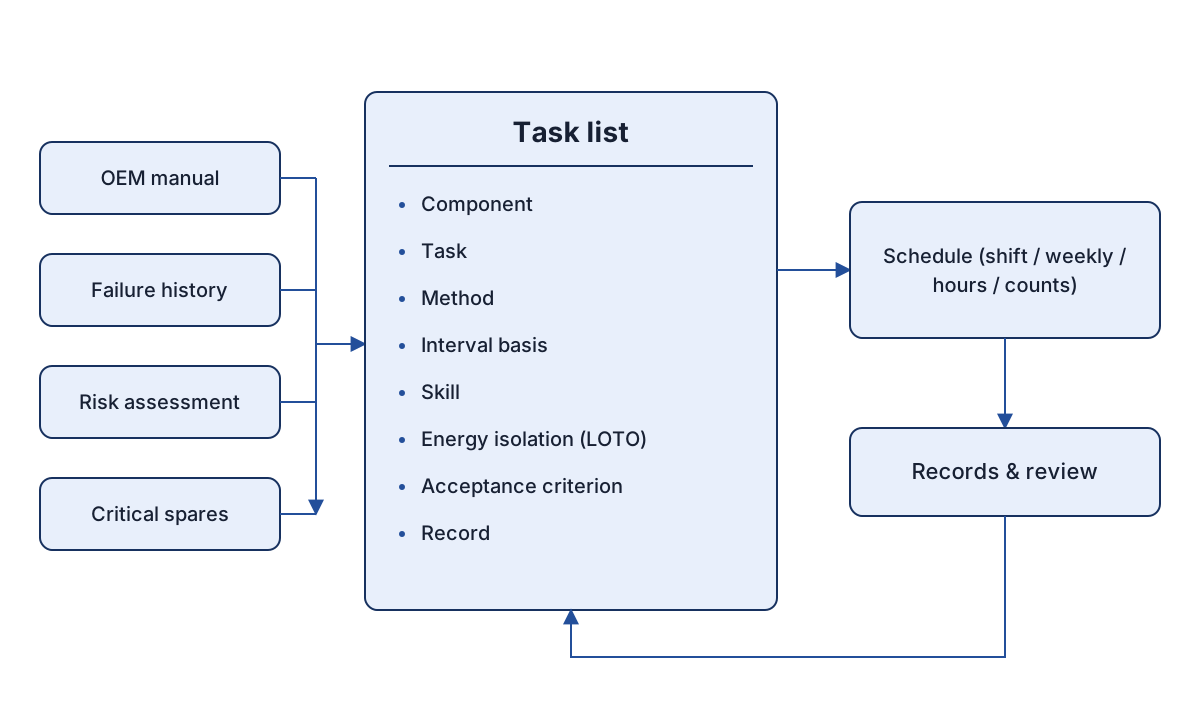
The checklist for each machine draws on four inputs.
- The OEM manual. The supplier’s maintenance section is the starting point for tasks, methods and intervals, because the supplier knows the design.
- Failure history. The breakdown, short-stop and quality records for that machine show what has actually gone wrong on your product and in your environment.
- The risk assessment. The site’s assessment of maintenance hazards covers how energy is isolated and who may perform each task.
- Critical spares. These are the parts whose absence would stop the line for a long time, and they should drive both inspection tasks and stock decisions.
The inputs produce one task list per machine. The list becomes a schedule, and the records from carrying out the schedule feed back into the list through periodic review.
Start from the OEM manual
Collect the current maintenance sections for every machine and for bought-in components such as drives, pumps and sensors. Confirm the manual revision matches the machine’s build, since older manuals may predate a modification. If the manual is missing, mark the task basis unresolved and request the matching revision from the OEM. Have the site engineering and safety team review any interim plan; avoid applying intervals, lubricants or isolation steps from another model.
Add what your records show
Manuals cover the machine in general. Your records cover your conditions: abrasive or sticky product, dust, washdown, high changeover frequency. Failure history is where a task earns its place or loses it. A part that keeps failing between inspections means the task, the method or the basis for the interval needs to change.
Apply the risk assessment
Each task has hazards: moving parts, stored energy, hot surfaces, pressurized air, electrical equipment. The site risk assessment decides how each is controlled and who may do the task, and qualified people should carry it out. ISO 12100 gives a general method for machine risk assessment and risk reduction.
The task-list template
The template below has one row per task. The columns match the structure in Figure 1.
Swipe sideways to see the other columns. The first column stays visible.
| Column | What to write |
|---|---|
| Component | The part or assembly, using the same name as the manual and spare parts list |
| Task | The specific action: inspect, clean, lubricate, replace, test, calibrate |
| Method | How the task is done: visual, by feel, with a gauge, with a test piece, by procedure number |
| Interval basis | Where the interval comes from: OEM manual, site risk assessment, failure history, or operating counts |
| Skill | The competence needed: operator, maintenance technician, electrician, supplier service |
| Energy isolation (LOTO) | Whether the task needs energy isolation, which energy sources, and the procedure reference |
| Acceptance criterion | What counts as pass or fail, in a form two people would judge the same way |
| Record | What is written down and where: check mark, measured value, photo, work order |
Blank task record
Copy this record once per task. Blank fields are unresolved work, not authorization to perform it.
Swipe sideways to see the other columns. The first column stays visible.
| Field | Site entry |
|---|---|
| Component / machine ID | — |
| Task | — |
| Method / procedure reference | — |
| Interval basis / trigger / source revision | — |
| Skill / authorized role | — |
| Energy sources / isolation procedure reference | — |
| Acceptance criterion | — |
| Record location / result / person / date | — |
Example rows by component category
The rows below show the form for common component categories. They are not a complete list, and intervals depend on the machine, the product and the site.
Sealing jaws or heater bars
Swipe sideways to see the other columns. The first column stays visible.
| Field | Example to adapt |
|---|---|
| Task | Inspect seal faces for wear, residue and damage; check cover or release material condition |
| Method | Visual check; compare with a reference seal sample |
| Interval basis | Per OEM manual; adjust from seal-defect history |
| Skill | Maintenance technician |
| Energy isolation (LOTO) | To be specified in the approved site procedure; record all energy sources and the procedure reference |
| Acceptance criterion | Faces clean and undamaged; seal appearance matches the reference sample |
| Record | Checked or replaced, with date and operator |
Cutting knife or cross-seal knife
Swipe sideways to see the other columns. The first column stays visible.
| Field | Example to adapt |
|---|---|
| Task | Inspect edge condition; check mounting security |
| Method | Visual check; cut test on scrap material as set by procedure |
| Interval basis | Per OEM manual |
| Skill | Maintenance technician |
| Energy isolation (LOTO) | To be specified in the approved site procedure; record all energy sources and the procedure reference |
| Acceptance criterion | Clean cut; no burr or tearing as defined in the procedure |
| Record | Condition noted; replacement logged |
Drive belts and chains
Swipe sideways to see the other columns. The first column stays visible.
| Field | Example to adapt |
|---|---|
| Task | Check wear, tension and alignment; look for debris |
| Method | Visual; tension check by the method in the manual |
| Interval basis | Per OEM manual |
| Skill | Maintenance technician |
| Energy isolation (LOTO) | To be specified in the approved site procedure; record all energy sources and the procedure reference |
| Acceptance criterion | Within the manual’s stated limits |
| Record | Condition and any adjustment noted |
Gearboxes and lubrication points
Swipe sideways to see the other columns. The first column stays visible.
| Field | Example to adapt |
|---|---|
| Task | Check oil level or grease condition; look for leaks; lubricate with the specified product |
| Method | Visual; sight glass or grease points per manual |
| Interval basis | Per OEM manual |
| Skill | Operator or technician as trained |
| Energy isolation (LOTO) | To be specified in the approved site procedure; record all energy sources and the procedure reference |
| Acceptance criterion | Level and condition as stated in the manual; no new leaks |
| Record | Lubricant used and amount noted |
Pneumatic components
Swipe sideways to see the other columns. The first column stays visible.
| Field | Example to adapt |
|---|---|
| Task | Check for audible leaks; inspect hoses and fittings; check filter-regulator and drain condition |
| Method | Visual and audible check; gauge reading |
| Interval basis | Per OEM manual and site air-system practice |
| Skill | Operator or technician |
| Energy isolation (LOTO) | To be specified in the approved site procedure; record all energy sources and the procedure reference |
| Acceptance criterion | No audible leaks; filter bowl and drains in the condition the manual specifies |
| Record | Leaks logged with location |
Sensors and photo-eyes
Swipe sideways to see the other columns. The first column stays visible.
| Field | Example to adapt |
|---|---|
| Task | Check cleanliness, alignment and function |
| Method | Clean lens; test with a known target |
| Interval basis | Per OEM manual; shorter where failure history shows contamination |
| Skill | Operator or technician |
| Energy isolation (LOTO) | To be specified in the approved site procedure; record all energy sources and the procedure reference |
| Acceptance criterion | Detects the test target reliably |
| Record | Result noted |
Guards, interlocks and e-stops
Swipe sideways to see the other columns. The first column stays visible.
| Field | Example to adapt |
|---|---|
| Task | Verify the safety function operates as intended |
| Method | Functional test by the procedure approved by safety personnel |
| Interval basis | Per site risk assessment and OEM manual |
| Skill | Qualified personnel |
| Energy isolation (LOTO) | To be specified in the approved site procedure; record all energy sources and the procedure reference |
| Acceptance criterion | Safety function stops the machine as the validated design requires |
| Record | Test result and tester signed |
Filling or dosing parts
Swipe sideways to see the other columns. The first column stays visible.
| Field | Example to adapt |
|---|---|
| Task | Inspect product-contact parts for wear, build-up and seal condition |
| Method | Visual; compare with reference |
| Interval basis | Per OEM manual; shorter where product is abrasive or sticky |
| Skill | Operator or technician |
| Energy isolation (LOTO) | To be specified in the approved site procedure; record all energy sources and the procedure reference |
| Acceptance criterion | Parts intact and clean; seals show no cracking |
| Record | Parts replaced and logged |
Add rows from your own failure history, even where the manual treats the item as an operator cleaning task.
Write each acceptance criterion so that two people would judge it the same way. “Looks OK” does not qualify. A reference sample, a gauge reading or a photo can.
Energy isolation and safety
Sealing jaws and heater bars stay hot, knives cut, and pneumatic parts hold stored air after the machine stops. Work on any of them needs a defined energy isolation procedure and qualified personnel. In the US, OSHA 29 CFR 1910.147 covers the control of hazardous energy during servicing and maintenance, and other markets have their own requirements. ISO 12100 gives the general method for machine risk assessment. This guide contains no isolation procedures, and none of its tasks should be done with guards removed, interlocks bypassed or equipment energized. Follow the OEM manual, the site’s lockout procedures and the site risk assessment.
The “Energy isolation (LOTO)” column puts that decision where the technician sees it. Fill it from the risk assessment and the site’s procedures, not from memory. For each task it should say whether isolation is needed, which energy sources are involved (electrical, pneumatic, hydraulic, thermal, gravity or stored spring energy), and which procedure applies. Some tasks, such as lens cleaning from a safe position or a visual check from outside the guarded area, may not need isolation, but the risk assessment decides that, not convenience.
Safety function checks on guards, interlocks and emergency stops belong on the list. Safety personnel and the supplier’s instructions set the method and who performs them.
From task list to schedule
Once tasks are written, group them by what triggers them.
- Shift: daily operator checks such as cleanliness, leaks and abnormal noise.
- Calendar: weekly or monthly tasks tied to time passing, such as lubrication or inspection.
- Operating hours: tasks tied to running time, read from the machine’s hour meter.
- Counts: tasks tied to cycles, packs or knife strokes, where wear follows output.
The “Interval basis” column records which trigger applies and where it came from. For a lightly used machine, ask the OEM which tasks follow hours or cycles and which remain tied to calendar time. Low utilization is not a reason to postpone every task; keep the source and any calendar limit in the record. The values come from the OEM manual and the risk assessment. Do not copy intervals from a different machine or an unrelated source, even one that looks similar.
A schedule becomes preventive maintenance only when someone is assigned, time is allowed and the machine is released. Typical gaps are tasks that need a stop production never grants, tasks given to untrained operators, and tools or consumables that are not staged.
Coordinating with the production schedule and with format changeovers often helps more than adding tasks. Some changeover steps already involve cleaning and inspection that can double as maintenance checks.
Records and the review loop
Records are what let you improve the list. Each completed task should leave evidence that fits its type: a tick for a simple check, a measured value for a gauge reading, a work order for a replacement. Where the criterion is a measurement, record the value, not only pass or fail, so you can see drift.
Review the list on a set cycle and after any significant failure. Ask:
- Which failures happened since the last review? Check whether the component was covered and whether the method, interval basis or acceptance criterion missed the failure. Record the proposed change and its evidence before approving it.
- Which tasks found nothing over a long period? Check whether the interval basis is still right, starting with the manual and the risk assessment. Some tasks, such as safety function checks, matter even when they rarely find anything.
- Which tasks regularly find problems? A repeated finding can mean the interval needs review, or that the root cause sits elsewhere, such as material quality or a setting.
- Which spares were used, and are the critical ones still stocked?
Give each review change a responsible owner, due date and change basis (failure/work-order reference, manual revision or risk-assessment revision), plus approval and task-list revision. Tie failure analysis back to the checklist. When a seal fault repeats, the seal defect investigation guide helps separate maintenance causes from material, product and setting causes, so the checklist is not blamed or credited for faults it cannot affect.
Maintenance staff should not carry this alone, since production, quality and the supplier each hold part of the picture. Some plants use autonomous maintenance from total productive maintenance literature, where operators take on basic cleaning and inspection. Whether that suits your site depends on training and on what the risk assessment permits.
Connect to line performance
Maintenance effort pays off most at machines whose stops limit the line. The bottleneck analysis guide shows how to find the machine whose lost time matters most. Spare-part stock, task depth and inspection frequency can then be weighed against the cost of downtime at that machine instead of being spread evenly. KPI definitions such as OEE are covered in ISO 22400-2.
Servo and pneumatic axes call for different checks, as the guide on servo versus pneumatic actuation explains. The maintenance load is also part of the total cost of ownership and belongs in the purchase decision.
Information to request from suppliers
- The maintenance manual in the revision matching the machine, with the basis for each interval.
- A list of recommended spares, split into wear parts, critical spares and those suited to a longer-term holding.
- Lubricant and consumable specifications, including food-contact suitability where relevant.
- Procedures for energy isolation and any stored-energy points specific to the machine.
- Which tasks the supplier expects operators to do and which need supplier or trained technician service.
- Training offered for maintenance staff and the expected response for service and parts.
Checklist before you release a maintenance plan
- Current OEM manual collected for every machine and major bought-in component.
- Failure and short-stop history reviewed per machine.
- Site risk assessment applied to each task, and isolation requirements entered in the LOTO column.
- Critical spares identified and stock decisions made.
- Every task has a method, an interval basis and a measurable acceptance criterion.
- Skill level and training confirmed for each task.
- Schedule agreed with production and with changeover planning.
- Record format agreed, with a named owner for the review cycle.
- Review date set, and triggers for early review defined, such as a major failure.
Limits and on-site verification
This guide gives a structure, not a plan. It cannot say which tasks a given machine needs, how often, with which tools, or under which isolation steps. Those come from the OEM manual, the risk assessment, and the people who know your site.
Verify the list at the machine. Walk through each task with the person who will do it, with the machine in a safe state, and confirm that the access, the method and the criterion work in practice. Treat the first version as provisional and expect to correct it over the first few review cycles. Qualified personnel should review the safety-related content, including isolation steps and safety function tests, under your own procedures.
References
- EN 13306:2017 — Maintenance — Maintenance terminology — CEN
- 29 CFR 1910.147 — The control of hazardous energy (lockout/tagout) — U.S. Department of Labor, OSHA (eCFR)
- ISO 12100:2010 — Safety of machinery — General principles for design — Risk assessment and risk reduction — ISO
- Seiichi Nakajima, Introduction to TPM: Total Productive Maintenance (Productivity Press, 1988) — Productivity Press
- ISO 22400-2:2014 — Automation systems and integration — Key performance indicators (KPIs) for manufacturing operations management — Part 2: Definitions and descriptions — ISO
Update history
- : First published.
- : Added task-record shortcuts and a blank record; converted examples to vertical task cards and specified trigger and review-change records.
Next steps
Packaging Format Changeovers: What to Record and Verify
A format changeover checklist: seven steps from preparation to run monitoring, a record template, and the SMED idea of external versus internal work.
Read guide
Finding Packaging Line Bottlenecks with Basic Production Data
Identify candidate packaging-line constraints using four analysis groups, measured good-pack counts and running rates, with a worked example and copyable shift log.
Read guide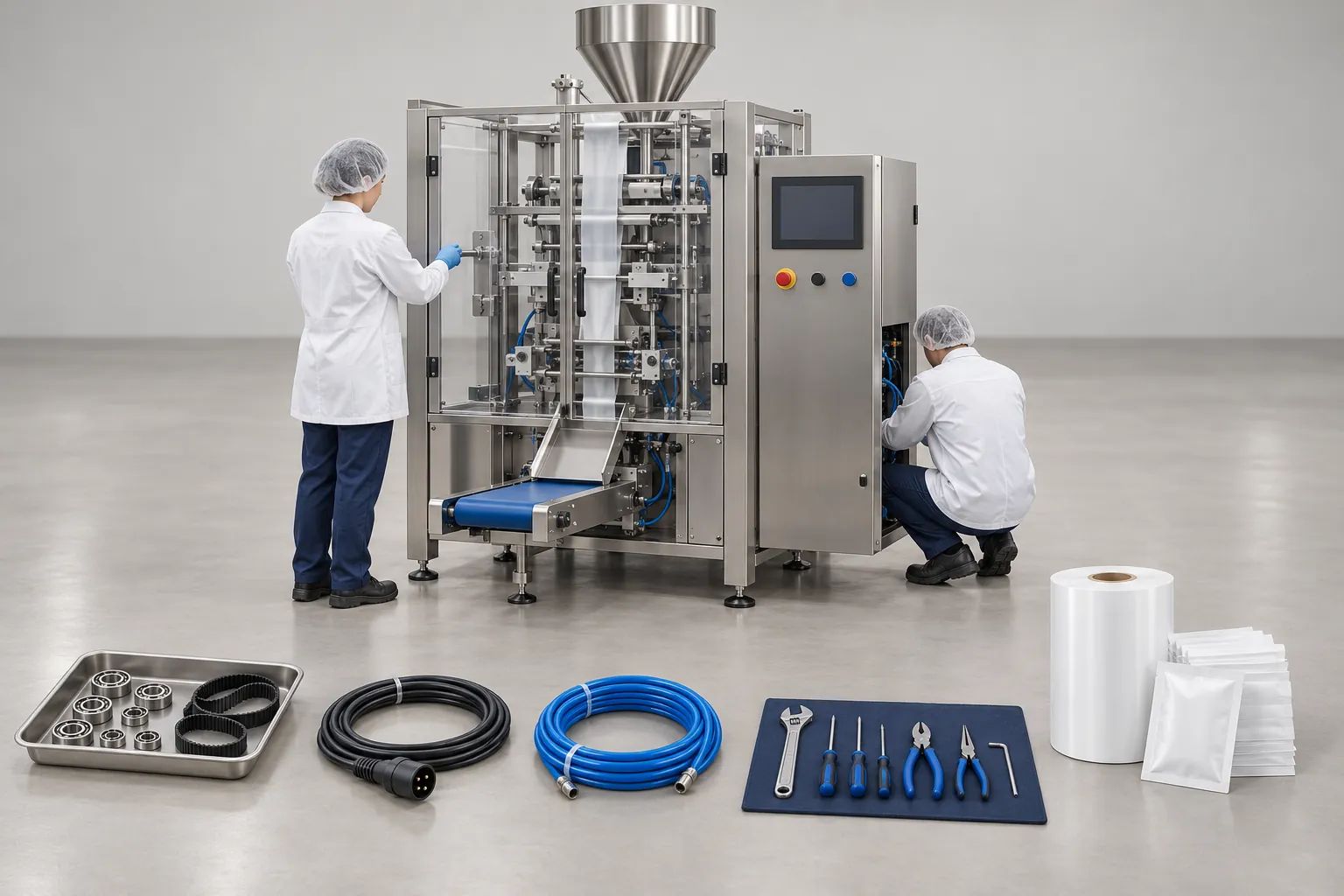
Packaging Machine Total Cost of Ownership: A Comparison Framework
Compare packaging machine offers by total cost of ownership: cost components, a fill-in table, an example with invented numbers and a sensitivity check.
Read guide