
Packaging Machine RFQ Checklist: Information Suppliers Need
A reusable blank RFQ template for packaging machines in nine sections, with the reason suppliers need each item and a list of commonly missed details.
Different assumptions make quotations difficult to compare. A useful packaging machine RFQ describes the product, the package and materials, the required output, the site, the line interfaces, the controls and data needs, the compliance documents, the acceptance method and the commercial terms. Gaps in any of these usually turn into assumptions in the quotation.
Applies to: Covers requests for quotation for new standalone packaging machines and small cells, such as fillers, form-fill-seal machines, wrappers and cartoners. It does not cover full turnkey line projects, used equipment or legal contract drafting.

Different assumptions in an RFQ can produce incomparable quotations and later change orders. Give every supplier the same product, pack, output, site, interface, control, document, acceptance and commercial scope, with unknowns marked explicitly. This guide provides a versioned form and supporting checklists; start with machine types if the family is still undecided.
Swipe sideways to see the other columns. The first column stays visible.
| Input section | Why it is needed | If still unknown |
|---|---|---|
| Product | Handling and cleaning scope | Describe variation; request a sample evaluation |
| Package/material | Tooling and sealing basis | State candidate formats; request material assumptions |
| Output/shifts | Capacity and retained operator work | Mark target range and counting period to be agreed |
| Site/utilities | Installation and supply fit | Mark pending survey or utility confirmation |
| Interfaces | Transfer and line behavior | List neighbors and open interface owners |
| Controls/data | Site support and recovery | Request proposed platform and backup scope |
| Safety/documents | Market and handover requirements | Name destination; request qualified review |
| Acceptance | Evidence of agreed functions | Request a draft plan; limits remain to be agreed |
| Commercial terms | Delivery and support scope | Request separate inclusions and exclusions |
How to use this template
Work through the sections in order, but do not wait until every cell is filled. Mark unknown items as “unknown, supplier to propose” so that the supplier states its assumption in writing. An open question that is visible is easier to resolve than one that is hidden inside a price.
Send the same revision and attachments to every supplier. Ask for “complies”, “deviates” or “assumption” against each requirement ID, with the proposed alternative and its scope, cost or timing effect stated separately. If a supplier uses its own format, request a cross-reference to these IDs before comparing replies.
For unknown material, identify candidate structures and the data/sample evaluation still needed; do not accept an assumption as demonstrated compatibility. For unknown capacity, distinguish a provisional planning target from an accepted output requirement and ask for the proposed product, pack and counting conditions. Keep these items open until the evaluation and acceptance method are agreed.
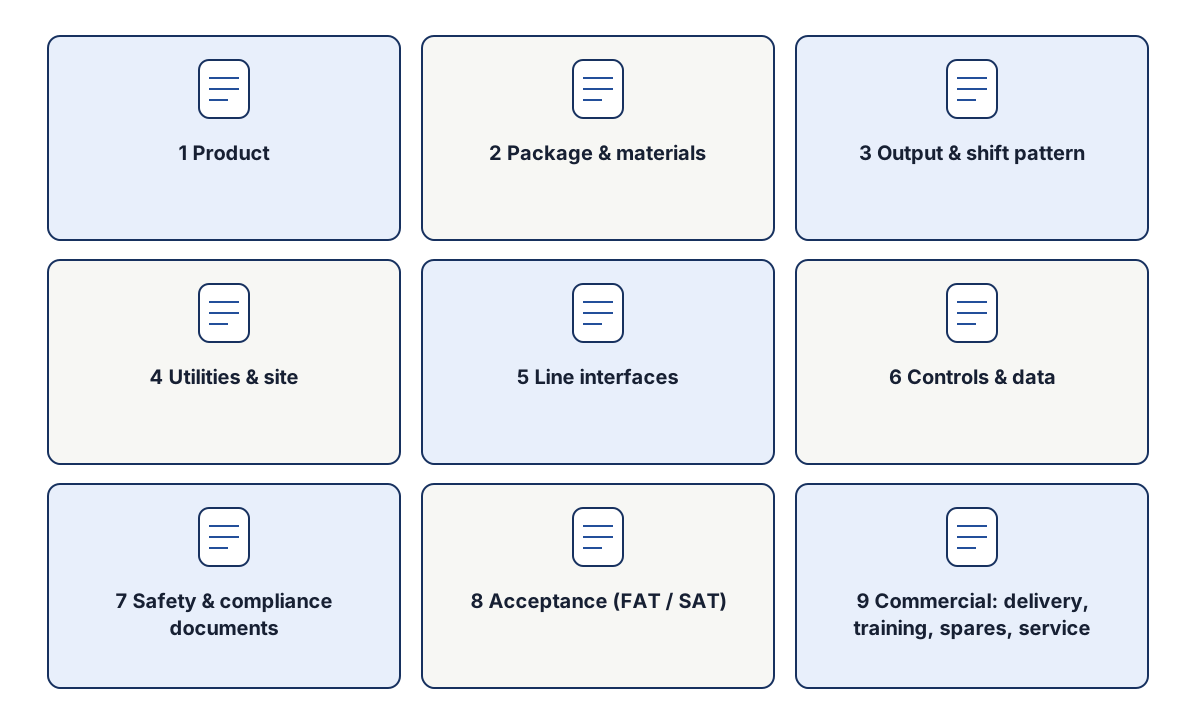
Takeaway: Keep provisional inputs and supplier assumptions visible until they are confirmed.
Versioned RFQ form to copy
Copy this form into an editable document or spreadsheet and print the same revision for review. Blank cells are for project inputs, not recommended values. Use one currency for commercial comparisons; specify units beside each value.
Project ID: ______ · RFQ revision/date: ______ · Prepared by: ______ · Supplier reply revision: ______
Swipe sideways to see the other columns. The first column stays visible.
| ID / section and input fields | Value / unit / unknown status | Attachment ID / revision | Supplier compliance / deviation / assumption | Evidence source / confirmation owner |
|---|---|---|---|---|
| 1 Product: density, particle size, temperature, cleaning, allergens | ||||
| 2 Package: dimensions, fill quantity, film structure/thickness, reel/core, seal type | ||||
| 3 Output: net good packs/time period, shifts, changeovers, duration, future target | ||||
| 4 Site: voltage/phases/frequency, air pressure/flow/quality, space, ambient conditions, delivery route | ||||
| 5 Interfaces: infeed/discharge height/direction, signals, buffer, line speed master | ||||
| 6 Controls: platform, recipe storage, protocol, data map, remote access and backups | ||||
| 7 Documents: market, references, handover records, contact/hygiene evidence | ||||
| 8 Acceptance: FAT/SAT, buyer materials, criterion reference, payment milestone | ||||
| 9 Commercial: delivery date/point, training, spares, warranty and exclusions |
Use sub-IDs for individual requirements and keep their evidence sources, units and supplier reply with them. This is an editorial procurement form, not a legal or engineering specification.
The nine sections
1. Product
The product decides the dosing or handling principle, the contact materials, the cleaning approach and the feeding method. A free-flowing granule, a sticky paste and a fragile baked item need different machines even when the finished pack looks the same. For liquids and pastes, viscosity, particulates and shear sensitivity decide between filling principles, as the comparison of piston and pump fillers explains.
- Product name and a description of its form (powder, granule, liquid, paste, solid unit, mixed)
- Samples or photographs supplied, including the worst case you expect to run
- Known handling problems (sticky, dusty, abrasive, fragile, static, foaming, clumping)
- Allergen, hygiene or cleaning requirements that affect construction
- Product temperature at the machine and any temperature-sensitive behavior
Section output: Product description plus labeled samples and handling/cleaning notes.
2. Package and materials
Package format and packaging material set the forming tools, the sealing system and the film path, and a machine quoted for one film structure may not run another. Ask suppliers to name the material properties they depend on. The guide to film and machine compatibility explains which ones matter.
- Package type and style (pillow bag, stand-up pouch, stick pack, tray, carton, bottle)
- Drawing of the finished pack with all critical dimensions
- Film or container structure and supplier, with the data sheet attached
- Reel or container dimensions, including core size and outer diameter for roll stock
- Print registration, eye-mark or coding requirements
- Features such as zipper, tear notch, spout, hang hole or gas flushing
- All formats to be run now, and those planned later
Section output: Pack drawings and material data sheets, each with an attachment revision.
3. Output and shift pattern
Machine size, number of lanes and level of automation follow from the required output and from how that output is measured. A rated speed on a data sheet is not the same as the output you get after stops, changeovers and cleaning.
- Required output, stated as net good packs per hour over a defined period
- Whether the figure is peak, average or planned, and how it is measured
- Shift pattern, days per week and expected utilization
- Changeover frequency and the time you can accept between formats
Section output: An output basis and shift/changeover schedule with units.
4. Utilities and site
Motors, heaters, compressors and filtration have to be sized for your supply, not the supplier’s workshop. Wrong voltage or poor air quality often delays installation day.
- Electrical supply: voltage, phases, frequency and available capacity
- Compressed air: available pressure, flow and quality class
- Water, steam, vacuum, nitrogen or other utilities if used
- Floor plan, ceiling height, door and lift sizes along the delivery route
- Floor load capacity and flatness
- Ambient temperature, humidity, dust and washdown conditions
- Hazardous area classification, if any
Section output: A site layout and utility confirmation, with pending measurements visible.
5. Line interfaces
A machine that works alone can still fail in the line. Heights, transfer direction, signals and buffer capacity need to be agreed before design. Use the packaging line integration checklist to complete this section in detail.
- Upstream equipment and how product arrives (orientation, spacing, continuous or batch)
- Downstream equipment and how packs leave (orientation, height, spacing)
- Conveyor heights, directions and transfer points
- Buffer or accumulation between machines
- Handshake signals expected (ready, running, fault, full, empty)
- Which machine controls line speed
- Layout drawing showing walkways, guarding and service access
Section output: An interface drawing and responsibility/signal list.
6. Controls and data
Control hardware, software and data connections are expensive to change once the machine is built, and your maintenance team has to be able to support what is delivered.
- Preferred or mandated PLC and HMI platforms, if any
- Spare parts and software support expectations for your site
- Recipe storage and format management requirements
- Operator access levels and audit trail requirements
- Data to collect or export (counts, rejects, alarms, states)
- Communication protocol and network rules, including cybersecurity policy
- Remote access policy for supplier support
Section output: A controls/data requirement sheet including recipe storage and recovery.
7. Safety and compliance documents
The supplier needs to know where the machine will be used and which rules apply, and handover documents are easier to obtain when the order names them. Safety design needs a risk assessment and review by qualified people. The RFQ only states what you expect to receive. Relevant references include the general method for risk assessment in ISO 12100, electrical equipment of machines in IEC 60204-1, and safety requirements for packaging machines such as EN 415-10 or ANSI/PMMI B155.1, depending on the market.
- Country and market of installation, so the supplier can identify applicable rules
- Safety standards or company requirements the machine must meet
- Declaration or certificate documents required at handover, depending on the market
- Risk assessment documentation expected from the supplier
- Electrical schematics, pneumatic diagrams and panel documentation
- Food contact, hygienic design or material certificates if relevant to the product
- Lockout and energy isolation points identified on the machine
- Manuals, spare parts lists and maintenance instructions in your language
Section output: A destination-specific document register for qualified review.
8. Acceptance (FAT / SAT)
Acceptance tests are priced and scheduled work. If the RFQ does not state them, they get negotiated after the order, when your position is weaker. Terminology for factory and site acceptance is covered by IEC 62381; the full method for writing criteria is in the guide to FAT and SAT.
- Whether a factory acceptance test (FAT) is required, and where it takes place
- Whether a site acceptance test (SAT) is required
- Samples and materials you will supply, and the timing of supply
- Test objects, duration and sample quantities to be agreed in writing before the test
- How results are measured and recorded
- Pass or fail rule and who signs off
- What happens if a test fails, including retest and cost responsibility
- Payment milestones linked to acceptance
Section output: A draft acceptance plan linked to numbered requirements.
9. Commercial: delivery, training, spares, service
These terms set the real cost and the support you get over the machine’s life. Ask for each as a separate line so the quotes can be compared. Lifetime cost is covered in the total cost of ownership framework.
- Required delivery date and any site shutdown window
- Incoterms or delivery point, and who handles transport and unloading
- Installation and commissioning scope: who does what
- Training for operators, maintenance staff and engineers
- Spare parts: a recommended list, price and delivery time for critical items
- Service availability, response approach and language
- Warranty scope, duration and what voids it
- Validity period of the quotation
Section output: A terms schedule separating delivery, training, spares and support.
Commonly missed items
These are the items buyers tend to leave out. Check them before sending the RFQ.
- A worst-case sample, not only the sample that runs well
- Formats planned for the next few years, not only the first one
- The way output is measured (rated speed versus net good packs)
- Changeover time and who will perform changeovers
- Reel size, core size and unwind direction for roll stock
- Compressed air quality and not only pressure
- The path from the dock to the final position, including doors and lifts
- Which side of the machine is the operator side and where service access is needed
- Reject handling and confirmation, if inspection is included
- Handshake signals with the upstream and downstream machines
- Data export and network or cybersecurity rules
- Language of the HMI, manuals and training
- Documents needed at handover, and who receives the software backups
- Acceptance criteria and the consequence of a failed test
Information to request from suppliers
Ask every supplier to return the following with the quotation. Use the same list for all of them.
- A numbered response matching your sections, with deviations marked
- Scope of supply and a list of exclusions
- A layout drawing with dimensions and service access
- Utility consumption data with the conditions under which it was stated
- The basis of the quoted speed: product, package, material and the test that supports it
- A list of assumptions the supplier made where you left items open
- A draft acceptance plan, with FAT and SAT proposals
- A list of recommended spares and consumables
- Training and documentation scope
- Reference to the safety rules the design follows, and the documents delivered at handover
Takeaway: Compare replies against the same requirement IDs, revision and attachment set.
Limits and on-site verification
A template does not replace engineering judgment. It cannot tell you which machine type fits your product, whether your film will run, or whether a quoted speed is achievable. Those answers come from trials with your real product and material on the actual machine, and from review of the machine manual and your site risk assessment by qualified engineers.
The template also does not draft your contract. Terms such as liability, warranty and payment should be reviewed by people qualified to do so, and rules differ by market and product. The safety items in the template request documents. They are not a safety design, and the machine’s safeguarding must come from a risk assessment done for the machine and the site.
Related decisions
Once the RFQ is out and replies arrive, compare them against the same numbering. Agree the acceptance method in the FAT versus SAT guide before the order is placed, and use the integration checklist while the design is still open.
References
- ISO 12100:2010 — Safety of machinery — General principles for design — Risk assessment and risk reduction — ISO
- IEC 60204-1:2016+AMD1:2021 CSV — Safety of machinery — Electrical equipment of machines — Part 1: General requirements — IEC
- EN 415-10:2014 — Safety of packaging machines — Part 10: General requirements — CEN
- Regulation (EU) 2023/1230 of the European Parliament and of the Council of 14 June 2023 on machinery and repealing Directive 2006/42/EC and Council Directive 73/361/EEC — European Parliament and Council of the EU (EUR-Lex)
- ANSI/PMMI B155.1-2023 — Safety Requirements for Packaging and Processing Machinery — PMMI
- IEC 62381:2024 — Automation systems in the process industry — Factory acceptance test (FAT), site acceptance test (SAT), and site integration test (SIT) — IEC
Update history
- : First published.
- : Consolidated RFQ fields into a versioned copyable form, added an unknown-input overview and section outputs, and redrew the input-to-attachment map.
Next steps

FAT vs. SAT for Packaging Equipment: Defining Acceptance Criteria
Compare factory and site acceptance tests for packaging machines, and learn how to write acceptance criteria that both buyer and supplier can verify.
Read guide
Packaging Line Integration Checklist: Interfaces to Confirm Before Ordering
Checklist of mechanical, electrical, signal, communication, safety and utility interfaces to settle before ordering a machine for a packaging line.
Read guide
Packaging Machine Total Cost of Ownership: A Comparison Framework
Compare packaging machine offers by total cost of ownership: cost components, a fill-in table, an example with invented numbers and a sensitivity check.
Read guide