
Piston vs. Pump Filling: Questions to Ask Before Choosing
Compare piston and pump filling systems by viscosity, particulates, shear, cleaning, product changes, containers and metering method, with supplier questions.
A poor flow-path choice can block particles or damage the product. A piston filler suits liquids, creams and pastes, including products with particles, when a fixed volume per stroke and a clear cleaning routine fit the application. A pump filler suits products that benefit from a continuous flow path, gentle handling or sanitary design, with the pump type matched to viscosity, particles and shear sensitivity.
Applies to: Covers piston fillers and gear, lobe and peristaltic pump fillers for liquids, creams and pastes, with brief notes on flow meter and time-based metering. Does not cover gravity or overflow fillers, net-weight fillers or machine-specific settings.
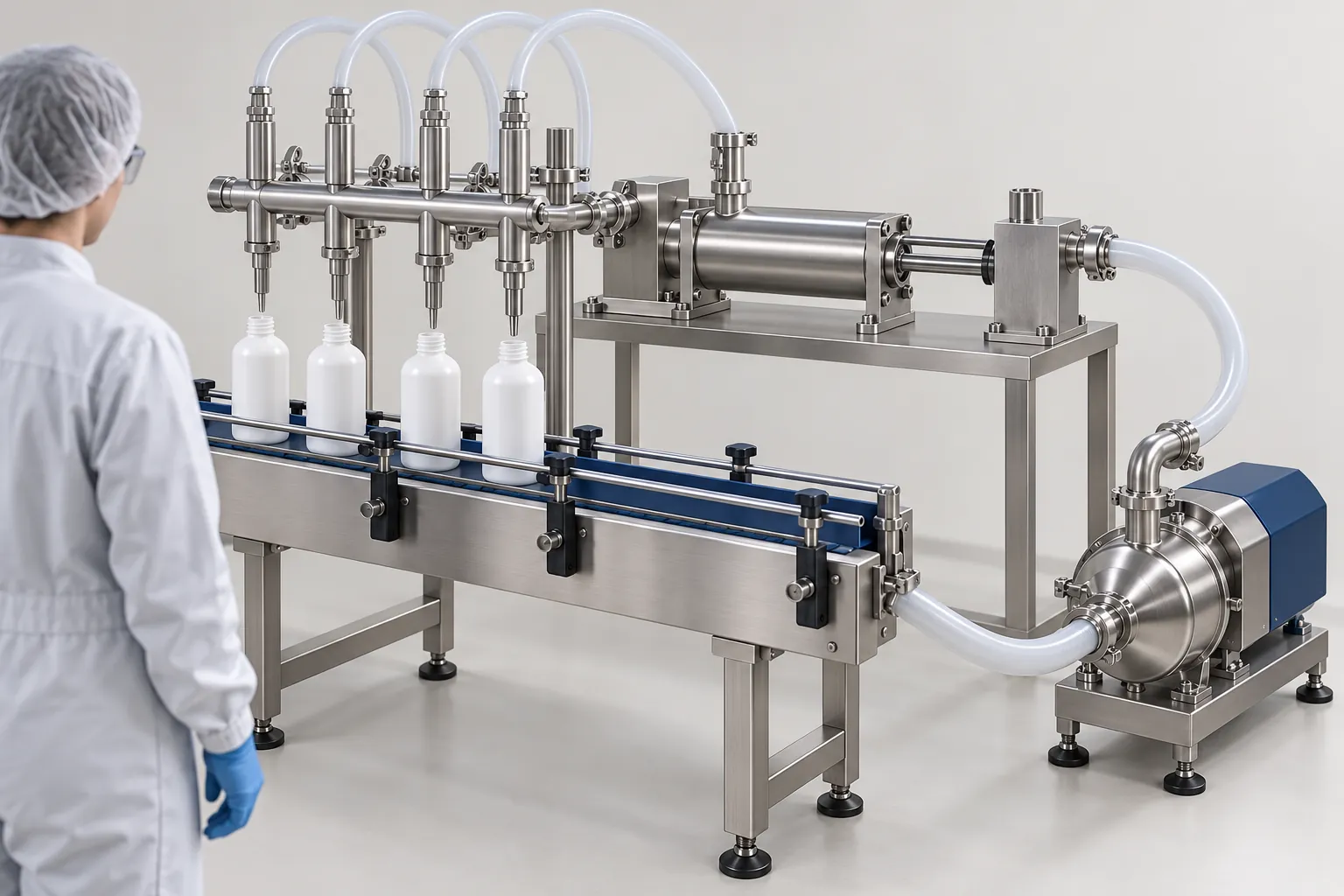
A valve or pump selected without the product conditions can block or damage the product. Compare the complete flow path and metering control using viscosity at filling temperature, particles, shear sensitivity and cleaning requirements.
This comparison uses public manufacturer descriptions, not our own tests.
Swipe sideways to see the other columns. The first column stays visible.
| Input | Evidence | Selection use |
|---|---|---|
| Viscosity / temperature | Range measured at filling conditions | Match the proposed flow path |
| Largest particle | Size, shape, proportion and sample | Check valves, pump and nozzle passage |
| Shear sensitivity | Post-fill product quality criteria | Compare speed and handling |
| Cleaning method | CIP/manual sequence and residue criteria | Check all contact parts |
| Metering method | Stroke, revolutions, meter or timed control | Validate fill quantity and variation |
How the filling principles work
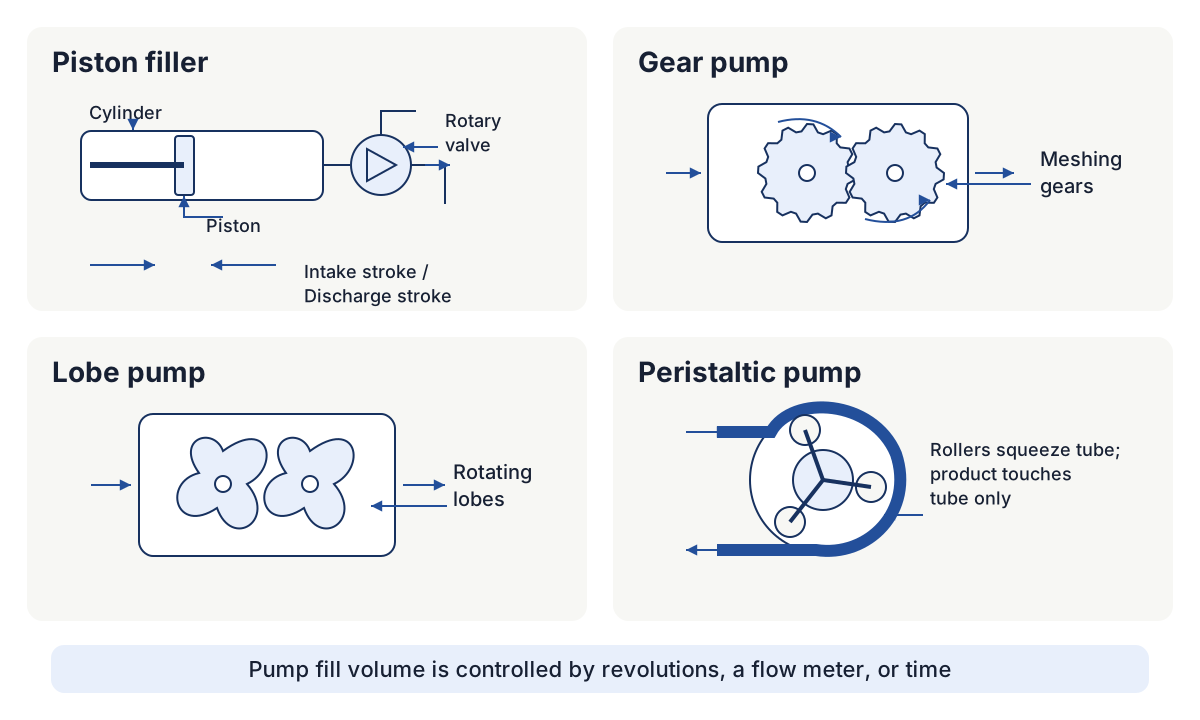
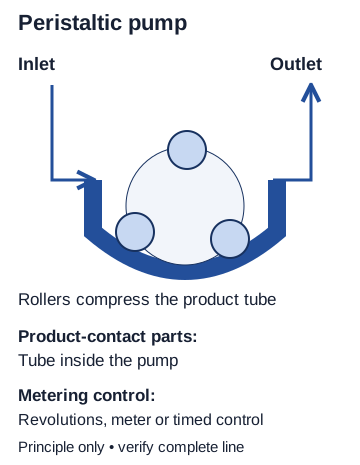
These schematics show a piston filler and three pump principles; they do not depict particular machines.
Piston filler
A piston filler draws product into a cylinder as the piston retracts and pushes it out as the piston advances. A rotary valve or similar device switches the cylinder between the product inlet and the nozzle, which gives the intake stroke and the discharge stroke shown in the figure. The stroke setting defines the intended displacement; verify the delivered fill with the actual product and valve configuration.
Piston fillers are often configured with several cylinders in a row, each feeding its own nozzle. Because the product passes through a defined chamber and valve, products with particles or fibers can often be handled, provided the valve and nozzle openings are sized for them. Changing the fill volume usually means changing the stroke setting, and changing product may mean changing seals and cleaning the chamber and valve.
Pump fillers
A pump filler moves product with a pump and controls the amount by revolutions, by a flow meter or by time. The pump type matters.
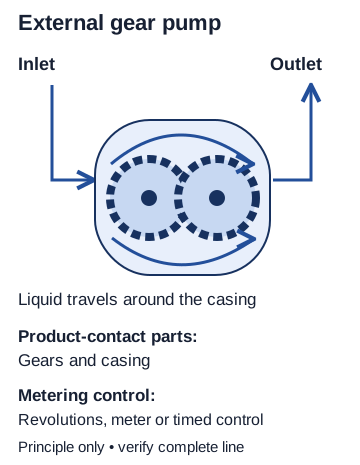
- Gear pumps carry product between meshing gears and the housing. They suit many smooth liquids and some viscous products, and the gear clearances need to suit the product.
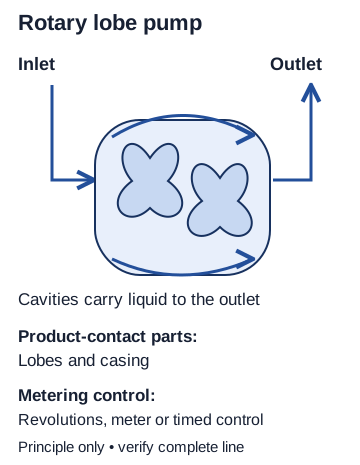
- Lobe pumps carry product in cavities between rotating lobes and the casing. Check the proposed clearances and flow path for the product; a pump family name does not establish particle passage or sanitary performance.
- Peristaltic pumps squeeze a flexible tube with rollers, so product touches only the tube. This isolates the pump mechanism from the product, but replacing a tube does not clean the rest of the filling line. The tube is a wear item and its material must be compatible with the product.
Other pump types exist, and the supplier should say which type is proposed and why.
Metering methods
Piston and rotary pump systems can both use positive displacement. Distinguish the pumping mechanism from the control that determines the delivered fill. Counting pump revolutions assumes steady delivery per revolution. A flow meter measures what passes and adjusts the fill, but it depends on the product’s properties and the meter type. Time-based filling relies on constant flow and pressure, so it tolerates changes in viscosity or supply pressure less well. Record the control method and trial variation.
Comparison by product and plant question
The table is a screening tool, and each row needs confirmation with your product.
Swipe sideways to see the other columns. The first column stays visible.
| Question | Piston filler may suit when | Pump filler may suit when |
|---|---|---|
| Viscosity | Products range from thin liquids to thick pastes, and the cylinder size and valve match the viscosity | The pump type is matched to the viscosity range: some pumps handle thick products, while very thin liquids may need a different pump or filler type |
| Particles | Particles fit through the valve and nozzle, and the product tolerates the valve action | Lobe or peristaltic pumps are selected for particles, and the particle size is within the pump’s limits |
| Shear sensitivity | The product tolerates being pushed through the valve and nozzle at the planned speed | A gentle pump, a larger clearance or a lower speed reduces the shear for emulsions, gels or products with fragile structure |
| Cleaning and hygiene | The valve, cylinder and seals can be dismantled, cleaned and inspected as the product and site rules require | The pump and tubing are designed for clean-in-place (CIP) or quick change, which suits sanitary applications; confirm what CIP covers |
| Product changes | Few product changes occur, or parts can be dismantled in the time available | Frequent changes are planned and the pump or tube can be swapped or flushed quickly |
| Containers | The container opening, neck and height suit the nozzle and filling position, and foaming is manageable | The same checks apply, and the tubing length between pump and nozzle is considered for product waste and for dripping |
| Metering method | A volume stroke is acceptable and accurate enough for the product | Revolutions, a flow meter or time-based dosing provides the accuracy the application needs, as shown by trials |
Viscosity and particles
Viscosity is the first property to know. Give the supplier a viscosity range with the temperature at which the product will be filled, since viscosity often changes with temperature and shear. For products with particles, note the largest particle size, the particle share and how fragile the pieces are. A nozzle that is too small can block, and a valve that closes on a particle may leak or damage it. Validate passage through the complete proposed pump/valve/nozzle path using representative largest and fragile particles at the intended temperature and rate; compare blockage, damage and fill results with agreed criteria.
Takeaway: Validate the complete passage, not only the pump opening.
Shear and product handling
Some products change when sheared: emulsions can separate, gels can thin and fruit pieces can break. Ask how the supplier has chosen speed, clearances and nozzle diameter with that in mind, and test the product after filling and again after storage, not only on the day of the trial.
Takeaway: Retain product-quality observations with the fill results.
Cleaning and hygiene
For food, beverage, cosmetic and pharmaceutical products, cleaning is part of the filling system. Ask whether the machine is cleaned by dismantling, by CIP or by a combination, how long the cleaning takes, how product-contact parts are drained and what hygienic design principles guided the machine. Map the CIP circuit against the complete product-contact path and ask which valves, nozzles, seals or disconnected sections still require manual removal and inspection; retain residue results against the site cleaning criteria. Apply the food-contact and cleaning requirements for the product and market.
Takeaway: Assign each contact part to a demonstrated cleaning step.
Product changes and containers
For product changes, record time, flushing loss and the site cross-contamination controls. The format changeover checklist provides a way to record and plan those steps. For containers, share sample bottles, jars or tubs, and note the neck finish, the height and the fill level. Foaming products may need bottom-up filling or a diving nozzle, so ask whether the nozzle design is included and how drip is controlled.
Assumed example. This scenario is made up to show the method and uses no measured data. A buyer fills a smooth sauce with small soft pieces into jars and runs three recipes in a week. One supplier proposes a piston filler, and another proposes a lobe pump with a flow meter. The buyer puts the same questions to both: the largest piece size passed, the cleaning method, the product-change time between recipes, the method of metering and the variation to expect. Neither proposal is accepted until each is tried with the actual sauce. The comparison turns on how the product behaves, not on the machine family.
Takeaway: Include a product change and the production container in the trial.
Questions to ask suppliers
- Which filling principle and pump type are proposed, and why they suit the product description, including viscosity, temperature, particles and shear sensitivity.
- The fill volume range, container sizes and nozzle options included in the quote.
- How fill volume is metered and what accuracy statement applies: how it is defined, at which speed and with which product.
- How the machine handles drips, foaming, stringing and product that cuts off poorly.
- Which parts contact the product, their materials and approvals for food contact where relevant, and how those parts are removed, cleaned and inspected.
- Whether CIP is offered, what it covers and what still needs manual cleaning.
- The steps and time for changing product and for changing container size, and what tools are needed.
- How the filler reacts when the supply tank empties, when a container is missing or when downstream is blocked.
- The safeguarding approach, documentation and relevant safety references for the target market.
- Recommended spares and wear parts: seals, gears, lobes, tubes and valve parts.
Trial checklist
- A representative product sample is supplied, at the filling temperature and including worst-case batches.
- Containers and closures from the production supplier are used in the trial.
- Fill weight or volume is measured over an agreed number of packs and recorded.
- Drip, foam, stringing and product on the container neck are observed.
- Product quality is checked after filling, for example separation or damage to pieces.
- Dismantling and cleaning are demonstrated using the actual parts.
- A product change is demonstrated if the plant needs more than one product.
Product and cleaning trial record
Copy for each product/configuration and attach the acceptance specification.
Swipe sideways to see the other columns. The first column stays visible.
| Field | Trial entry |
|---|---|
| Product / lot / temperature / particle sample | ________ |
| Pump or piston configuration / nozzle / contact parts | ________ |
| Metering method / target / speed / measured fill variation | ________ |
| Passage, blockage, shear or particle damage | ________ |
| CIP scope / manual cleaning / inspected residue | ________ |
| Trial result / acceptance source / authorized sign-off | ________ |
Limits and on-site verification
Validate the shortlisted system with production product and containers, then verify it during site acceptance. See the comparison of factory and site acceptance testing for planning that sequence. Machine manuals and the supplier’s cleaning instructions define the permitted cleaning methods and settings.
Filling equipment combines moving pistons, valves and pumps with pressurized product and hot or caustic cleaning fluids. The safeguarding design needs a risk assessment following the method in ISO 12100 and review by qualified personnel. Trained staff dismantle, clean and adjust the machine only under the site’s energy isolation procedures, and never with guards or interlocks bypassed. Hygiene and food contact requirements depend on the market and product.
Related decisions
When a liquid product is specified by mass but metered by volume across batches that shift in temperature or aeration, use the net-weight and volumetric filling density-drift check to separate density conversion, flow meters and load-cell feedback before changing the filler. For dry products, see the comparison of auger fillers and multihead weighers. To see where filling sits in the sequence of machines, return to the packaging machine types overview. When you have shortlisted a system, include your trial and cleaning requirements in the RFQ.
Method and source review
Reviewed October 8, 2026. Public manufacturer documents describe the mechanisms; they are not our test results:
- Filamatic piston-pump brochure, “How It Works” and operation description: intake/discharge strokes, chamber and valves.
- Viking Pump, How an Internal Gear Pump Works, January 9, 2024, external-gear explanation: liquid travels between teeth and casing, not through the gear mesh. The diagram here depicts that external-gear arrangement.
- Alfa Laval Pump Handbook, §4.2.2, printed p. 71: rotary-lobe cavities carry product from inlet to outlet.
- Watson-Marlow, peristaltic pump principles: rollers compress a tube, which is the pump’s product-contact part.
Metering, particle passage and cleaning acceptance need the proposed assembly and product trial. The record is an editorial aid; CIP coverage is not inferred from a pump-family label.
References
- EHEDG Guideline 8 — Hygienic Design Principles (Fourth Edition) — EHEDG
- Regulation (EC) No 1935/2004 of the European Parliament and of the Council of 27 October 2004 on materials and articles intended to come into contact with food and repealing Directives 80/590/EEC and 89/109/EEC — European Parliament and Council of the EU (EUR-Lex)
- ISO 12100:2010 — Safety of machinery — General principles for design — Risk assessment and risk reduction — ISO
- EN 415-10:2014 — Safety of packaging machines — Part 10: General requirements — CEN
Update history
- : First published.
- : Separated pumping from metering, added product-condition and cleaning records, and replaced the four-panel diagram with individually labeled principles.
Next steps
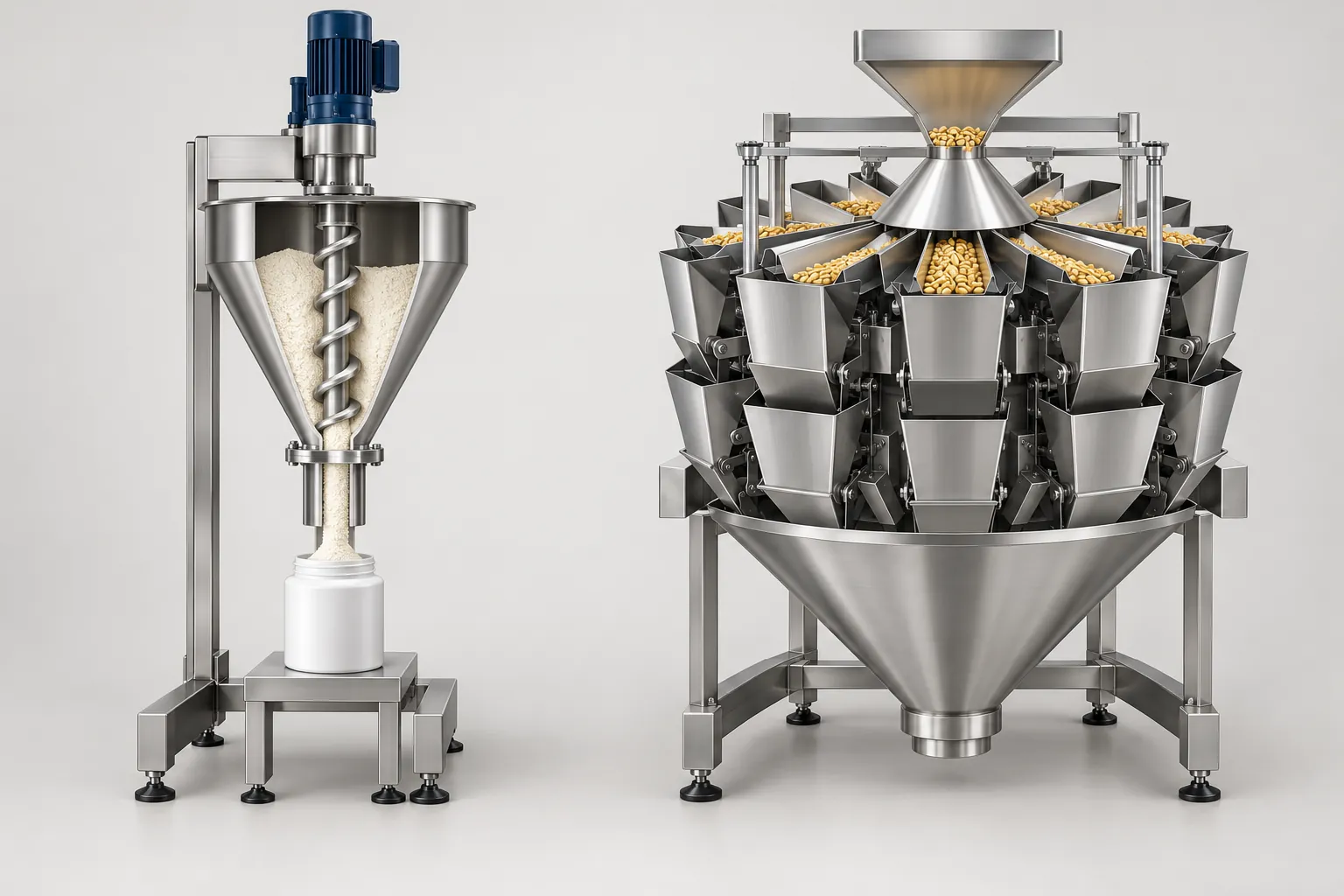
Auger Fillers vs. Multihead Weighers: Matching the Dosing System to the Product
Compare auger fillers and multihead weighers by dosing principle, product flow, fragility, dust, cleaning and mixes, with supplier questions and trial guidance.
Read guide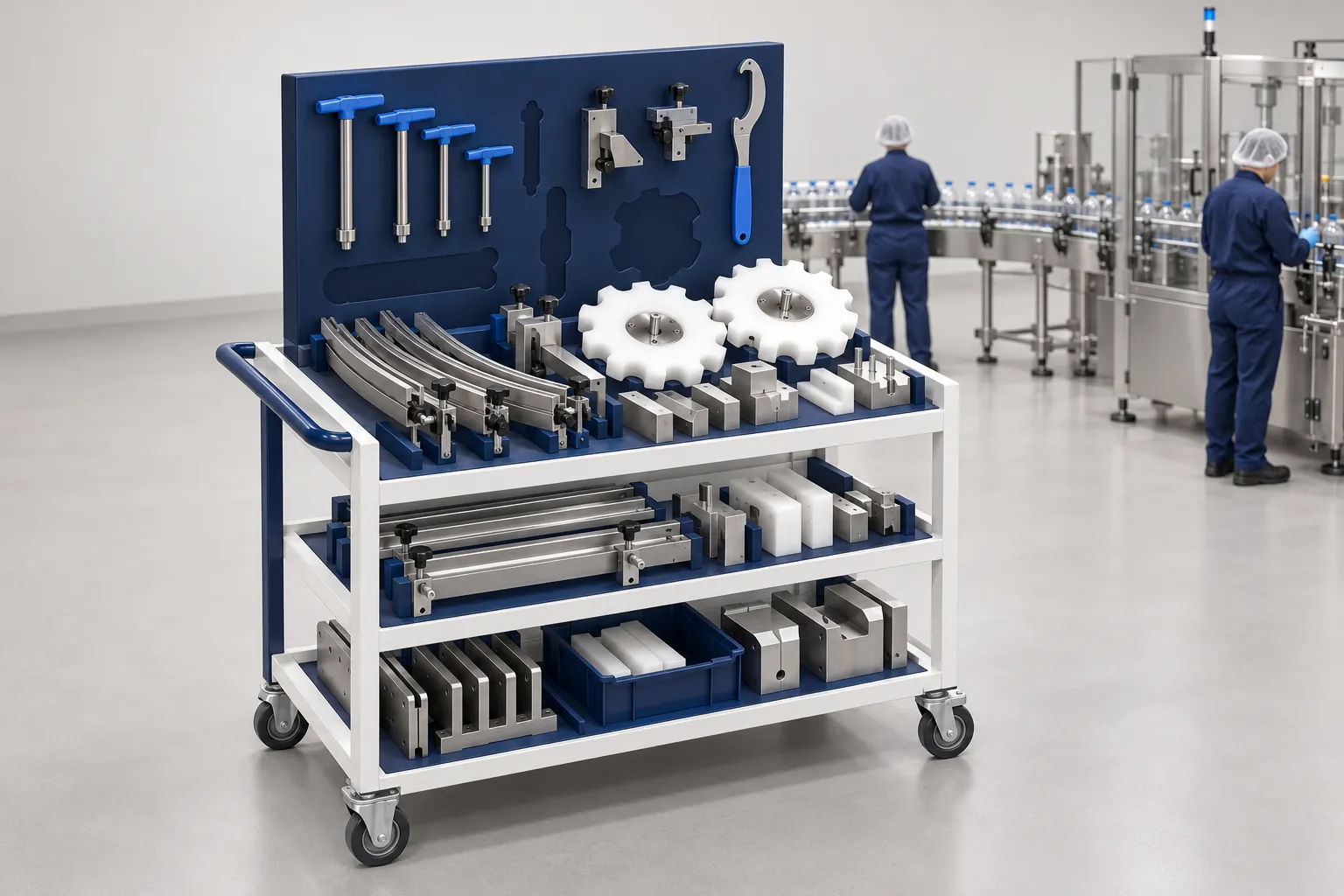
Packaging Format Changeovers: What to Record and Verify
A format changeover checklist: seven steps from preparation to run monitoring, a record template, and the SMED idea of external versus internal work.
Read guide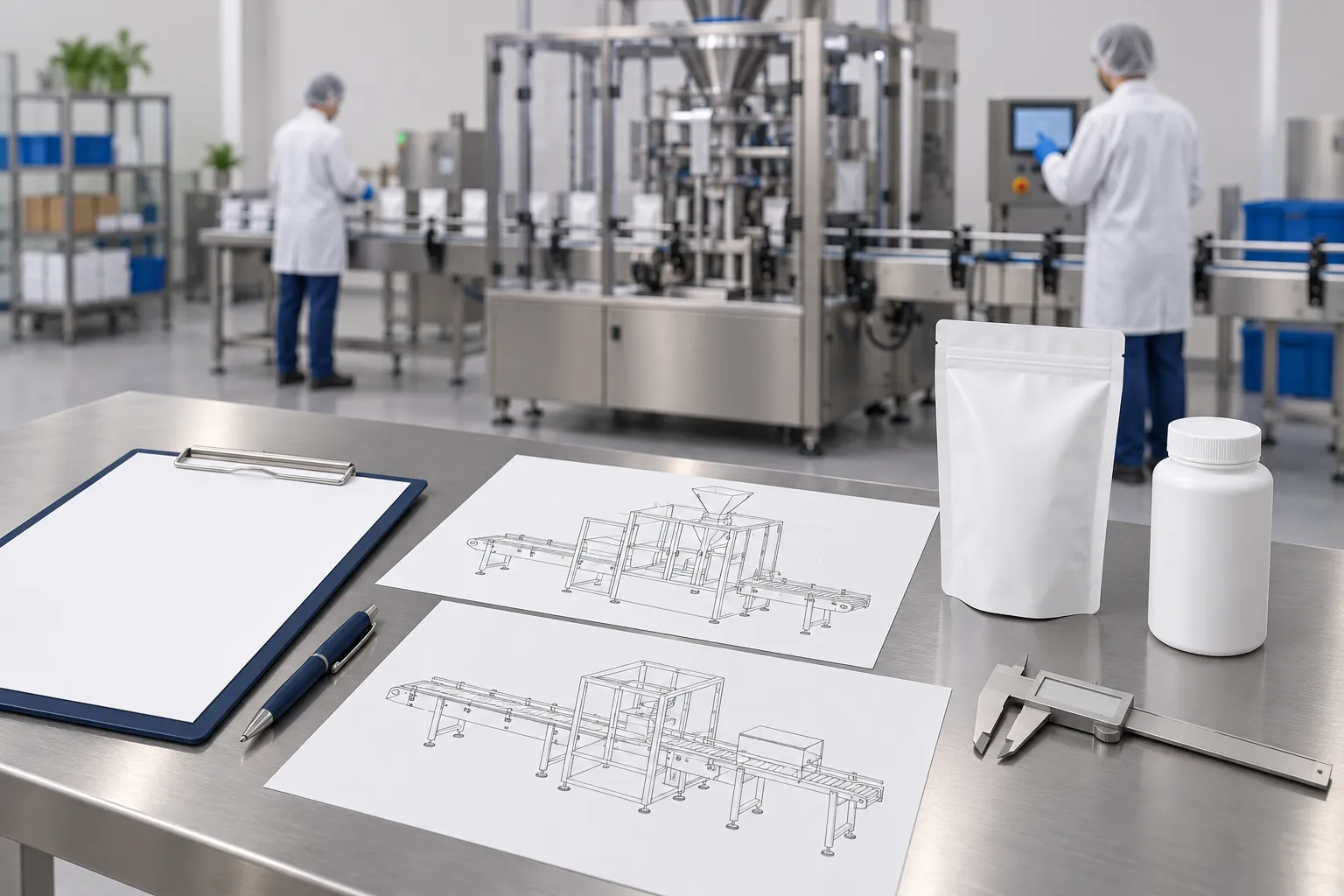
Packaging Machine RFQ Checklist: Information Suppliers Need
A reusable blank RFQ template for packaging machines in nine sections, with the reason suppliers need each item and a list of commonly missed details.
Read guide