
SunDance Coffee Valve Pouches: Line Checks Before Switching
SunDance announced digitally printed coffee valve pouches. Review pouch handling, sealing, coding and the supply details missing from the release.

SunDance announced custom coffee valve pouches on September 28, 2026; request a dimensioned pouch specification and representative samples before deciding whether your filling and sealing process can use them.
Applies to: Roasters and packaging engineers reviewing a proposed coffee pouch; select station checks for the actual manual, semi-manual or automated filling and sealing arrangement.
An unreviewed pouch change risks handling and sealing problems. SunDance’s coffee valve pouch announcement is a reason to review the pouch specification, handling and sealing process before replacing an existing package.
For engineers researching SunDance coffee valve pouches, this page turns the release into a station-level review. It distinguishes the company’s announced capability from the dimensions, materials and supply details a plant still needs. It does not report a packaging trial or measured shelf-life improvement.
What SunDance announced
On September 28, 2026, SunDanceUSA issued a release through PR Newswire announcing custom coffee valve pouches as an expansion of its flexible packaging portfolio. The company describes digital printing, low minimum order quantities and a one-way degassing valve intended to release carbon dioxide from roasted coffee while preventing oxygen entry.
Its stated audiences include specialty roasters, emerging brands, seasonal and limited-edition products, subscriptions and new launches. The release gives no numerical minimum order quantity, price, lead time, pouch drawing, laminate specification or valve test data.
Scroll horizontally if needed to see all columns →
| Read the announcement as | Do not treat it as |
|---|---|
| A company description of an added capability | Confirmation of a specific order or delivery slot |
| A reason to request a pouch specification | Evidence that an existing filler accepts the pouch |
| A statement of intended valve function | A shelf-life result for your coffee |
| A digital-printing offer | A quantified saving against another print process |
Takeaway: The useful next document is a complete pouch specification, not a restatement of the release.
Who is affected by the potential change?
Bring packaging engineering, production, quality and artwork control into the same review. The announcement addresses brands, but a plant decision needs both the commercial order structure and the physical package definition.
Scroll horizontally if needed to see all columns →
| Team or project | Potential decision | Evidence to request |
|---|---|---|
| Roaster launching another SKU | Whether a new artwork order is practical | Order terms per design and proof requirements |
| Packaging engineer | Whether the pouch can be handled | Dimensioned drawing and representative samples |
| Production team | Whether the intended process can run it | Defined trial with the proposed pouch construction |
| Quality team | Whether performance evidence matches the use | Valve, package and material documentation |
| Procurement | Whether supply fits the production plan | Written quantities, schedule and order conditions |
These are recommended review responsibilities, not claims that SunDance supplies an integrated packaging line. Use the packaging hub to locate equipment-format guides. If the plant is still choosing between forming a bag from rollstock and handling a premade pouch, the VFFS versus premade-pouch comparison owns that wider decision.
Do not require a machine replacement simply because the package source or artwork changes. First identify what differs in the proposed pouch and ask the existing equipment provider to review the relevant differences. Conversely, do not call the change “artwork only” until the construction and geometry are documented.
Takeaway: The brand’s order decision and the plant’s compatibility decision need different records.
Map the pouch to the affected stations
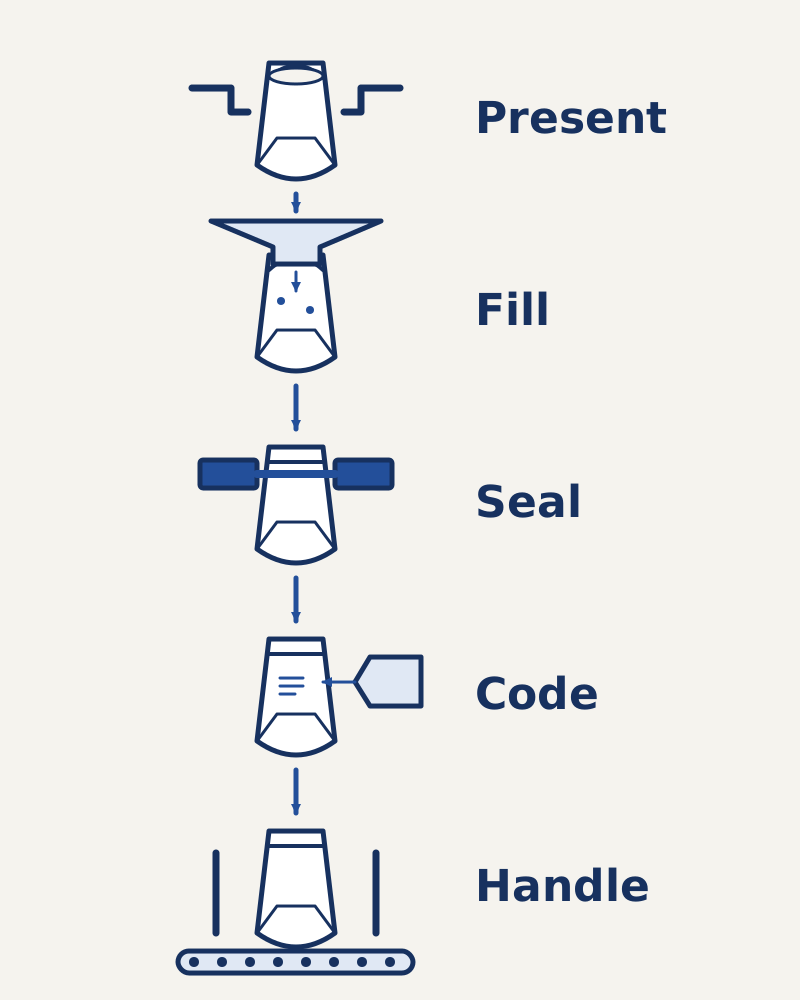
Select the checks that exist in your actual process: machine-handling checks apply where the proposed arrangement uses those stations; manual or semi-manual handling needs its own review. Make the review follow the pouch through the intended process. Request station-specific observations rather than a general assurance that the package is “machine compatible.”
Scroll horizontally if needed to see all columns →
| Station or activity | Proposed check | Record to keep |
|---|---|---|
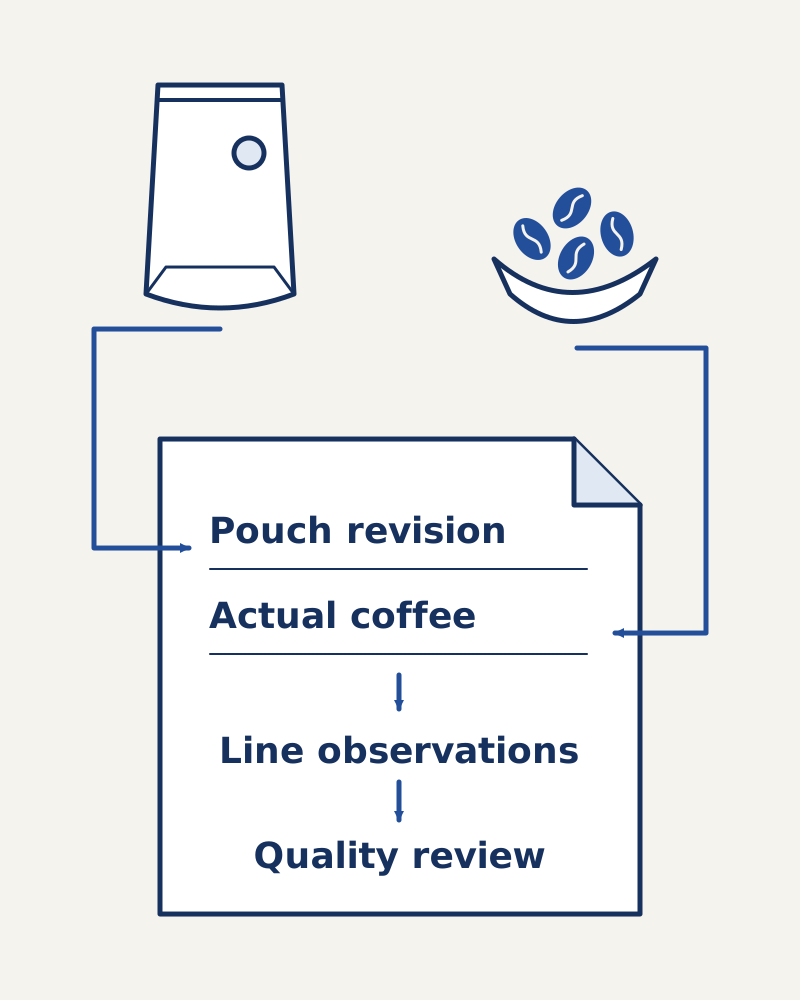
| Receiving and storage | Match supplied pouch identity to the approved specification | Revision, lot and storage instructions |
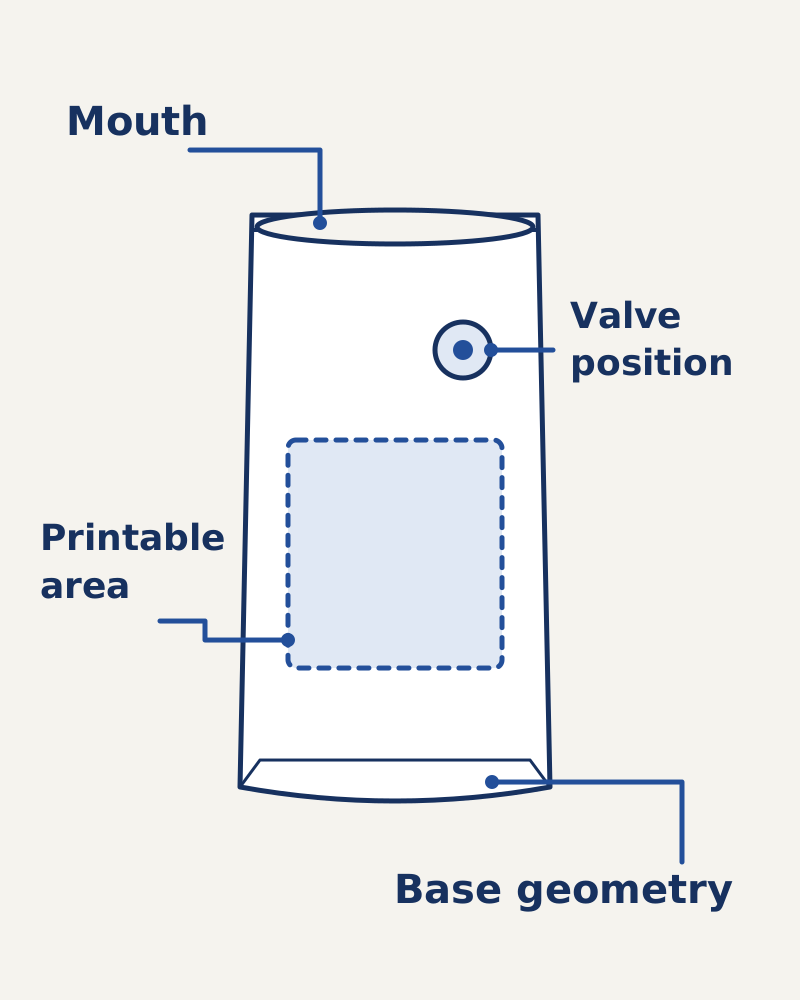
| Pouch presentation | Ask whether the proposed valve location meets actual gripping/contact areas, and the pouch mouth matches the opening arrangement | Drawing comments and trial observations |
| Filling | Observe the intended coffee and dose with the pouch | Product condition and fill-trial record |
| Sealing | Compare the dimensioned mouth and seal area with the intended filling and sealing arrangement; review supplier guidance | Agreed procedure and package checks |
| Coding and inspection | Verify the intended code and inspection presentation | Location, readability and rejection observations |
| Downstream packing | Check finished shape against the planned handling | Actual packed samples and scope notes |
The film and machine compatibility guide organizes material questions, but it does not replace a pouch supplier’s specification. The seal-defect investigation guide helps record observations when seal results differ. Ask the qualified trial team to set the appropriate tests and conditions; this article provides no universal sealing settings.
Where inspection is proposed, use the machine-vision guide to state what the camera should verify. A visible valve or a readable code is a separate question from demonstrated package performance.
Takeaway: Follow the physical pouch through each station and document the differences that matter there.
Keep digital artwork and physical construction under separate control
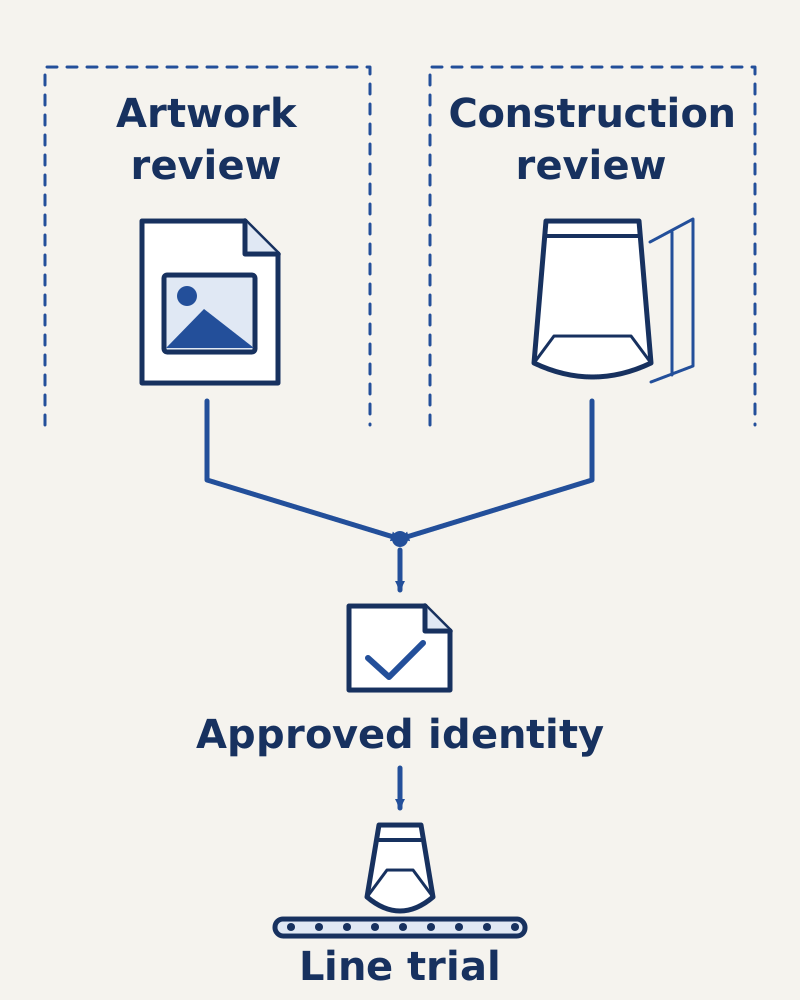
Ask which features can change between artwork orders and which require a new technical review. A graphic variant and a construction variant should not be treated as interchangeable records.
For each proposed design, keep an approved artwork identifier linked to the pouch specification. Ask whether the order minimum applies to each design, size, construction or combined order; the release does not answer this. Request a description of the proof process and the point at which approved artwork becomes the production file.
For coding, record the intended area and the way the code will be applied and checked. Compare real finished samples with the plant’s code requirement instead of relying on an artwork screenshot. Keep supplier-provided print evidence distinct from your own line-coding evidence.
Common mistake: Assuming that digital printing means every small run has the same cost or order terms. Procurement can compare written commercial terms for the actual design set and quantity. Use the packaging RFQ checklist to organize equipment-related requirements if the package review exposes a machine scope change; use a separate pouch enquiry for materials and artwork terms.
Takeaway: Link each artwork revision to an approved physical pouch specification.
Prepare a sample evaluation rather than a freshness promise
Use representative samples to define what the plant will evaluate. A description of the intended degassing function does not establish the storage outcome for a particular coffee, filling process or distribution route.
Ask the supplier to identify the valve specification, installation position and available test documentation. Ask the quality team to define the package-performance evidence needed for the intended product. Request material and food-contact documentation for the specific supplied construction without assuming an approval from a company announcement.
Record the product and pouch identities in any proposed trial. Keep observations about handling, sealing and finished appearance separate from longer-term performance evidence. If the project includes storage evaluation, the responsible team should define the conditions and acceptance approach before making claims based on it.
Use FAT versus SAT when equipment changes form part of the project, and the format-changeover checklist to record transitions between pouch variants. Do not infer a changeover duration from the printing technology.
Takeaway: Specify the evidence needed for your use before approving a package-performance statement.
When should a production team act?
Begin the specification enquiry if this format matches the packaging project. Do not schedule a production launch from the announcement date alone.
Scroll horizontally if needed to see all columns →
| Date or milestone | Status in the reviewed evidence | Suggested action |
|---|---|---|
| September 28, 2026 | Company-issued announcement | Request the proposed pouch specification |
| October 8, 2026 | This source review | Log missing technical and order details |
| Sampling and order opening | Not specified in the release | Ask SunDance for written confirmation |
| Delivery and production release | Project-specific and unresolved | Agree supply and trial milestones |
Ask procurement to distinguish sample availability, artwork approval, production allocation and dispatch. Record the date and scope of each supplier response so that a later revised drawing does not inherit an earlier approval by accident.
The supplier-evaluation guide is useful where the project also needs equipment due diligence. Keep that review separate from approval of the pouch supplier and the supplied material.
Takeaway: Use the announcement to open questions, then build the schedule from confirmed project milestones.
What remains unverified?
The missing items should become an enquiry register with named closing evidence. Avoid filling the blanks with specifications from another SunDance package.
Scroll horizontally if needed to see all columns →
| Unresolved item | Who can clarify it | Evidence that would help |
|---|---|---|
| Pouch size and form | SunDance packaging team | Drawing and identified samples |
| Material structure and barrier | SunDance technical team | Construction-specific data and methods |
| Valve specification | SunDance and valve documentation owner | Applicable specification and test evidence |
| Minimum order and quantity combinations | SunDance commercial contact | Written terms for the design set |
| Price and lead time | SunDance commercial contact | Dated quotation and schedule |
| Line suitability | Equipment provider and plant trial team | Trial record for the defined configuration |
| Digital versus conventional print costs | Procurement and supplier | Like-for-like dated quotations, specifications, quantities and included charges |
| Relationship to awards or a new production line | SunDance | Written capability history and identified award entry, if relevant |
| Recycling or shelf-life statements | Supplier and responsible quality reviewer | Evidence for this exact construction and use |
Do not transfer a material-reduction or recycling claim from a different product into this register as an established fact. The total-cost guide helps keep equipment scope consistent if the pouch change requires capital work; it supplies no numerical comparison between printing processes.
Takeaway: Close each missing item against the actual coffee pouch, not a related marketing example.
When this does not apply
This is not a shelf-life study, a valve-design guide or a supplier comparison. It does not establish that all pouches described as coffee valve bags share the same material, dimensions or operating behavior.
The reviewed release mentions company awards but does not establish that a particular award belongs to the coffee pouch configuration a reader may order. We therefore do not use an award as technical evidence for the proposed package. We also do not infer recyclability or a material-saving percentage from unrelated SunDance products.
If construction is unchanged and only artwork differs, document that comparison and review the affected graphic/code controls. If geometry or construction changes, review the affected physical operations. A process without automated pouch handling does not need every machine-handling check in our table.
Our recommendation is to open a specification and sample review where the pouch format suits the project. If the required format differs, obtain a separate application response.
Takeaway: Evaluate the proposed supplied pouch and the intended process, not the category label alone.
Frequently asked questions
What is a coffee valve in packaging?
SunDance describes its valve as a one-way degassing feature intended to let carbon dioxide out while preventing oxygen entry. Obtain the proposed valve specification and package evidence; the announcement supplies no measured storage result.
Do coffee bags have to have a valve?
This release does not establish a universal requirement. Ask the packaging and quality teams to review the intended coffee, packing process and storage use against the proposed package specification.
Where can I find wholesale coffee bags with valves?
SunDance announced a custom coffee valve pouch capability. Confirm its actual offered construction, quantities and supply schedule directly; this article provides no supplier directory or confirmed order availability.
Method and sources
Primary source: the September 28, 2026 SunDanceUSA release on PR Newswire, reread October 8. It supports what the company announced; publication on a newswire is not independent technical verification. Station checks, document requests and suggested review responsibilities are editorial recommendations. We have no test data, order terms or delivery records.
Related reading: material compatibility helps organize technical inputs; seal investigation helps preserve observations during a trial.
Update history
- : First published.
Next steps
Packaging Line Integration Checklist: Interfaces to Confirm Before Ordering
Checklist of mechanical, electrical, signal, communication, safety and utility interfaces to settle before ordering a machine for a packaging line.
Read guide
FAT vs. SAT for Packaging Equipment: Defining Acceptance Criteria
Compare factory and site acceptance tests for packaging machines, and learn how to write acceptance criteria that both buyer and supplier can verify.
Read guide
Packaging Machine RFQ Checklist: Information Suppliers Need
A reusable blank RFQ template for packaging machines in nine sections, with the reason suppliers need each item and a list of commonly missed details.
Read guide