
SIG Neo Aseptic Fillers: What to Check on the Line
SIG announced XSlim 32 and Midi 15 aseptic carton fillers. Map its claims to affected stations, comparison limits and evidence to request.

SIG announced two Neo aseptic carton fillers on October 1, 2026; evaluate the pack formats, downstream demand and validation evidence before treating either as a candidate for your plant.
Applies to: Engineers reviewing the announced sleeve-based XSlimBloc and MidiBloc/MidiFit filler applications; product, material, retrofit and U.S. supply suitability require project confirmation.
Treating a filler announcement as a line upgrade plan risks unresolved interfaces. SIG’s new Neo aseptic carton fillers merit a format and line review, with the company’s published claims kept separate from the performance a plant needs to demonstrate.
For engineers following the SIG Neo aseptic carton filler announcement, the immediate deliverable is a change register. Identify the affected stations, the information supplied by SIG and the evidence still needed for a U.S. project. This is analysis of public material, not our equipment test.
What SIG announced
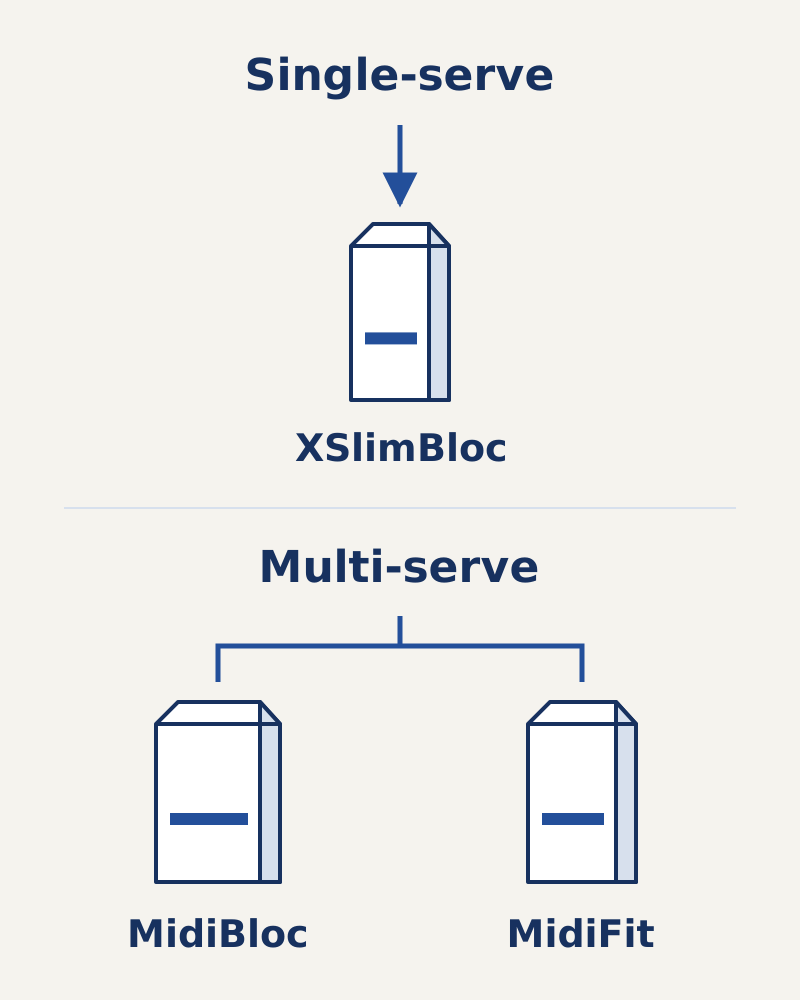
On October 1, 2026, SIG announced two additions to the Neo platform. Its stated machine and format scope is:
Scroll horizontally if needed to see all columns →
| New model | SIG’s stated output | Stated pack range |
|---|---|---|
| Neo XSlim 32 Aseptic | 32,000 cartons/hour | XSlimBloc single-serve, nine sizes |
| Neo Midi 15 Aseptic | 15,000 cartons/hour | MidiBloc and MidiFit, each with three sizes |
The equipment uses the sleeve-based, open-sleeve process described by SIG. The release also claims one-third higher total output and output per square metre, without naming the comparator. It describes applicable pack-size/format changes below 15 minutes without changing machine parts, waste below 0.5%, Neo HMI functions and Neo Shield particle removal up to 95% during bottom sealing and pre-folding. These are SIG statements, with no independent test record supplied in the announcement.
Takeaway: Use the named formats to start the candidate review; use the performance claims to frame questions.
Who is affected, and which stations need review?
Start with the team specifying the carton range and trace the consequences through the line. The following station checks are editorial recommendations; the announcement does not establish that a particular existing plant needs modification.
Scroll horizontally if needed to see all columns →
| Project situation | Station or responsibility to review | Evidence to obtain |
|---|---|---|
| Single-serve project | Carton handling and output transfer | Approved XSlimBloc size list and interface drawings |
| Multi-serve project | Format selection and downstream handling | MidiBloc/MidiFit range and change procedure |
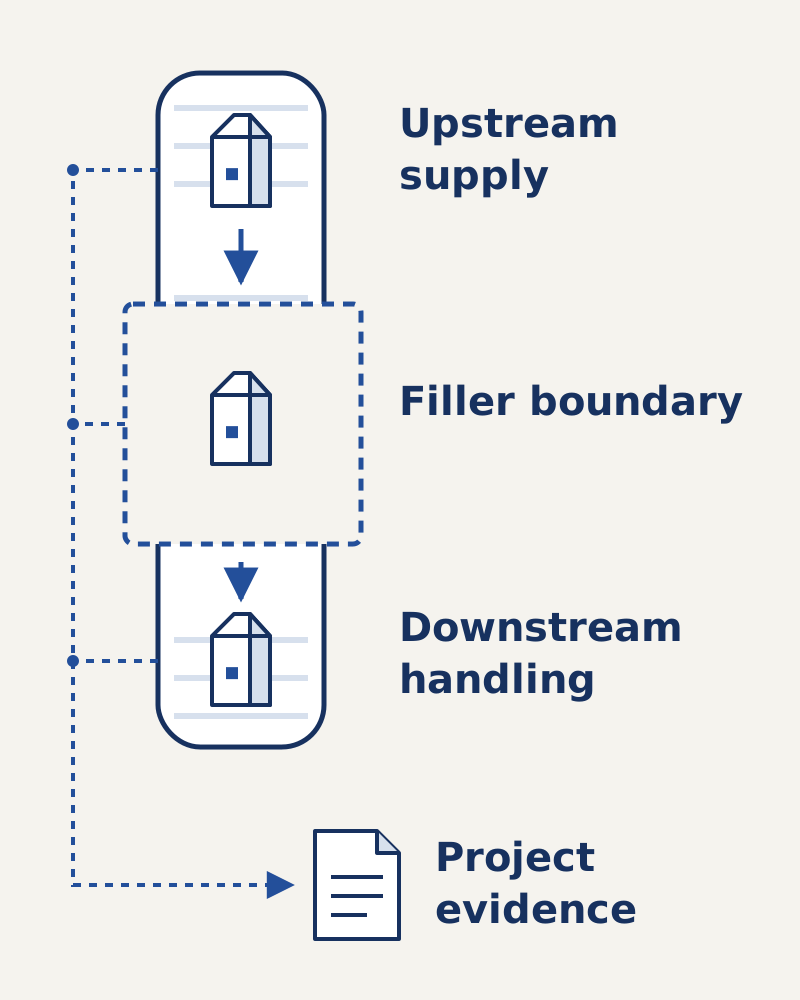
| Capacity addition | Upstream supply and downstream discharge | Agreed line conditions and accumulation assumptions |
| Multiple SKUs | Recipe management and quality release | Format sequence, restart checks and sign-off process |
| U.S. installation | Supply, service and local project responsibilities | Written commercial and technical scope |
An engineer can use the automation hub to locate the control and interface topics, then the line integration checklist to assign each boundary. A filler specification alone does not answer how neighboring equipment will receive packs or how a blocked downstream station will be handled.
Ask for a drawing that distinguishes the machine envelope from service access and the wider line arrangement. Compare that drawing against the actual site plan. Keep proposed changes to conveyors, inspection and end-of-line packing visible as separate scope items rather than hiding them inside a footprint claim.
Takeaway: Trace the candidate’s pack and signal boundaries before reviewing its headline capacity.
How should an engineer read the one-third claim?
Request SIG’s reference model and comparison conditions. The one-third figure in the release cannot, by itself, identify the older machine it describes.
The SIG filling-technology catalogue, read October 8, 2026, lists Smile at 24,000 packs/hour. An assumed catalogue comparison using the announced XSlim figure gives (32,000 − 24,000) / 24,000, or approximately 33.3%. That is our arithmetic under an assumption of comparability. It does not prove that Smile is SIG’s intended baseline, that the formats match, or that a plant will gain that percentage.
The same catalogue lists standard aseptic equipment for medium-size carton packs at up to 12,000 packs/hour. An assumed category-level comparison with the announced 15,000 gives (15,000 − 12,000) / 12,000 = 25%, rather than one-third. This is our calculation using catalogue figures, not a verified comparison of Midi models or an identification of SIG’s reference machine. Ask SIG to resolve the comparator and operating conditions; we do not label the catalogue entry “Midi 12.”
Scroll horizontally if needed to see all columns →
| Comparison question | Record needed before using the result |
|---|---|
| Are the pack formats comparable? | Exact format, volume and configuration |
| What does output count? | Counting point, acceptable packs and time window |
| What area is included? | Machine footprint versus complete operating area |
| What operating conditions apply? | Product, pack mix and defined interruptions |
| What is the Midi reference? | SIG’s named comparator and supporting document |
Common mistake: Using a ratio between published maxima as the expected improvement in finished line output. Use the bottleneck investigation guide to prepare plant observations before making a line-output assumption.
Takeaway: A numerical match is a question for SIG, not confirmation of the comparison baseline.
Treat changeover as a defined event
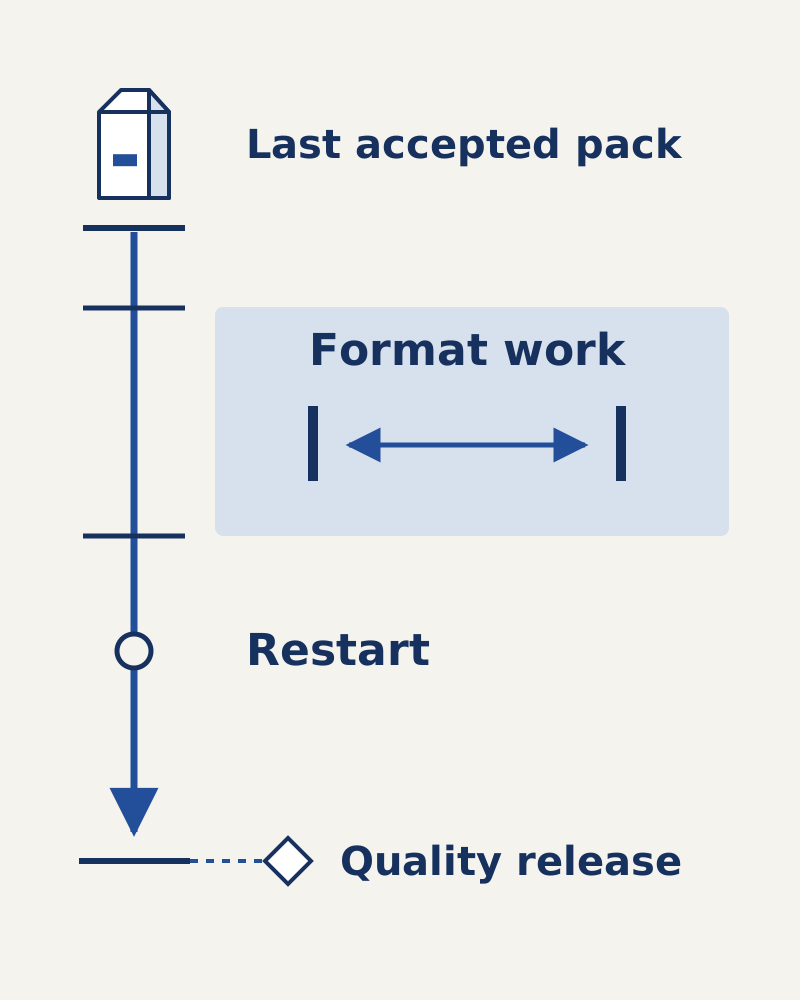
Ask where SIG starts and stops the changeover clock and which pack-size or format transitions the statement covers for each model. Request the supported transition matrix, including the scope of its no-machine-parts-change statement. A useful demonstration record names the starting format, ending format, activities included and the condition for releasing production.
Propose recording the last accepted pack before the change, the first pack afterward and the quality release point. Label these as your project’s requested observations, rather than implying the announcement uses these boundaries. Request a separate description of cleaning and product changes where relevant; a pack-size statement cannot supply those procedures.
The format-changeover checklist provides a place to record parts, adjustments and verification. Use the same requested sequence when comparing candidates. If different proposals include different activities in their stated times, preserve those differences in the comparison instead of ranking the numbers directly.
Takeaway: Agree on the event and release criteria before a changeover time becomes an acceptance target.
Separate shielding, waste and HMI evidence
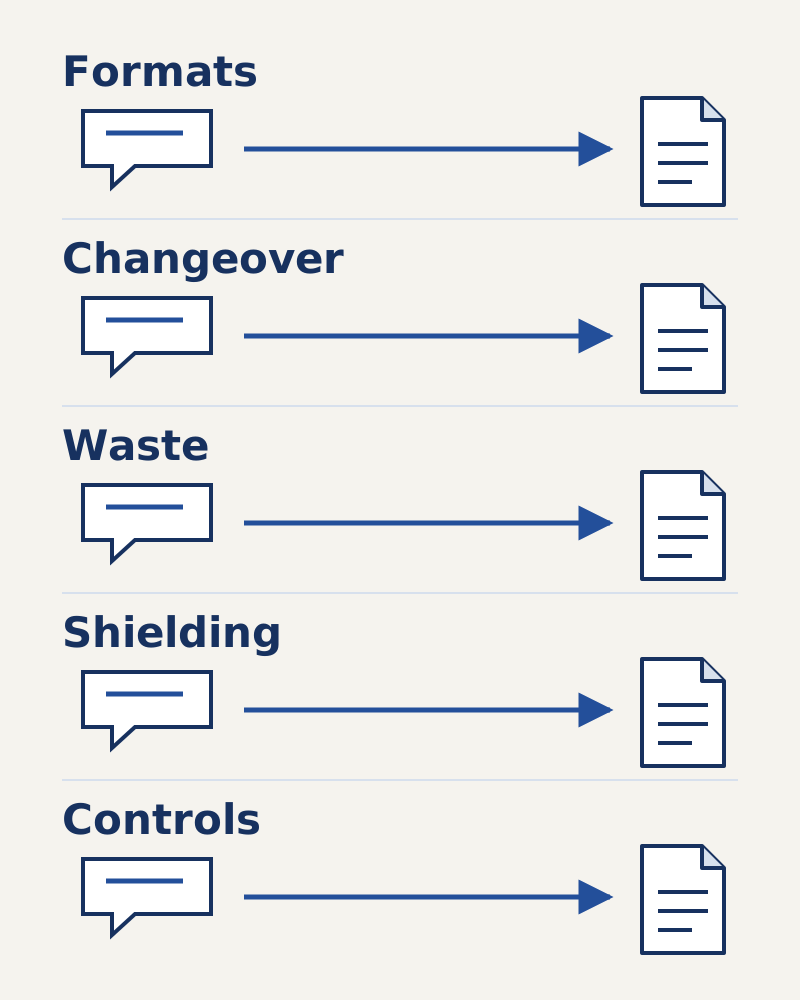
Send each technical claim to the reviewer who can evaluate it. A shared supplier presentation is useful background, but the acceptance evidence for air handling, waste counting and control functions should answer different questions.
For shielding, ask SIG for the particle-removal test method, sampling locations, operating conditions and relationship to the process-validation documentation. Do not convert an air-particle statement into a microbiological outcome. For waste, request the counting definition, included rejection categories and trial window before drafting a criterion.
For HMI functions, request a demonstration of the screens and records the operating team needs. The PLC and HMI guide helps distinguish a display from the underlying controls. Where inspection records are part of the project, use the machine-vision guide to specify what an inspection result is intended to establish.
Keep maintenance access and instructions in the scope review using the preventive-maintenance checklist. None of these recommendations supplies machine settings or authorizes intervention inside the equipment.
Takeaway: Match each claim to its own method, record and responsible reviewer.
When can a project team act?
The announcement supports beginning an information review. It does not publish a U.S. order, trial or delivery date.
Scroll horizontally if needed to see all columns →
| Date or milestone | What the evidence supports | Engineering action |
|---|---|---|
| October 1, 2026 | SIG issued the announcement | Open a candidate-format review |
| October 8, 2026 | Our source review cutoff | Record the claims and outstanding documents |
| U.S. supply and trial window | To be confirmed by SIG | Obtain a written project response |
| Installation and acceptance | To be agreed for the project | Tie the schedule to actual scope and evidence |
Do not infer local availability from a global announcement or a company’s broader customer geography. Ask who will supply, commission and support the proposed installation, and what a demonstration can include before the equipment is selected. Use the RFQ checklist to carry those questions into the enquiry.
Takeaway: Start the document review now; schedule physical milestones only with project-specific confirmation.
Keep a verification register before committing scope
Record the unresolved item, the person who can answer it and the document that would close it. This is more useful than marking an entire machine “verified” after reading a press release.
Scroll horizontally if needed to see all columns →
| Unresolved item | Ask whom | Closing evidence |
|---|---|---|
| Individual pack volumes in mL and format combinations | SIG application team | Model-specific format/product sheet |
| Approved carton material structures | SIG application team | Material compatibility documents |
| Existing-line upgrade capability | SIG and site owner | Assessment of the installed configuration |
| Compatibility with installed equipment | SIG and site integrator | Interface drawings and responsibility agreement |
| Claimed performance conditions | SIG technical team | Defined test methods and relevant records |
| U.S. supply and support | SIG project contact | Location-specific proposal |
| Filling cost comparison | SIG and plant project owner | Named baseline, inclusions and assumptions |
| Site demonstration | Supplier and acceptance team | Agreed FAT/SAT plan |
Use FAT versus SAT to decide which questions can be resolved before shipment and which depend on installation. Use the total-cost guide for a consistent scope if SIG provides a filling-cost comparison. This article has no price or cost-saving estimate.
Takeaway: Close questions with documents and demonstrations that belong to the actual project.
When this does not apply
This is not a route-selection guide for all aseptic packaging technologies. It does not prove retrofit compatibility, package sterility, material approval, a delivery commitment or a production result. The catalogue arithmetic is an assumed public-data comparison only.
Our recommended action is to keep the two format families on a document-review shortlist when the intended product, sleeve-based process and pack requirement are confirmed within the proposed application scope. If the intended pack is outside the stated range, ask for an explicit application response rather than extending the announcement by analogy.
Takeaway: Keep the review tied to the announced formats and the plant’s documented requirements.
Frequently asked questions
What are aseptic filling machines?
In this article the phrase refers to the aseptic-carton fillers named by SIG. The announcement does not establish the validated process for a reader’s product; request the applicable process and validation scope from SIG.
How much does a carton factory machine cost?
The sources reviewed here provide no machine price or project quotation. Identify the required format, installation location and scope before requesting commercial terms.
Which is the best packing machine?
This article does not rank packing machines. Use the announced pack scope to decide whether these fillers belong in a document review, then compare candidates using the same project conditions.
Method and sources
Primary material: SIG’s October 1, 2026 announcement and its filling-technology catalogue, reviewed October 8. Claims are attributed to SIG; the Smile comparison is explicitly assumed editorial arithmetic. Media coverage of the same announcement is not a second independent test. Station maps and verification questions are our editorial recommendations.
Related reading: line integration identifies interface responsibilities; FAT/SAT planning turns unresolved claims into a demonstration plan.
Update history
- : First published.
Next steps
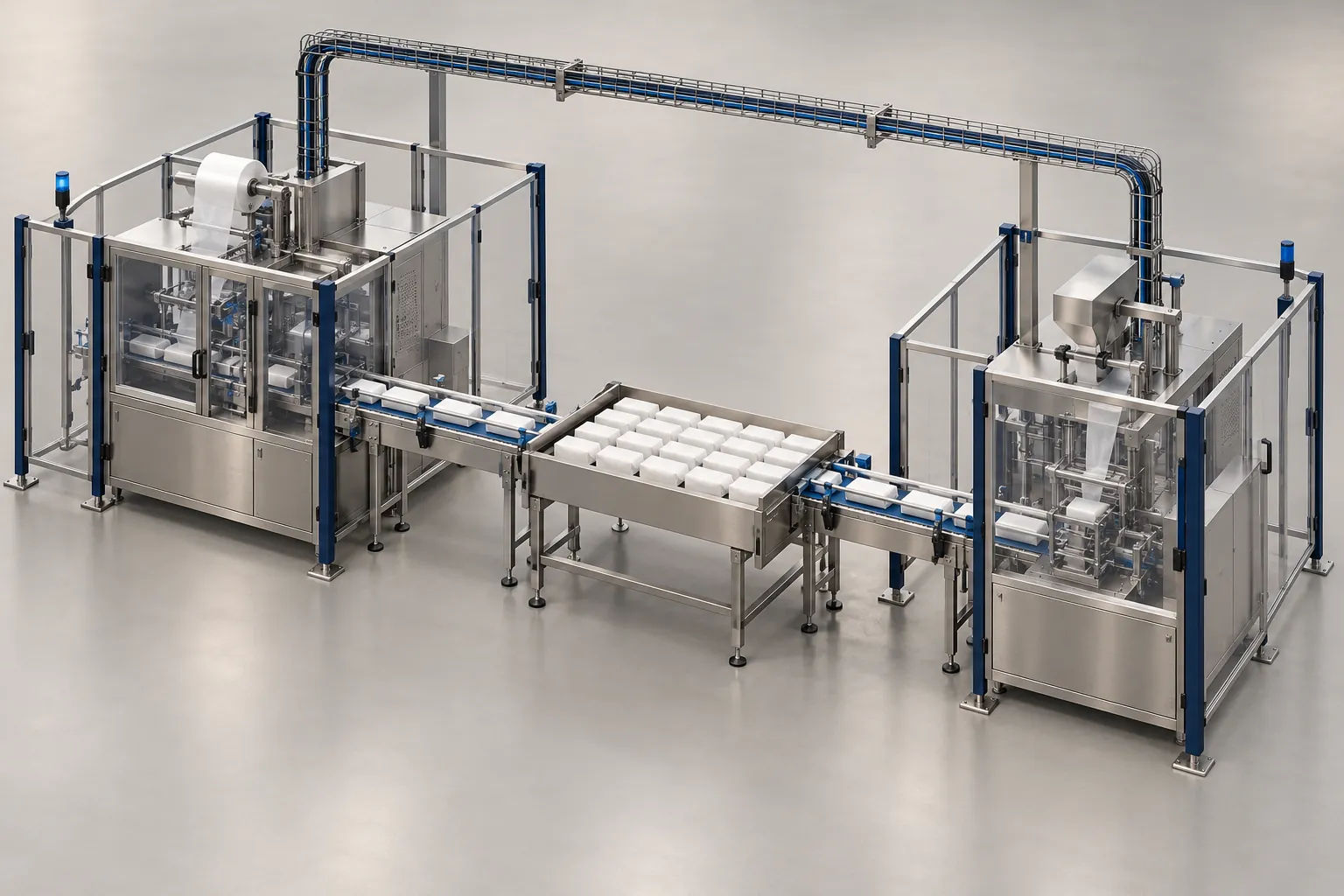
Packaging Line Integration Checklist: Interfaces to Confirm Before Ordering
Checklist of mechanical, electrical, signal, communication, safety and utility interfaces to settle before ordering a machine for a packaging line.
Read guide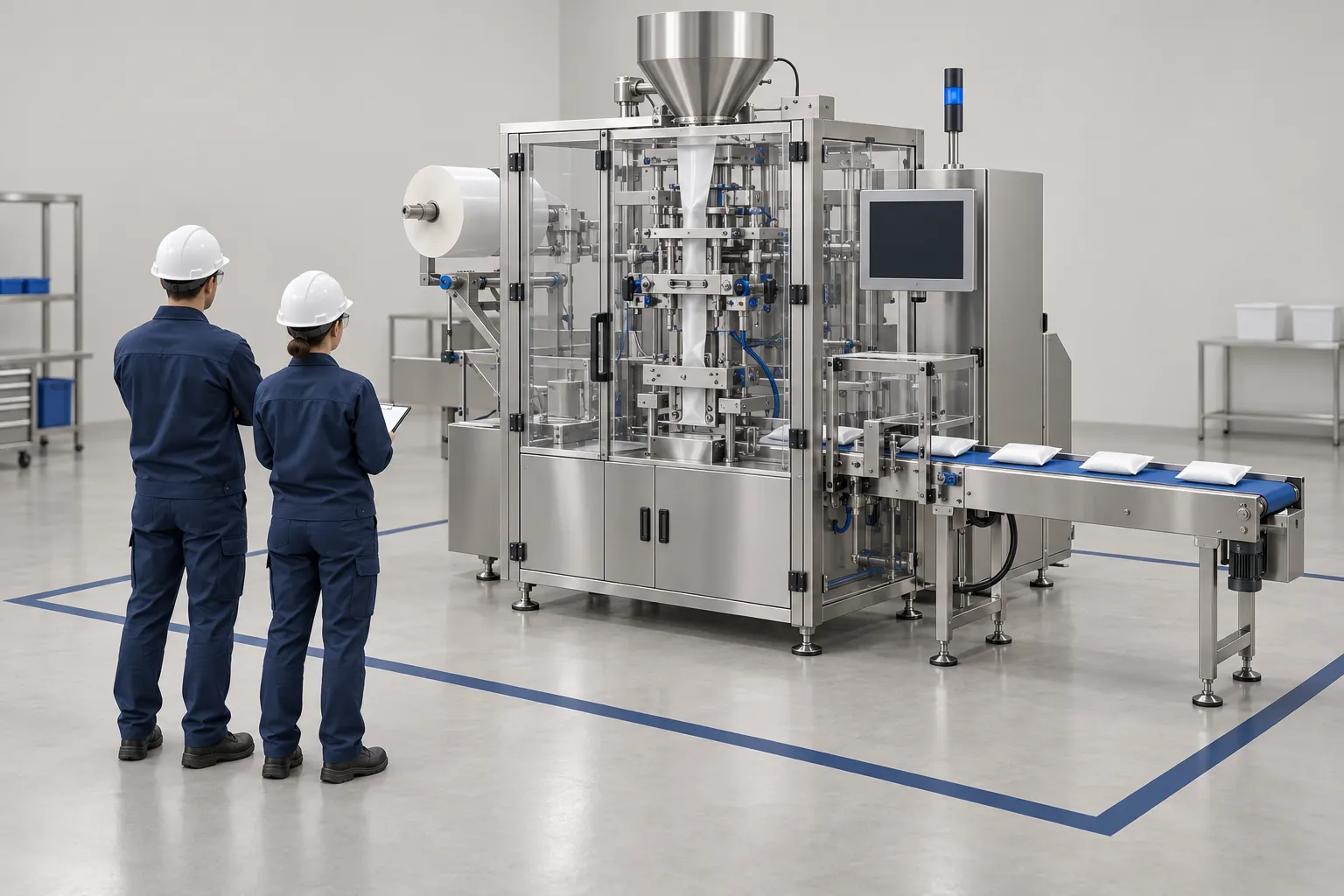
FAT vs. SAT for Packaging Equipment: Defining Acceptance Criteria
Compare factory and site acceptance tests for packaging machines, and learn how to write acceptance criteria that both buyer and supplier can verify.
Read guide
Packaging Machine RFQ Checklist: Information Suppliers Need
A reusable blank RFQ template for packaging machines in nine sections, with the reason suppliers need each item and a list of commonly missed details.
Read guide