
Auger Fillers vs. Volumetric Cup Fillers: Trial Product Flow Before Comparing Accuracy
Separate screw transport from gravity cup filling for a powder or granule, then record flow, density, dose, cup level, auger feed, residue and change parts on two lots.
A cup that fills only partway, or a screw that breaks the piece you need whole, wastes product before an accuracy label is worth comparing. A volumetric cup lets product fall in, levels a volume, and drops it. An auger turns a screw so the flights carry a swept volume. Either way, pack weight still follows the bulk density of the product that occupied that volume. Run two real lots and write down flow, density, dose, cup level, auger feed, residue and change parts.
Applies to: Powders and granules dosed by a gravity cup or a screw into bags, pouches or containers. Does not choose an auger against a multihead weigher, name a faster or more accurate machine, assign a changeover time, or rank suppliers.
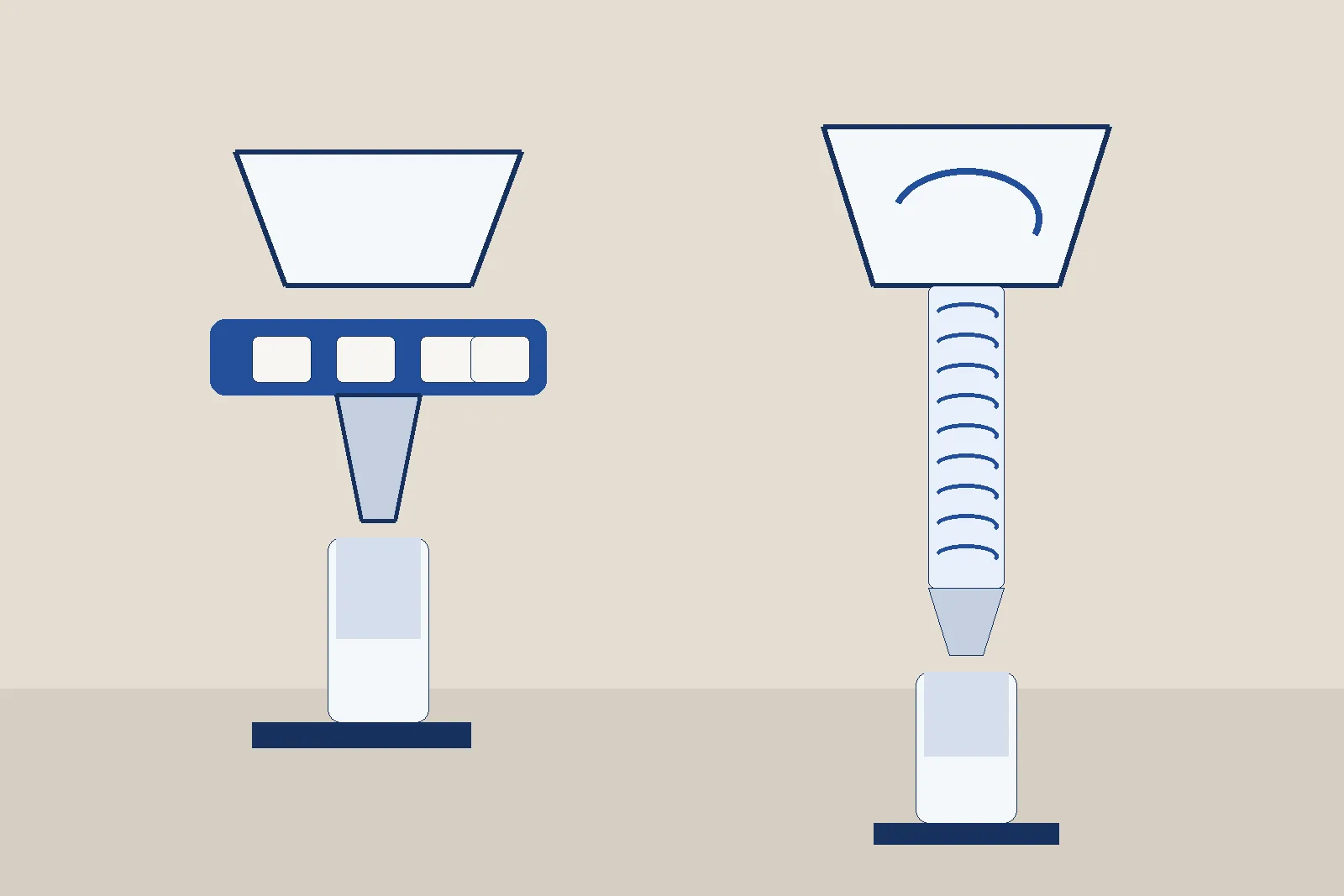
A cup that fills only partway, or a screw that shears a piece you need intact, wastes product and leaves residue in the dosing path. A volumetric cup filler and an auger filler both meter a volume. The weight in the pack still follows the bulk density of whatever product actually occupied that volume on that lot.
Several manufacturers already compare the two machines. This page uses those public descriptions of the mechanisms, then gives you a decision matrix and a paired-lot sheet. It does not declare a winner on accuracy or speed. If the alternative is weighing pieces in combination hoppers, use the auger filler and multihead weigher comparison instead.
Swipe sideways to see the other columns. The first column stays visible.
| Input | What to write down | What the note is for |
|---|---|---|
| Product flow | Pours, bridges, packs, dusts, or breaks | Whether gravity can fill a cup, or a screw has to carry the product |
| Density on the lot | Loose volume and settled volume, or a bulk density with its method | How far a fixed volume can move the weight |
| Dose | Target quantity and whether the spec is a weight or a volume | So both lots are judged against the same target |
| Cup fill and level | Height before the leveler, height after it, and whether the cup emptied | Whether the cup volume was actually full |
| Auger feed | Flight fill, a bridge over the screw, or a hole against the hopper wall | Whether the screw saw a steady product |
| Residue and change parts | Product left behind, and the cups, screw, tube or funnel fitted | The cleaning work and the tooling the result depends on |
How a cup measures, and how a screw carries
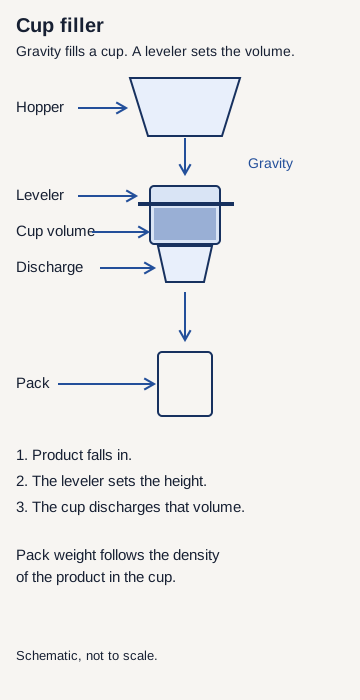
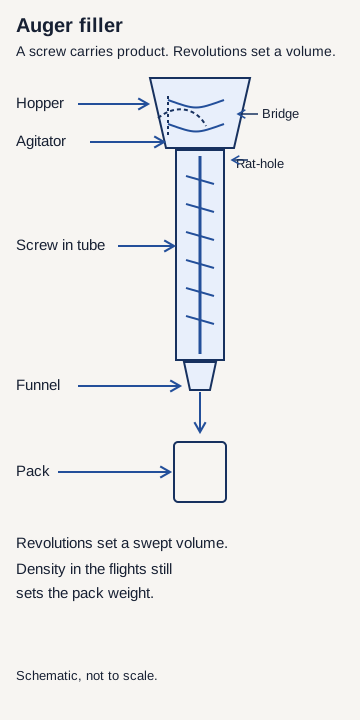
The drawings below are explanatory schematics of the two paths described in public equipment pages. They are not a named machine, a test setup, or a shipment.
Gravity cup
Product leaves the hopper under gravity and falls into a cup. A wiper or scraper levels the top. The cup then moves to a discharge point and the contents drop into the package. Zeepack’s 21 September 2026 comparison describes that sequence: flow into the cups, a wiper, travel to the discharge, the drop, and the empty cup returning. Soontact’s 3 December 2025 comparison describes the same idea with the cup bottom opening over a funnel. Cups sit in a rotating plate under the hopper.
The volume is the leveled cup, not the pile that first fell in. Soontact says the method assumes the product fills and levels the same way on every cycle. A cohesive powder can bridge across the cup mouth and leave the cup partly filled, and gravity has no second motion that pushes the missing product in. All-Fill’s SC/Series page describes that company’s cup filler for free-flowing products and names rice, popcorn, nuts, seeds and candy as examples. It also describes removable volume cups. Those examples are the manufacturer’s list for that series. They are not a test of your material.
Cup volume is changed in more than one way on the pages reviewed. Soontact describes telescopic cups, where a small change is a height adjustment and a larger change is a different cup set. Zeepack describes adjusting cup depth. All-Fill describes removing the volume cups. Write down which of those parts the machine in the trial actually has. A depth knob on one design is not a cup swap on another.
Screw transport
An auger filler turns a screw inside a tube. Soontact describes a close-fitting tube, a set number of revolutions, and an auger diameter and pitch that set the dose range. An agitator in the hopper keeps product moving into the flights. Zeepack describes a servo setting the rotations, an agitator moving powder toward the screw, and the target volume adjusted at the controller. Its sequence is a fill signal from the packaging machine, agitator motion, screw rotation, discharge of a volume, then a stop before the next cycle.
The flights carry product that would sit still in an open cup. That is transport. It is still a volume. Soontact states that neither filler weighs the dose: bulk density is what turns the volume into a weight. A new lot, a change in hopper level, or a humidity shift can move that density while the revolution count stays put. Soontact’s suggested correction is a checkweigher that trims the turn count after a pack has been weighed. The correction is after the fill. The checkweigher and metal detector comparison explains what an in-line scale is checking. It does not turn the screw into a scale.
Zeepack names two hopper faults worth watching on the sheet. Bridging is an arch of powder over the screw, so the flights run empty. Rat-holing is a tunnel the agitator cuts through the product while material stays packed on the hopper wall. Zeepack also lists scraper blades, hopper vibration and wall coatings as ways builders respond. Treat those as questions about the quoted machine. This page does not prescribe a coating or a vibration setting.
Takeaway: Record whether the cup was full after leveling, or whether the screw flights stayed full, before you compare the weights.
Match the mechanism to the flow you can see
Use the matrix as a screen. A row tells you which behavior to watch. It does not award the machine.
Swipe sideways to see the other columns. The first column stays visible.
| What you see in the product | Watch on the cup | Watch on the screw | Sheet field that holds the result |
|---|---|---|---|
| Granules pour and the leveled surface repeats | Whether the cup is full after the leveler and empty after discharge | Whether flights nick, shear or jam pieces that did not need a screw | Cup fill and level; auger feed |
| Powder bridges, packs or dusts | A partly filled cup, and dust on the plate, leveler or discharge | Flight fill, a bridge over the screw, or a rat-hole at the wall | Product flow; residual product |
| Loose volume and settled volume differ, or two lots differ | Fill weight moving with hopper level or with the lot, at the same cup setting | Fill weight moving at the same revolution count | Density; dose |
| Pieces are coated, brittle or coarse | Broken pieces after the drop and the leveler | Fines, smears, or a stall where a piece sits between flight and tube | Product flow, plus the dose weights |
| The line will change product or dose size | Which cup, insert or depth setting was fitted | Which screw, tube and funnel came off | Cleaning and change parts |
Soontact’s comparison table labels auger accuracy “high” and cup accuracy “moderate to high,” and it says to read that row as applying to the product each machine is built for, not as a property of the filler. The same table says the cup wins on speed, changeover, cleaning and price. Those labels are the supplier’s summary. They are not used here as measured results. Zeepack’s opening summary makes a similar speed-versus-precision claim and calls auger systems superior for dust. That ranking is not adopted. Dust and speed belong on the sheet as observations, with the product and the tooling named.
Free-flowing granules are the case both writers give for a cup: rice, beans, seeds, sugar, coarse salt, peppercorns, candy. Powders they give for a screw include flour, milk powder, spices, protein powders and, in Zeepack’s list, talc and cosmetic powders. All-Fill’s free-flowing examples overlap the granule list and add popcorn and nuts. A name on a list is a hint about flow. Whole bean coffee can pour like a granule. Ground coffee is on Zeepack’s in-between list, with mixed spices and some chemical granules, and that page says those materials should be tested because humidity, temperature or the formula can change the flow. Put your ground product through the sheet. Do not inherit the whole-bean example.
Dust is a geometry question, not a trophy. Soontact describes fine powder falling through an open funnel and reaching seal jaws, and describes the auger as holding product inside the tube until it leaves the tip. Zeepack describes cup fillers as more open, and auger fillers as enclosed systems that can include dust extraction. Your quoted cup may have a cover. Your quoted auger may still spill at the nozzle. Write where dust landed.
A screw can damage product because the flights move it. Soontact says flights shear what sits between the flight and the tube wall, and names coated candy, seeds and freeze-dried pieces. A coarse particle jammed there can stall the drive. Zeepack says the screw can damage freeze-dried fruit and delicate granules, and that a gravity cup is the gentler drop when shape matters. A drop can still break a brittle piece. Look at the product after each path and keep the damaged pieces with that lot’s row.
Takeaway: Keep the matrix as a list of observations to make, and leave the accuracy words off the decision.
Run two lots and keep one sheet
A paired lot means the same two lots of your product. Pick lots that differ in a way production already sees: two supplier lots, or a lot just filled into the hopper and a lot that has sat. Run each dosing method you are actually comparing on both lots. If only one machine is in the plant, fill that machine’s rows for both lots and leave the other method blank until you have it. One lot on one machine is a demonstration, not a pair.
Figure 3 is the worksheet. Copy the table under it into the trial file and leave every limit blank until the project team sets one. This page has no acceptance numbers.
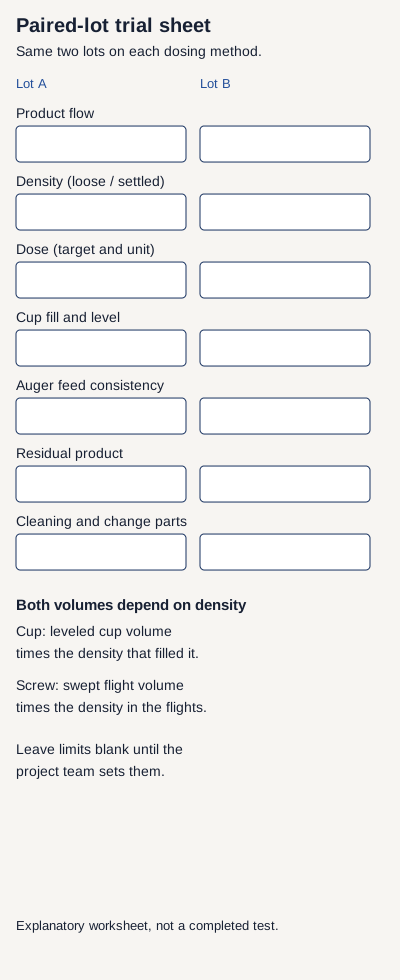
Swipe sideways to see the other columns. The first column stays visible.
| Field | Lot A | Lot B |
|---|---|---|
| Product and lot identity | ________ | ________ |
| Product flow: pours, bridges, packs, dusts, breaks | ________ | ________ |
| Density method and result (loose volume, settled volume, or stated bulk density and how it was measured) | ________ | ________ |
| Target dose and unit | ________ | ________ |
| Dosing method and tooling fitted (cup set or depth; screw, tube, funnel) | ________ | ________ |
| Cup fill and level: height before leveling, after leveling, and whether discharge emptied the cup | ________ | ________ |
| Auger feed: flight fill, bridge, rat-hole, revolution count used | ________ | ________ |
| Delivered dose: sample count, method, mean and spread | ________ | ________ |
| Residual product and where it remained | ________ | ________ |
| Cleaning and change parts removed or fitted | ________ | ________ |
| Who watched, and what is still unresolved | ________ | ________ |
How to fill the density and dose rows
Soontact describes a bench check for powder. Pour it into a graduated cylinder and read the loose volume. Tap the cylinder until the level stops dropping and read the settled volume. The compressibility index they print is 100 times the difference, divided by the loose volume. They then map a USP flowability scale onto cup and auger choices, from “excellent” flow toward a cup to poor flow toward a screw. That mapping is their screening rule. Copy the two volumes onto the sheet if you run the check. Judge the machine from the fill weights on these lots, not from the band name.
Write the target dose in the unit the specification uses. If the specification is a weight, a stable cup height can still miss it when density moves. If the specification is truly a volume, say so, and still record the weight so a later argument about giveaway has numbers from the same run. OIML R 87 is a reference for how net quantity in prepackages is verified. It does not set your tolerance. The market and the product owner do.
For the delivered-dose row, write the sample count and whether you weighed filled packs, caught the dose in a cup, or used another method. Leave the mean and the spread blank until those samples exist. Do not type a supplier’s accuracy percentage into the cell.
Cup level, auger feed, residue, cleaning
On the cup, record three observations per lot. How full was the cup before the leveler scraped it? How full was it after? Did the discharge empty it, or did product hang up? A leveler that scrapes air over a bridge is not delivering the cup volume drawn on the general arrangement.
On the screw, record whether the flights looked full, whether an arch formed over the screw, and whether the agitator left a hole with product stuck to the wall. Write the revolution count or the controller setting that was actually used, so a later weight change can be compared with the setting held constant.
Residual product is part of the dose result. Product left in the cup, on the leveler, in the funnel, on the screw or in the tube is product that did not reach the pack, and it is also product the next lot can pick up. Note the location in words. A wipe that looks clean on the plate and dirty inside the tube is a different cleaning job from the reverse.
Change parts are the tooling fitted during the run: cup set or depth position, screw, tube, funnel, agitator. Zeepack publishes minute ranges for small volume changes, larger tooling swaps and product changes. Those ranges are left out of this page. They are not tied to a named machine, a crew or your product. Time the work if the duration matters, and store the time in your own file. The format changeover checklist is the place for the line’s changeover steps around this dosing unit.
All-Fill’s SC/Series page says the volume cups are easily removable and mentions servo-driven position control. The same page states a fill-weight span and a fills-per-minute figure for that series. The product, cup set and acceptance method behind those figures are not on the page, so the figures are not repeated here and are not a baseline for your trial.
Takeaway: Same two lots, both methods you are comparing, and blank limits until your team sets them.
What to do with the sheet afterward
Zeepack says both dosing styles are used with vertical form-fill-seal machines, horizontal form-fill-seal machines, premade pouch machines and rigid containers, and that the doser and the packaging machine have to agree when the container is actually there to receive product. A fill signal that arrives early spills. A signal that arrives late leaves an empty pack. The VFFS and premade pouch comparison covers how the bag or pouch is made and presented. Keep this sheet for the dose itself.
Cleaning access is a design question to confirm on the machine, not a slogan. EHEDG Guideline 8 is a reference for hygienic design principles such as cleanability and accessibility. It is not a certificate for either filler. Ask which product-contact parts come off without tools, which need tools, and how residue inside a tube or under a cup plate is reached. ISO 12100 is the reference for risk assessment of machinery. Screws, agitators and rotating cup plates can trap or pinch. Watch the trial under the site’s isolation rules. Do not bypass a guard to see a flight fill.
Factory and site acceptance are a later gate. Zeepack argues for running production material before accepting a machine. Use the factory and site acceptance guide to decide who signs which test. Carry this sheet into that test as the dosing record. The sheet is not itself an acceptance protocol, and it does not set a speed.
Takeaway: File the sheet with the tooling list and the two lot identities, and keep supplier accuracy labels in the source file rather than in the result cells.
Limits
This page compares two volumetric methods and stops there. It does not choose between an auger and a multihead weigher, and it does not cover linear weighers, vibratory feeders or liquid fillers. Piston and pump filling for liquids and pastes is a separate comparison: piston versus pump filling.
No speed, accuracy percentage, changeover duration, price, power figure or certification is stated as a property of cup fillers or of auger fillers. Public pages that do state those things are describing their own equipment, often without a shared product and method. Where a figure could not be tied to a product and a tooling set, it was left out.
The three mechanism sources are manufacturer pages. They are not independent trials of your product. Product examples on those pages (rice, flour, and the rest) illustrate the flow the writer had in mind. Your material can share a name with an example and still behave differently once it is aerated, packed or humid.
The blank sheet is an editorial worksheet. Filling it in does not create a test report from this site. We did not run product, and we do not supply the machines.
Related decisions
Place the dosing step on the line with the packaging machine types overview. When the dose must be a weighed combination of pieces, go back to the auger and multihead comparison. After the weights exist, the checkweigher guide covers in-line verification of package weight.
Method and sources
Read on 12 October 2026 from archived library copies. Manufacturer text supports the mechanism descriptions only.
- All-Fill, SC/Series cup fillers, library copy fetched 7 October 2026. Free-flowing product examples, removable volume cups, and servo-driven position control as that page describes them. The page’s fill-weight span and fills-per-minute figure are not used, because the product, cup set and acceptance method are not stated there.
- Soontact, Auger filler vs volumetric cup filler, byline 3 December 2025, library copy fetched 8 October 2026. Screw-in-a-tube versus gravity cup, level and discharge; both methods depend on bulk density; telescopic cups; the loose-and-settled volume check and their USP band mapping; checkweigher trim of revolution count after a weighed pack. Their accuracy, speed, changeover, cleaning and price row is quoted only to set it aside.
- Zeepack, Auger filling machine vs cup filling machine, publish time 21 September 2026, library copy fetched 8 October 2026. Cup sequence with a wiper and discharge, screw sequence with agitator and servo rotations, bridging and rat-holing, and the statement that both styles are used on form-fill-seal, premade pouch and rigid-container machines. Speed-versus-precision rankings and the published changeover minute ranges are not adopted.
OIML R 87, EHEDG Guideline 8 and ISO 12100 are scope references for net-quantity rules, hygienic design principles and machinery risk assessment. They are not results from a dosing trial.
References
- SC/Series Cup Fillers — All-Fill Inc.
- Auger Filler vs Volumetric Cup Filler: A Beginner's Guide to Choosing the Right Food Packaging Equipment — Soontact Intelligent Equipment
- Auger Filling Machine vs Cup Filling Machine — Zeepack
- OIML R 87:2016 — Quantity of product in prepackages — OIML
- EHEDG Guideline 8 — Hygienic Design Principles (Fourth Edition) — EHEDG
- ISO 12100:2010 — Safety of machinery — General principles for design — Risk assessment and risk reduction — ISO
Update history
- : First published.
Next steps
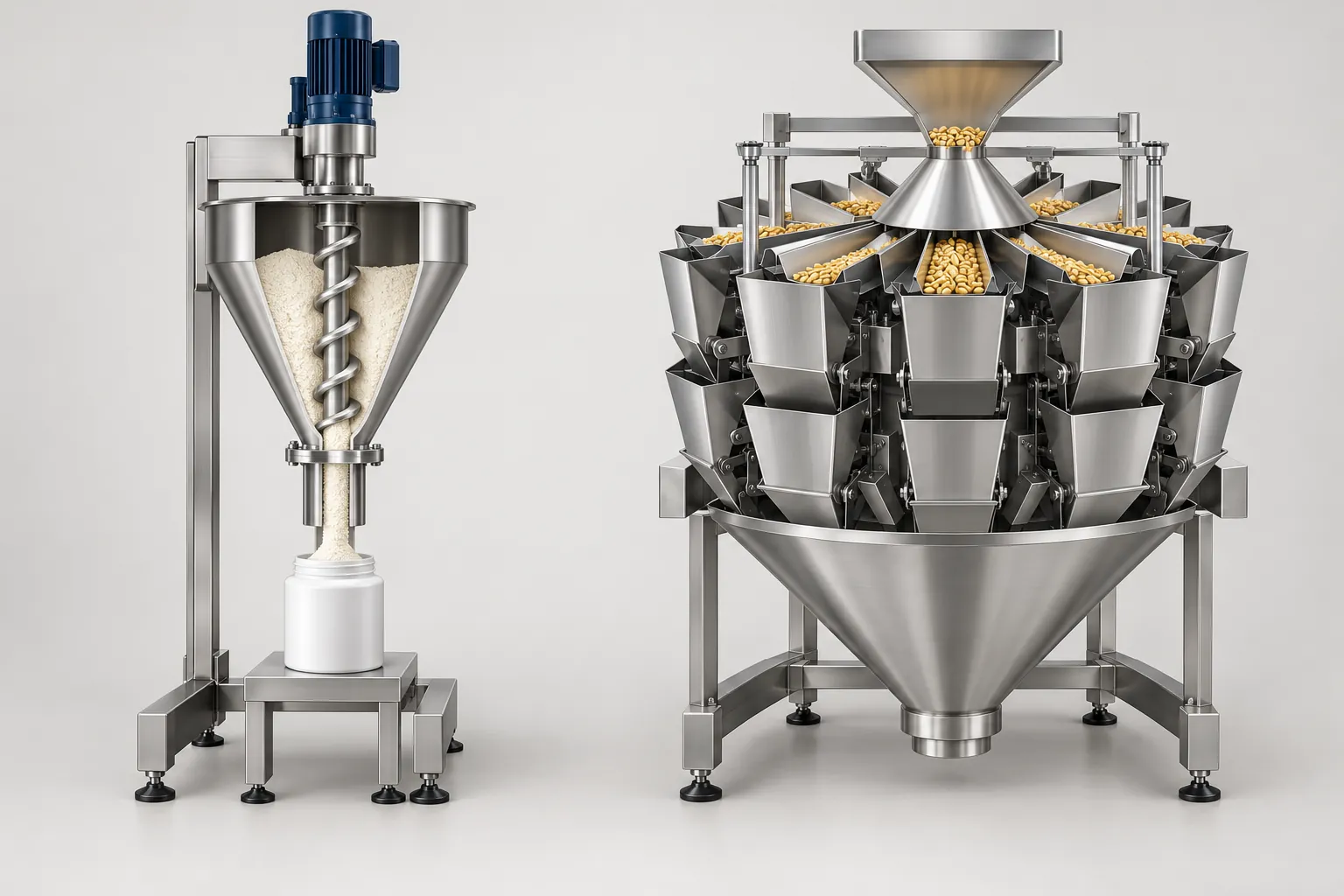
Auger Fillers vs. Multihead Weighers: Matching the Dosing System to the Product
Compare auger fillers and multihead weighers by dosing principle, product flow, fragility, dust, cleaning and mixes, with supplier questions and trial guidance.
Read guide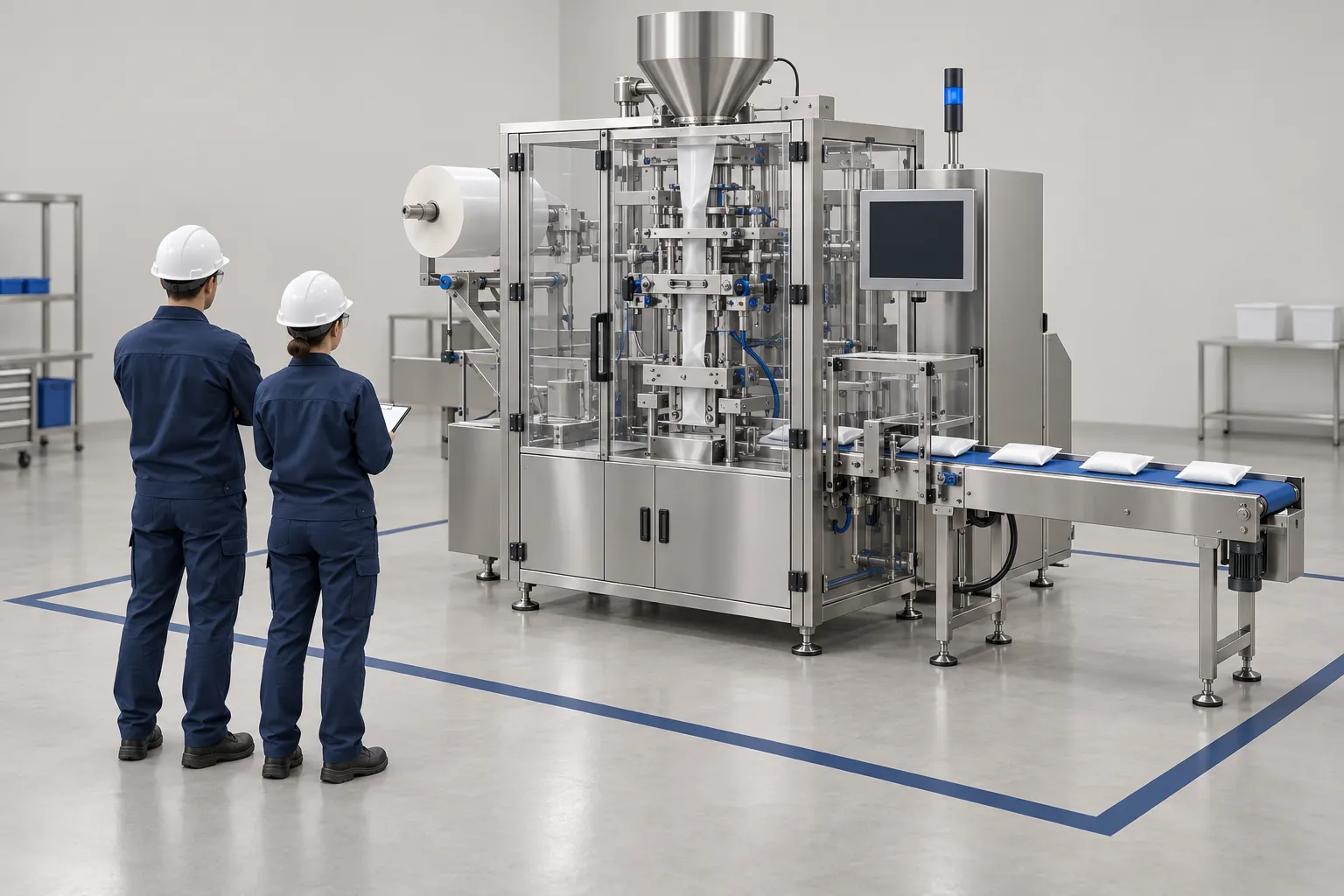
FAT vs. SAT for Packaging Equipment: Defining Acceptance Criteria
Compare factory and site acceptance tests for packaging machines, and learn how to write acceptance criteria that both buyer and supplier can verify.
Read guide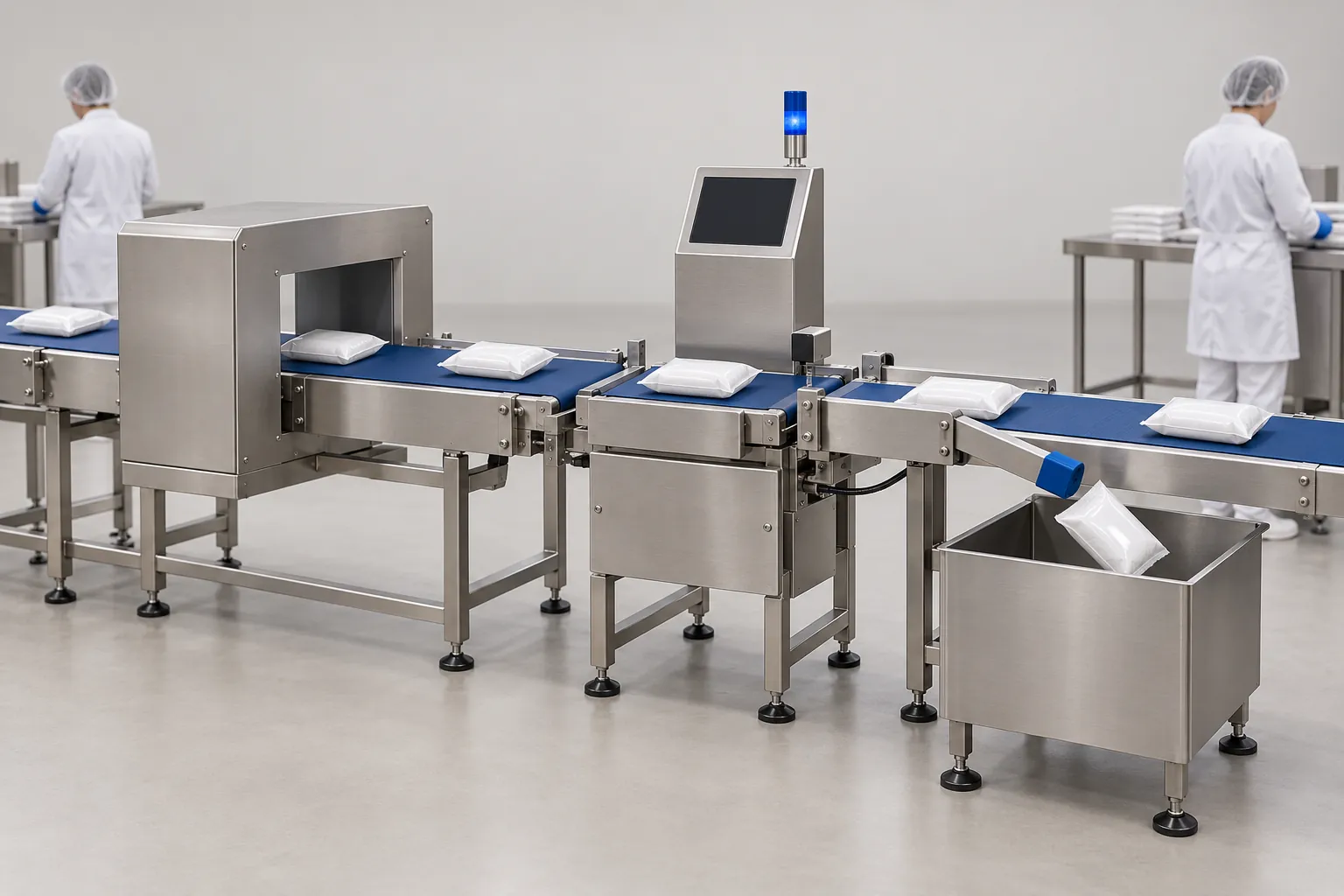
Checkweighers vs. Metal Detectors: Different Inspection Jobs
A checkweigher verifies package weight and a metal detector controls metal contamination. See why one cannot replace the other and how to plan rejects and records.
Read guide