
VFFS for Shredded Cheese: Match the Weigher, Product Flow and Cleaning Plan
Split shredded-cheese preparation, weighing, sealing, gas flush and cleaning on one trial sheet, and leave speed, bag size and oxygen cells blank.
Shreds that clump in the feed, miss the dose, or sit in the seal waste the bag before a machine rate is worth comparing. Write preparation, dosing, the seal area, gas flush and cleaning access on one sheet, and leave every cell blank until a trial on this cheese fills it.
Applies to: Shredded or grated cheese from preparation through a vertical bagger. Does not set a speed, a bag size, a residual-oxygen limit, a shelf life, an anti-caking recipe, or a certificate. Cottage-cheese listings are a different material and their figures are not used.
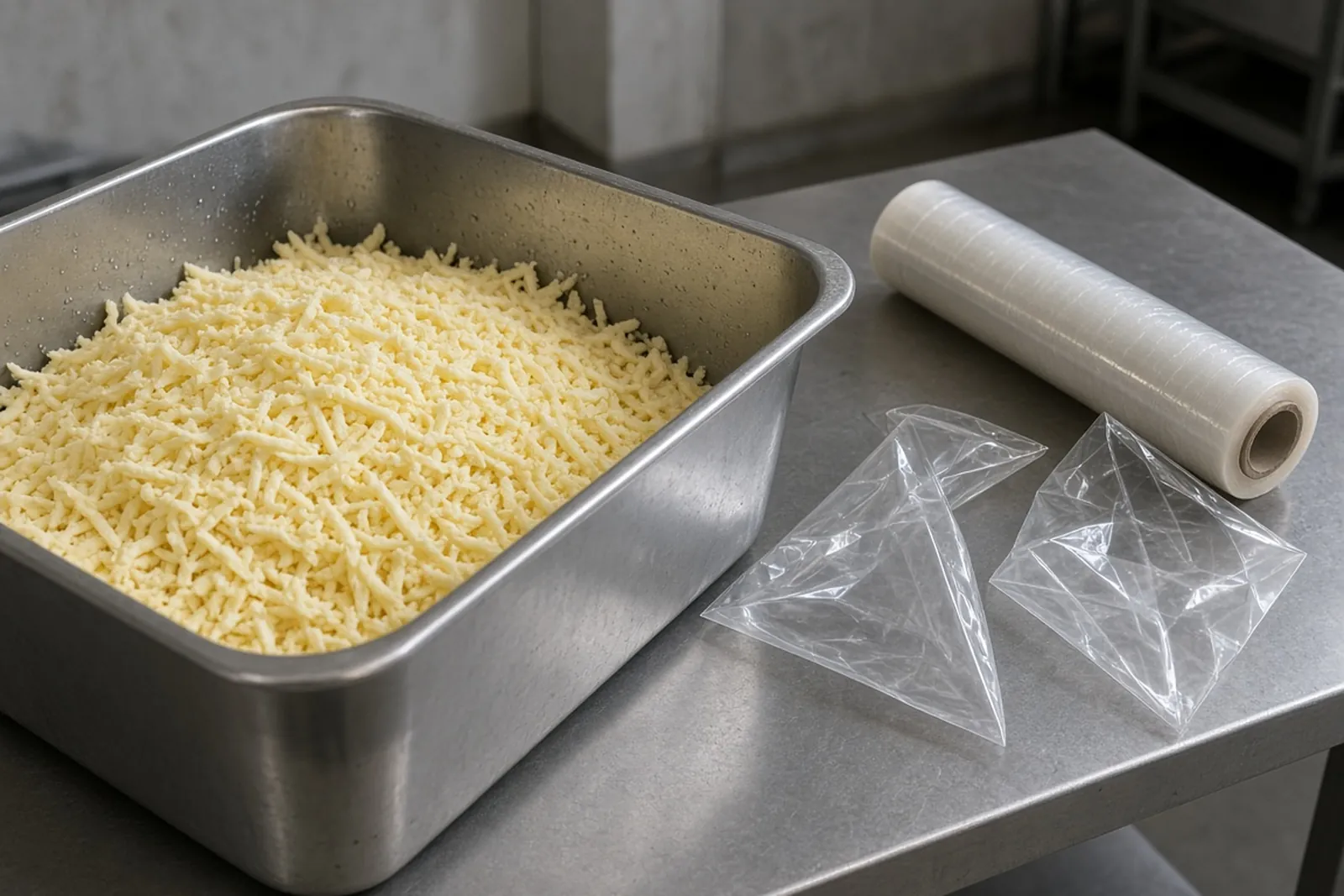
Shreds that clump in the feed, miss the dose, or sit in the seal waste the bag before a machine rate is worth comparing. Write preparation, dosing, the seal area, gas flush and cleaning access on one sheet, and leave every cell blank until a trial on this cheese fills it.
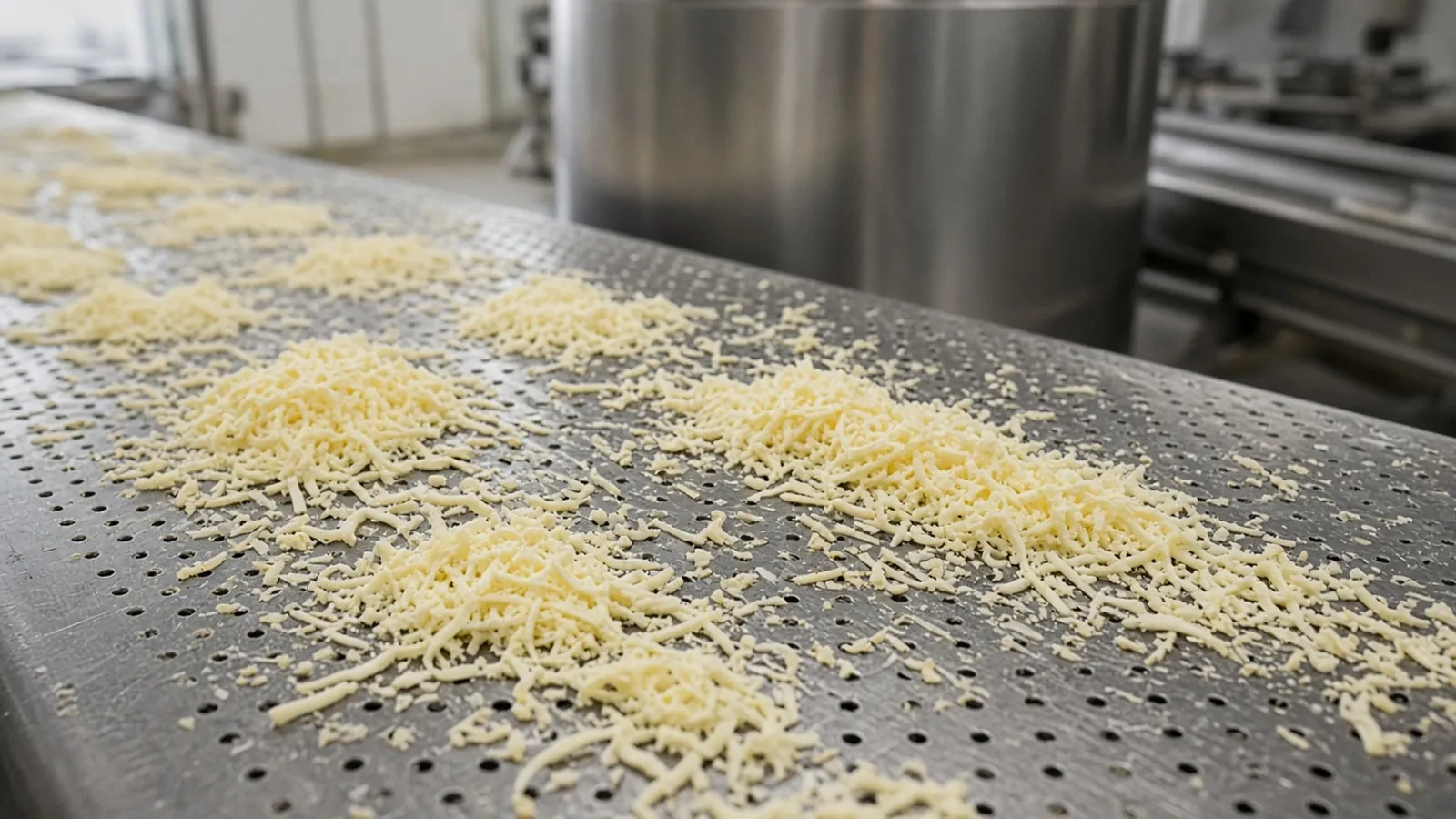
The photograph shows shreds on a belt. It does not name a grater, a tumbler, or a weigher, and it is not a completed trial. Two public pages describe parts of a cheese bagging line. They do not share one record of the cheese, the feed, the dose, the seal, the gas and the cleaning access. This page is that record. It does not pick a faster machine.
A shredded-cheese vertical line is a sequence of jobs, and a bagger rate does not tell you which job failed. ULMA’s page, library copy fetched 7 October 2026, starts at a grater and ends, for this sheet, when a multihead weigher transfers a dose into a vertical bagger. Triangle’s post of 15 April 2026, library copy fetched 6 October 2026, talks about product in the seal, a gas tube down the forming tube, and whether the frame can be cleaned. Neither page prints a shredded-cheese speed, a bag length, a bag width, or a residual-oxygen number. Where a page is silent, the cell stays blank.
If the package is already a premade pouch rather than a bag formed on the machine, use the VFFS and premade pouch comparison for the package route, and keep this sheet for how the cheese gets to the seal.
Swipe sideways to see the other columns. The first column stays visible.
| Input | What to write down | What the note is for |
|---|---|---|
| Named cheese and cut | The cheese name and the word the specification uses: shred, grate, or both | So a later run is about the same product |
| Preparation | Who grates, who reads the flow, what was added, and whether a tumbler ran | So a clump has a station |
| Dose | The unit the specification uses, and the doses you actually weighed | So a light bag is not called a feed problem by habit |
| Seal area | Whether cheese, powder, or moisture sat in the seal on this run | So a leaker is tied to what was in the jaw |
| Gas flush | The device that was fitted, and any reading from an instrument you used | So a hoped-for oxygen number is not typed in as a limit |
| Cleaning access | Which product-contact parts a person can reach and remove | So a sanitary sentence is not standing in for access |
What the ULMA page sequences before the bag
The sequence below is one manufacturer’s description of one installation. A sentence on that page is not a test of another company’s machine. The stored version has no publication date. The fetch date is 7 October 2026.
The page title says shredded cheese. The first heading in the body says grated cheese. Those are the page’s own words for the same installation. They are not a proof that every shred and every grate behave the same way. Write the word your specification uses. If the specification says one word and the sample looks like the other, write both in the product cell and say which one you ran.
The packaging line on that page begins with a cheese grater. A belt picks up the cheese and automatically reads the flow of cheese it receives. ULMA’s page adds anti-caking, usually potato starch, in proportion to the cheese flow the belt reads. That parenthetical is the manufacturer’s example of what is usually added on that line. It is an example from one page, not a recipe for every cheese, and this site does not set a starch percentage. On the sheet, write the additive that was used on this run, the unit, and who set the proportion. If nobody wrote the proportion down, leave the proportion cell blank.
The page then says all the cheese is transported to a tumbler, which homogenizes the mixture so that the product will not become compacted once packaged. That is the manufacturer’s purpose sentence for the tumbler. It is not a count of clumps, and it is not a result from your lot. On the sheet, the tumbler row records whether a tumbler ran, and what the cheese looked like after it: loose shreds, a mat, or a lump. A lump in the bag and a lump still on the belt are two locations. Put the location in the cell.
The product then rises to a multi-head combination weigher. The page says the weigher makes the necessary doses for each bag and transfers the product to the vertical packaging machine. It does not print a target weight, a tolerance, a head count, or a timing method. “Necessary” is the page’s word. It is not a number you can copy. If your specification names a weight or a count, write that target and its unit. If the specification is silent, write “specification silent” and leave the target blank.
The same page says both the multihead and the vertical packaging machine are flexible and designed to work with different bag formats. It also says ULMA has different packaging models for the dairy sector and chooses a model depending on speed, dose and reclosable solutions. The page does not print the speed, the dose, or the bag format those sentences depend on. A reclosable feature named in a sentence is not a bag you measured. Copy the sentences into the source note if you are reading that installation. Leave the trial sheet’s speed cell and bag-size cell blank until your run has a count, a cheese, and a measured bag.
After the bag, the same page describes an automatic destacker for empty plastic crates, a robot that case-packs bags into crates, an inline bar closure, crate stacking, and a labeler on each crate. Those steps are downstream of the bagger. This sheet stops when the dose has entered the vertical machine and the bag has been sealed or set aside. Crate logistics belong with the cartoner and case packer comparison if the open question is how closed bags go into a crate. They do not fill a dose cell or a seal cell.
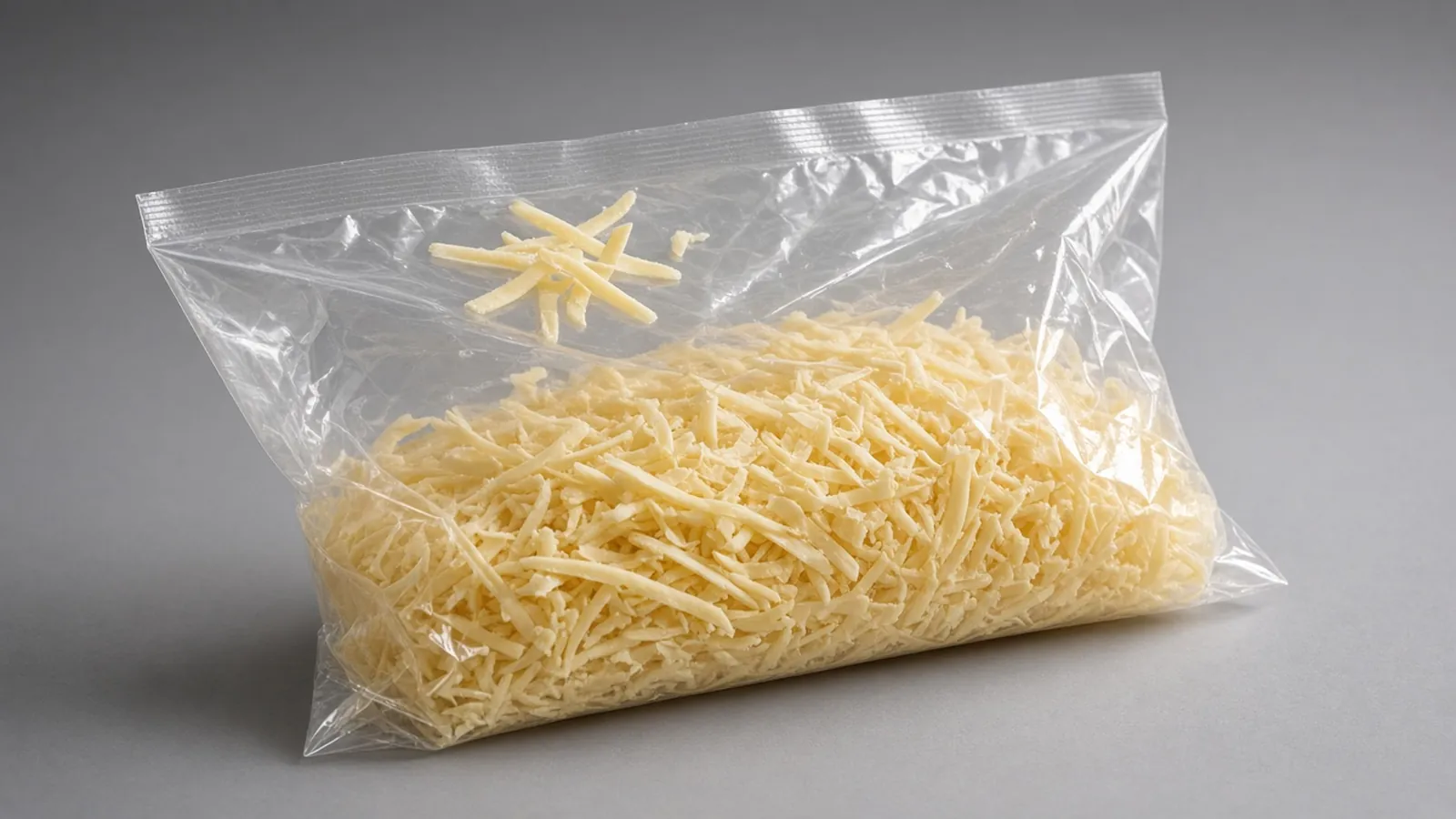
The photograph shows shreds on clear film above cheese in a bag. It does not show a seal jaw, a leak test, or a named film. Use it to see the kind of residue a seal row has to name. Your bag may not look like this.
Takeaway: Keep ULMA’s starch example, tumbler sentence and model sentence in the source note. The trial sheet starts blank.
What the Triangle post separates at the bagger
Triangle’s post is dated 15 April 2026 and carries the byline Don Maxwell, Regional Manager. The library copy was fetched 6 October 2026. It is a manufacturer’s argument about cheese bagging. It is not an independent trial of your cheese, and this page does not check any certificate number the post names.
The post says cheese molds quickly once exposed, retains heat during packaging, and that moisture and fat content vary between product types. Those are the post’s statements about cheese as a category. They are not a shelf life, a temperature, or a fat percentage for your lot. The sheet records the cheese name and, in words, whether this lot was warm, oily, dry, or wet to the touch. It does not convert those words into a shelf-life claim.
On seal integrity, the post says shredded products often require flow agents that get into seal areas, and that this can cause leakers and contamination. That sentence is why the seal row is separate from the feed row. A flow agent that was added at the grater can show up again in the jaw. Write whether you saw shreds, powder, or moisture in the seal on this run, and whether the bag leaked when you handled it. The post does not print a leak count. Do not borrow one.
The same post says its 3-A certified baggers offer ultrasonic sealing as an option, and that ultrasonics seal through product contamination in the jaw more effectively than traditional heat-seal systems. That is the manufacturer’s comparison. This page does not adopt it as a result. On the sheet, the seal method cell records what was fitted on the machine you watched: heat, ultrasonic, or a method you can point at. If you cannot point at it, leave the cell blank. A feature sentence is not a winner.
On gas flush, the post says gas flush has traditionally been seen as more successful on horizontal machines for retail packages. It says Triangle is developing a new gas-flush system for its vertical bagger, looking at laminar versus turbulent flow, nozzle geometry and gas conveyance. The author writes that most lines he visits just run a gas tube down the forming tube and hope for good residual-oxygen numbers. The post does not print a residual-oxygen number, a gas name, or a flow rate. “Hope” is the post’s word for what those visits did not measure. On the sheet, write the device you can see (a tube down the forming tube, another nozzle, or none). If you have an instrument printout from this run, attach it and write the reading with its unit. If you do not, leave the oxygen cell blank. Do not type a target because a vertical bagger “should” have one.
On hygienic design, the post says a machine built for potato chips or cereal, retrofitted with a stainless forming tube, does not become a sanitary cheese packaging solution, because the welds, the joints and the surfaces of the rest of the frame were not part of that retrofit. That is a design argument, not a swab result. The cleaning row asks which of those parts a person can reach on the quoted machine, and which product-contact parts come off. EHEDG Guideline 8 is a reference for hygienic design principles such as cleanability and accessibility. It is not a certificate for any model named in the post.
The post names model XM as its go-to bagger and says it is often paired with a multihead weigher, either Triangle’s own inline weigher or another supplier’s. It names Yamato as one weighing partner. Those sentences matter because the weigher and the bagger may be different companies. Write both names on the sheet if both are in the room. A partner named in a blog post is not a weigher you have on order. The post also makes certification statements about machines and forming tubes. This page does not verify them, and it does not repeat a claim that any one manufacturer is the only certified supplier.
If the dosing device in the room is a weigher or a screw, the auger filler and multihead weigher comparison is the place to separate weighing pieces from transporting a powder. Cheese shreds are pieces that can clump. A powder page does not choose this bagger. It stops you from writing “automatic” in the dose cell when you still do not know which device releases the portion.
Takeaway: A flow agent in the jaw, a gas tube with no reading, and a frame you cannot reach are three different notes. The post’s certificate language stays in the source file.
Map each failure to the station that can see it
Use the map as a screen. A row tells you which station writes the observation. It does not award a machine.
Swipe sideways to see the other columns. The first column stays visible.
| What you can already point at | Preparation column | Weigher column | Bagger column | Sheet field |
|---|---|---|---|---|
| Shreds stick together, or the cheese mats | Where the clump sits: belt, tumbler, or after the tumbler | Leave blank until the clump is inside a bucket or a chute | Leave blank until the clump is in the bag | Clumping and feed |
| Bag weights or counts differ | Leave blank unless the variation started before the weigher | The doses you weighed, in the specification’s unit | Leave blank unless the bag closed on a short dose | Dose variation |
| Cheese, powder, or moisture is in the seal | The additive name, if one was added upstream | Leave blank unless the weigher dusted the dose | What was in the jaw, and whether the bag leaked in your hands | Seal contamination |
| A gas device is fitted | Leave blank | Leave blank | Tube, other nozzle, or none; reading only if you measured | Gas flush |
| A person has to clean the machine | Parts reached before the weigher | Buckets, chutes, and contact parts on the weigher | Forming tube, jaws, and frame joints a person can reach | Cleaning access |
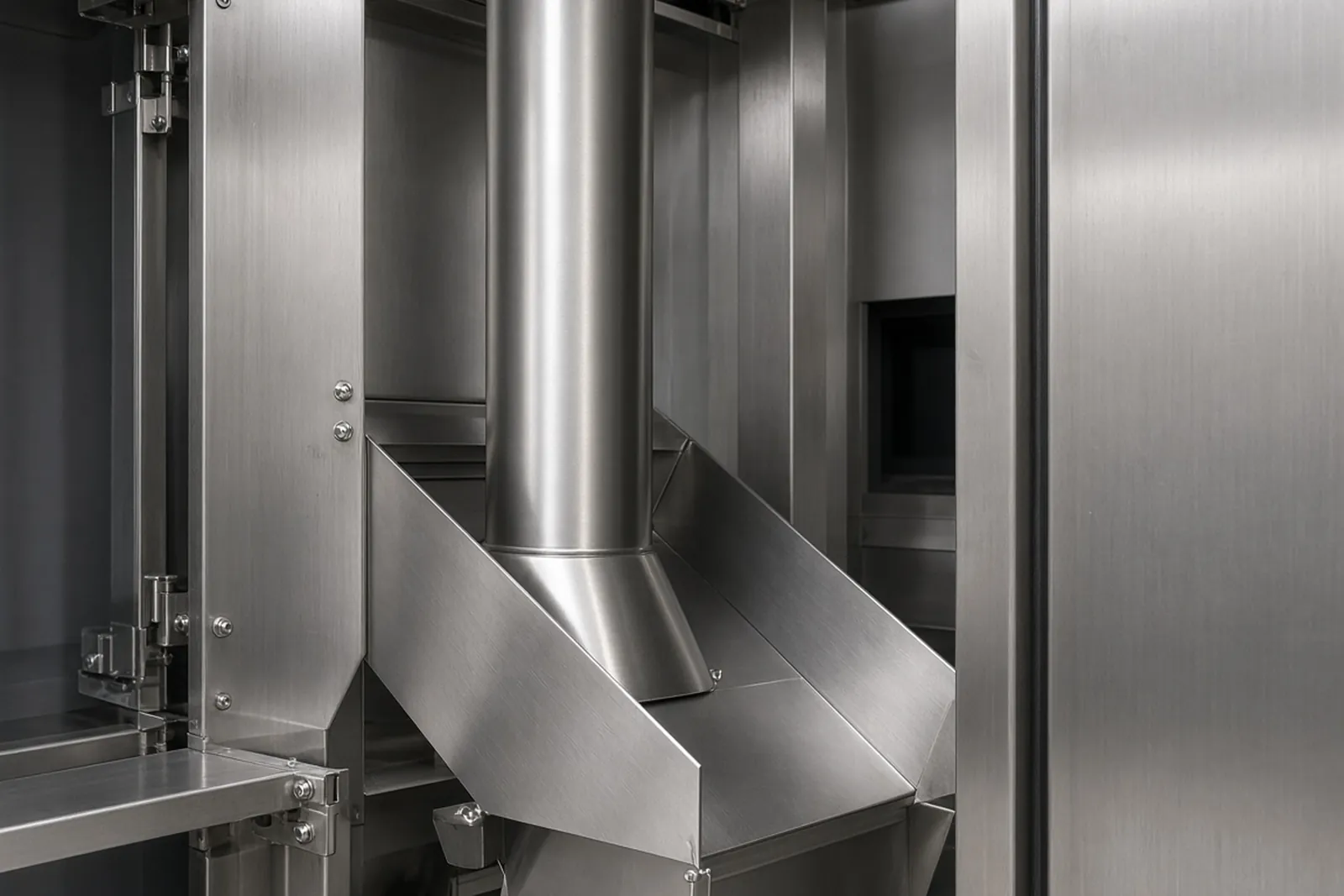
The outlines below have no labels and no measurements. They only separate a belt and a drum from a cluster of wedges and from a tall bar, which is the distinction the three columns are for.

Takeaway: If you cannot point at the station, that column stays blank and the failures are not separated yet.
Fill one sheet for the cheese you run
Run the line that is actually in the plant. If preparation is in another room and you can see only the bagger, fill the bagger column and leave preparation blank. A brochure with no sheet is not a trial. Copy the table into the trial file. This page has no acceptance numbers. The project team sets any limit later, in its own file.
Swipe sideways to see the other columns. The first column stays visible.
| Field | Preparation | Weigher | Bagger |
|---|---|---|---|
| Cheese name and the cut word on the specification | ________ | ________ | ________ |
| Condition of this lot, in words | ________ | ________ | ________ |
| Additive name, amount, unit, and who set it | ________ | ________ | ________ |
| Clumps or mats, and where they sat | ________ | ________ | ________ |
| Dose target and unit, or “specification silent” | ________ | ________ | ________ |
| Doses or bag weights you measured on this run | ________ | ________ | ________ |
| Product in the seal, and whether the bag leaked in hand | ________ | ________ | ________ |
| Seal method you can point at | ________ | ________ | ________ |
| Gas device fitted | ________ | ________ | ________ |
| Oxygen reading and unit, only if measured here | ________ | ________ | ________ |
| Parts a person can reach and remove | ________ | ________ | ________ |
| Bag length, width and style, only if measured here | ________ | ________ | ________ |
| Who watched, and what is still unresolved | ________ | ________ | ________ |
How to fill clumping, dose and the seal
Clumping is a location, not a score. ULMA’s tumbler sentence says the mixture is homogenized so the product will not become compacted once packaged. Check that claim against this lot: look at the belt, look after the tumbler, and look in the bag. A mat that was already on the belt is not a mat the weigher made. Triangle’s flow-agent sentence belongs in the seal row as well as the preparation row, because the post says those agents get into seal areas. Write the agent once, under preparation, and write what you saw in the jaw under the bagger. Do not invent a second additive to make the row look finished.
Dose variation is a list of measurements in one unit. If the specification is a weight, write the weight and the unit for each bag you actually weighed. If it is a count of shreds, write the count. Do not convert a count into a weight on this page. No piece weight is established here. ULMA’s page says the multihead makes the necessary doses and does not say what “necessary” equals. Leave the target blank when the specification is silent. A single bag that looks full is not a dose record.
Seal contamination is what you can see in the seal from this run: shreds, powder, oil, or moisture, and whether the bag leaked when handled. The Triangle post does not publish a leak rate for a named cheese. The seal defect investigation checklist is the place for containing suspect packs and changing one variable at a time. This sheet only records that product was, or was not, in the seal. It does not set a jaw temperature, a dwell, or a pressure. Those settings are absent from both opened pages.
Gas flush, cleaning access and the bag you measured
Gas flush stays a device description until there is a reading. The Triangle post’s picture of a gas tube down the forming tube is one description of lines the author says he visits. If your machine has a different nozzle, write the nozzle you see. If nobody measured oxygen, the reading cell stays blank. A development sentence about laminar flow is not a result from your trial, and it is not a residual-oxygen limit.
Cleaning access is the path a person walks, not a slogan about sanitary design. Name the parts: grater outlet, tumbler door, weigher bucket, chute, forming tube, jaw. Say whether the part comes off, and whether a person can see the product-contact surface without bypassing a guard. ISO 12100 is a reference for risk assessment of machinery. Hands, sealing jaws and moving buckets can trap or pinch. Watch the trial under the site’s isolation rules. Do not bypass a guard to see a seal. The Triangle post’s remarks about welds, joints and surfaces tell you which features to ask about. They do not certify the machine in the room. Surface-finish numbers in that post stay in the source note. If the supplier document names a finish, copy that name into the cell. If it does not, leave the cell blank.
The bag row stays blank until someone measures the bag that was actually made. ULMA’s page says the machines work with different bag formats and does not print a length or a width. Triangle’s post does not print a bag size either. A format mentioned as “reclosable” is a feature word, not a dimension.
Takeaway: One station fills its own column. A column with no machine in the room stays blank.
What to do with the sheet afterward
File the sheet with the cheese name, the lot words, and the devices that were fitted. A printed rate stays in the source file. Neither opened page gives a shredded-cheese bag rate with a product, a portion and a clock, so there is nothing on those pages to copy into the speed cell. Cottage-cheese machine listings are a different material. Their speeds are not entered here.
Place the bagger on the line with the packaging machine types overview. The sheet does not decide whether the bag should be formed from roll film. That question stays with the premade-pouch comparison if the plant is choosing the package route.
Factory and site acceptance are a later gate. Use the factory and site acceptance guide to decide who signs which test. Carry this sheet in as the preparation-to-bagger record. The sheet is not itself an acceptance protocol, and it does not set a speed, a leak limit, or an oxygen limit.
Takeaway: The sheet is ready for a trial file when the cheese, the stations and the blank cells are honest. It is not a speed claim and it is not a certificate.
Limits
This page maps preparation, dosing, sealing, gas flush and cleaning access for shredded or grated cheese, and it stops there. It does not set a film oxygen transmission value, a modified-atmosphere recipe, a shelf life, or a food-safety validation. It does not turn ULMA’s potato-starch example into a recipe, and it does not turn Triangle’s ultrasonic sentence into a ranking.
No bag rate, bag size, dose tolerance, starch percentage, or residual-oxygen target is stated here as a property of vertical baggers in general. The sentences that do appear are the manufacturers’ descriptions, with the conditions those pages actually print. Where a page is silent, the cell stays blank.
The mechanism sources are manufacturer pages. They are not independent trials of your cheese. A shred on one page can share a name with your shred and still behave differently once it is warm, oily, or cut finer. The blank sheet is an editorial worksheet. Filling it in does not create a test report from this site. We did not run product, and we do not supply the machines.
Related decisions
The machine types overview places a vertical bagger among the other primary machines. When the open question is the dosing device rather than the bag, go to the auger and multihead comparison. When the open question is roll film versus a pouch that already exists, use the VFFS and premade pouch comparison. When the open question is how to investigate a seal that already failed, use the seal defect checklist. Closed bags going into crates stay with the cartoner and case packer comparison.
Method and sources
Read from archived library copies. Manufacturer text supports only the descriptions cited. Compiled from those public pages. This site did not run a cheese trial, and it did not verify a certificate number.
- ULMA Packaging, Complete solution for packaging of shredded cheese with plastic crates, library copy fetched 7 October 2026. No publication date on the stored version. Grater, belt that reads cheese flow, anti-caking usually potato starch in proportion to that reading, tumbler to homogenize the mixture, multihead weigher making doses and transferring them to a vertical packaging machine. The page names speed, dose and reclosable solutions as reasons for a model choice and does not print those values. Crate destacking, robotic case packing, bar closure, stacking and labeling are downstream of this sheet.
- Triangle Package Machinery, Why 3-A Certified VFFS Baggers Are the Safe Choice for Cheese, 15 April 2026, byline Don Maxwell, library copy fetched 6 October 2026. Flow agents in seal areas, heat retained during packaging, moisture and fat varying by product type, ultrasonic sealing offered as an option, a gas tube down the forming tube with no residual-oxygen number, and hygienic-design comments on welds, joints and surfaces. Model XM is named as often paired with a multihead, including other suppliers such as Yamato. Certification statements in the post are not checked on this page.
ISO 12100 and EHEDG Guideline 8 are scope references for machinery risk assessment and hygienic design principles. They are not results from a cheese bagging trial.
References
- Complete solution for packaging of shredded cheese with plastic crates — ULMA Packaging
- Why 3-A Certified VFFS Baggers Are the Safe Choice for Cheese — Triangle Package Machinery
- ISO 12100:2010 — Safety of machinery — General principles for design — Risk assessment and risk reduction — ISO
- EHEDG Guideline 8 — Hygienic Design Principles (Fourth Edition) — EHEDG
Update history
- : First published.
Next steps
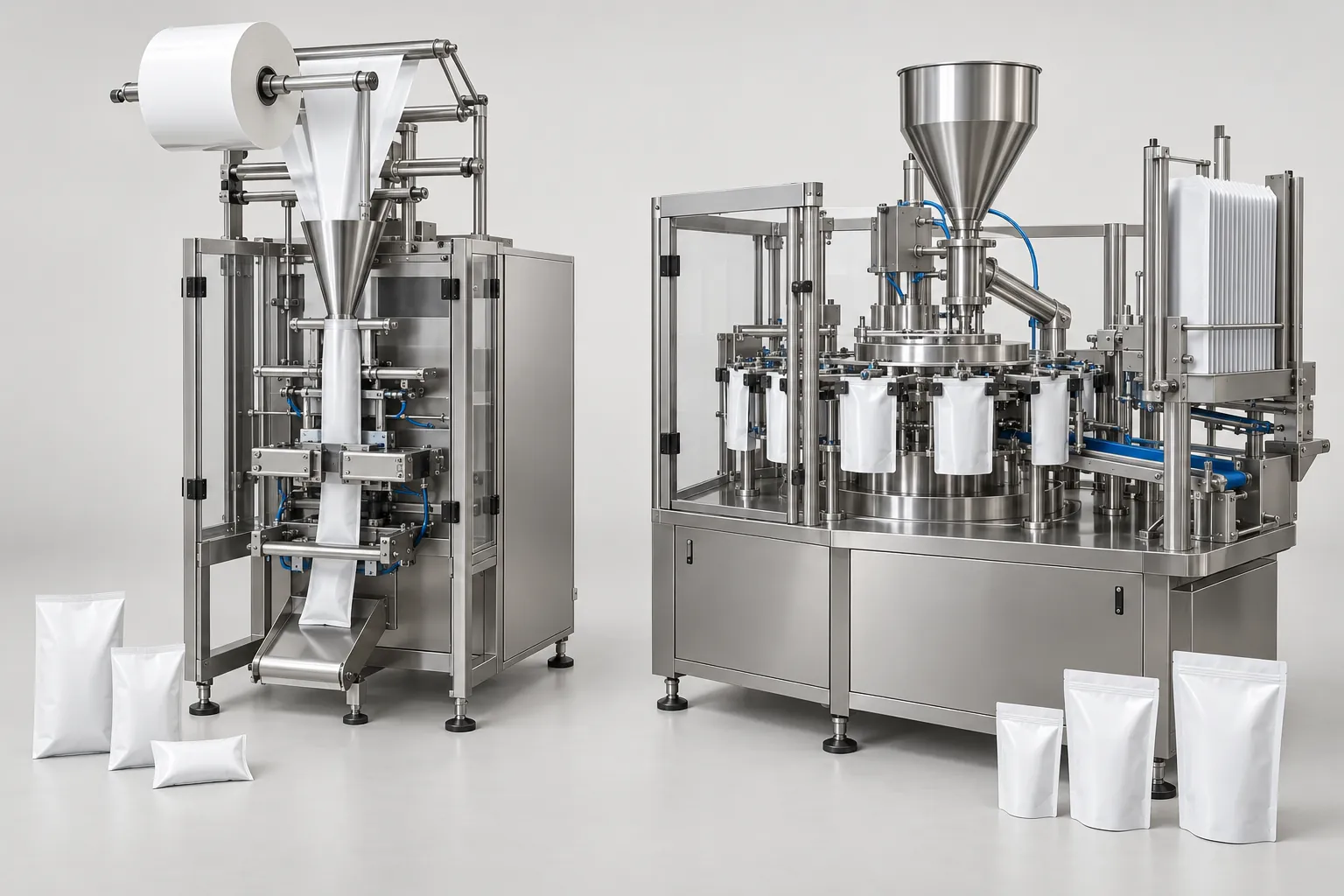
VFFS vs. Premade Pouch Machines: How to Choose
Compare VFFS and premade pouch machines by bag style, product, changeover, film or pouch supply, appearance, footprint and staffing, with questions for suppliers.
Read guide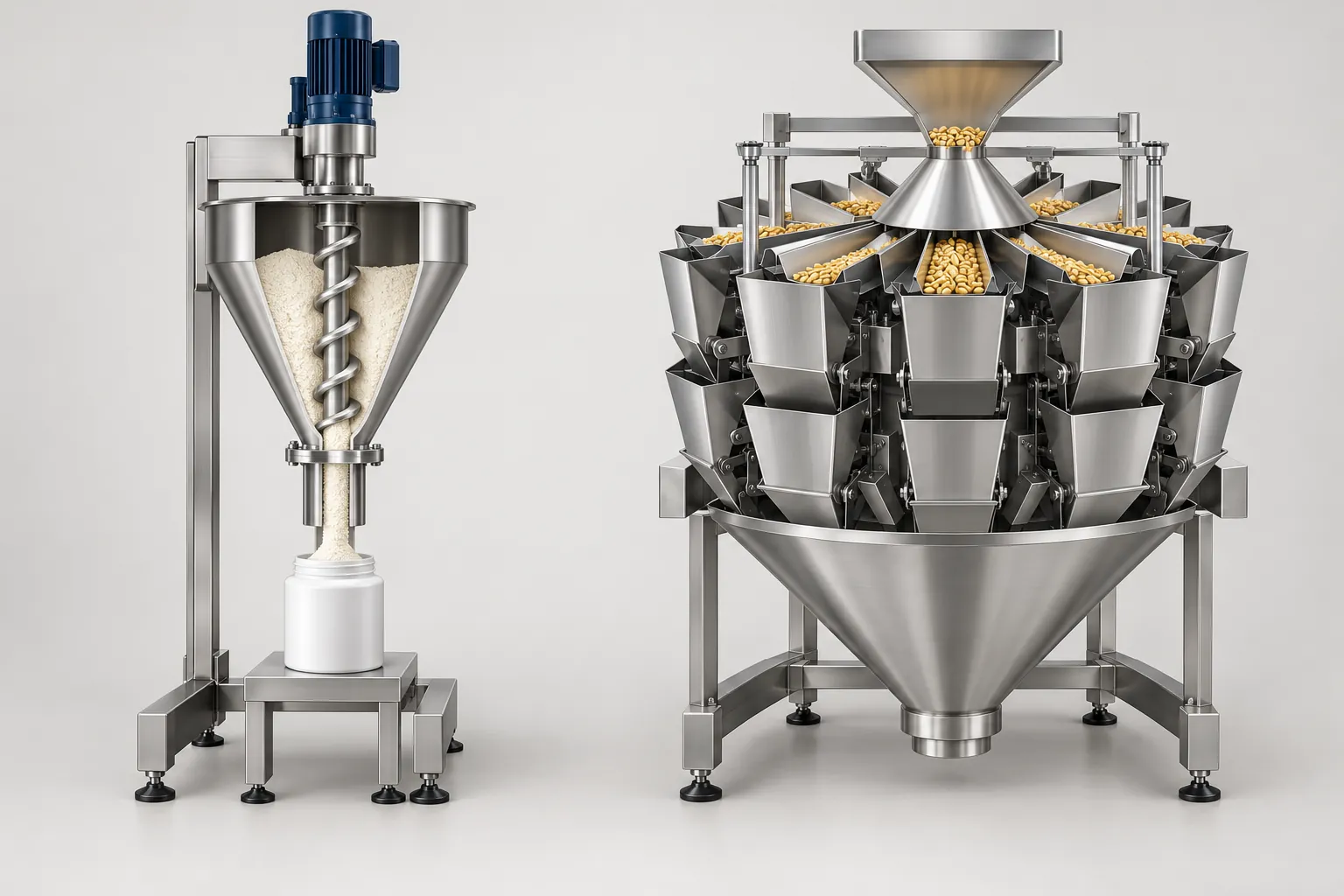
Auger Fillers vs. Multihead Weighers: Matching the Dosing System to the Product
Compare auger fillers and multihead weighers by dosing principle, product flow, fragility, dust, cleaning and mixes, with supplier questions and trial guidance.
Read guide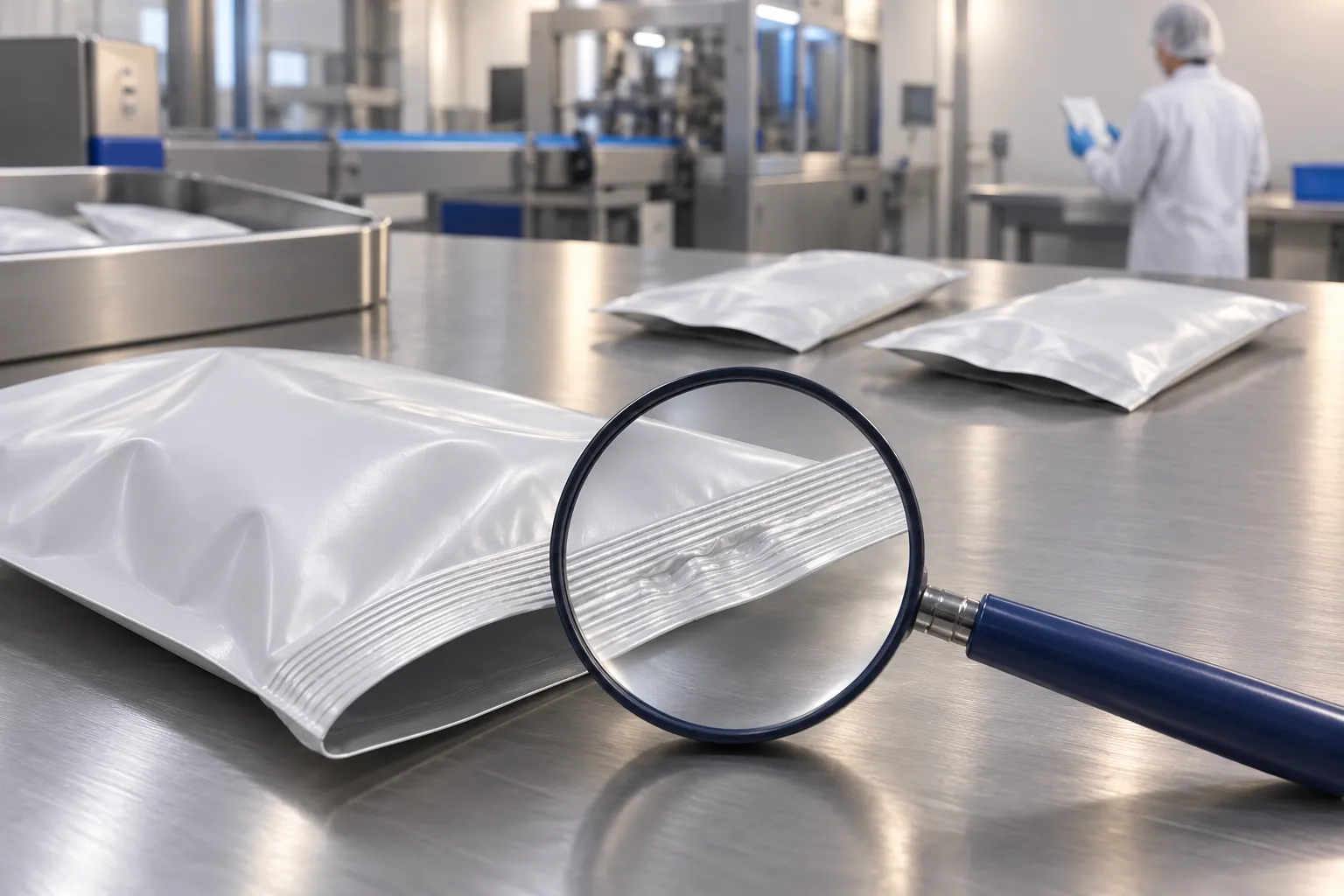
Packaging Seal Defects: An Evidence-Based Investigation Checklist
Investigate packaging seal defects by containing suspect product, collecting evidence, testing with agreed methods and changing one variable at a time.
Read guide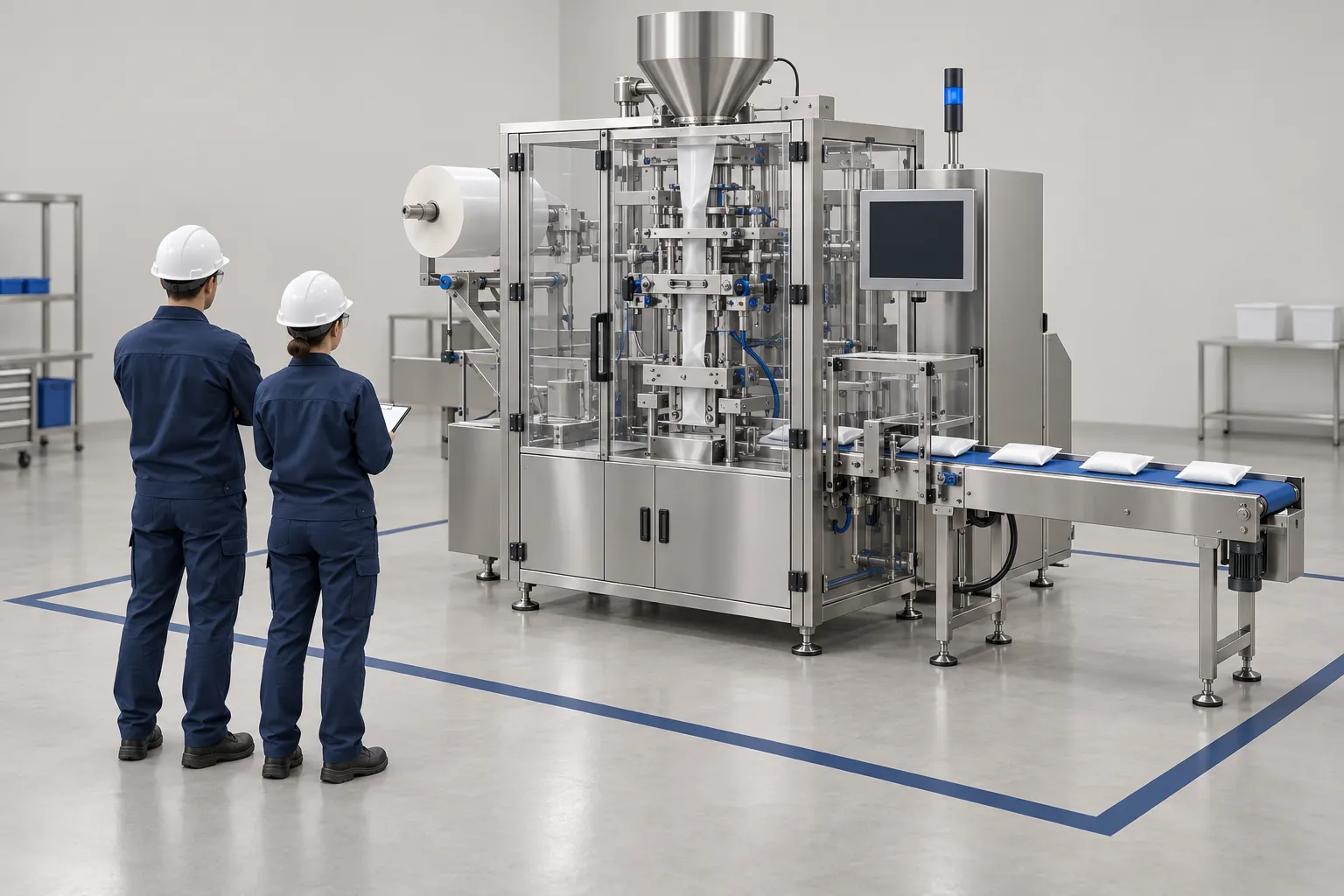
FAT vs. SAT for Packaging Equipment: Defining Acceptance Criteria
Compare factory and site acceptance tests for packaging machines, and learn how to write acceptance criteria that both buyer and supplier can verify.
Read guide