
Honey Pouch Filling: Package Routes and Trial Checklist
Compare honey pouch and sachet routes, then use a fill-to-seal trial card to record opening, nozzle release, seal residue and cleaning.
For a pouch filling machine for honey, confirm premade pouches or roll film first. Trial opening, dosing and closure with the actual honey and packaging.
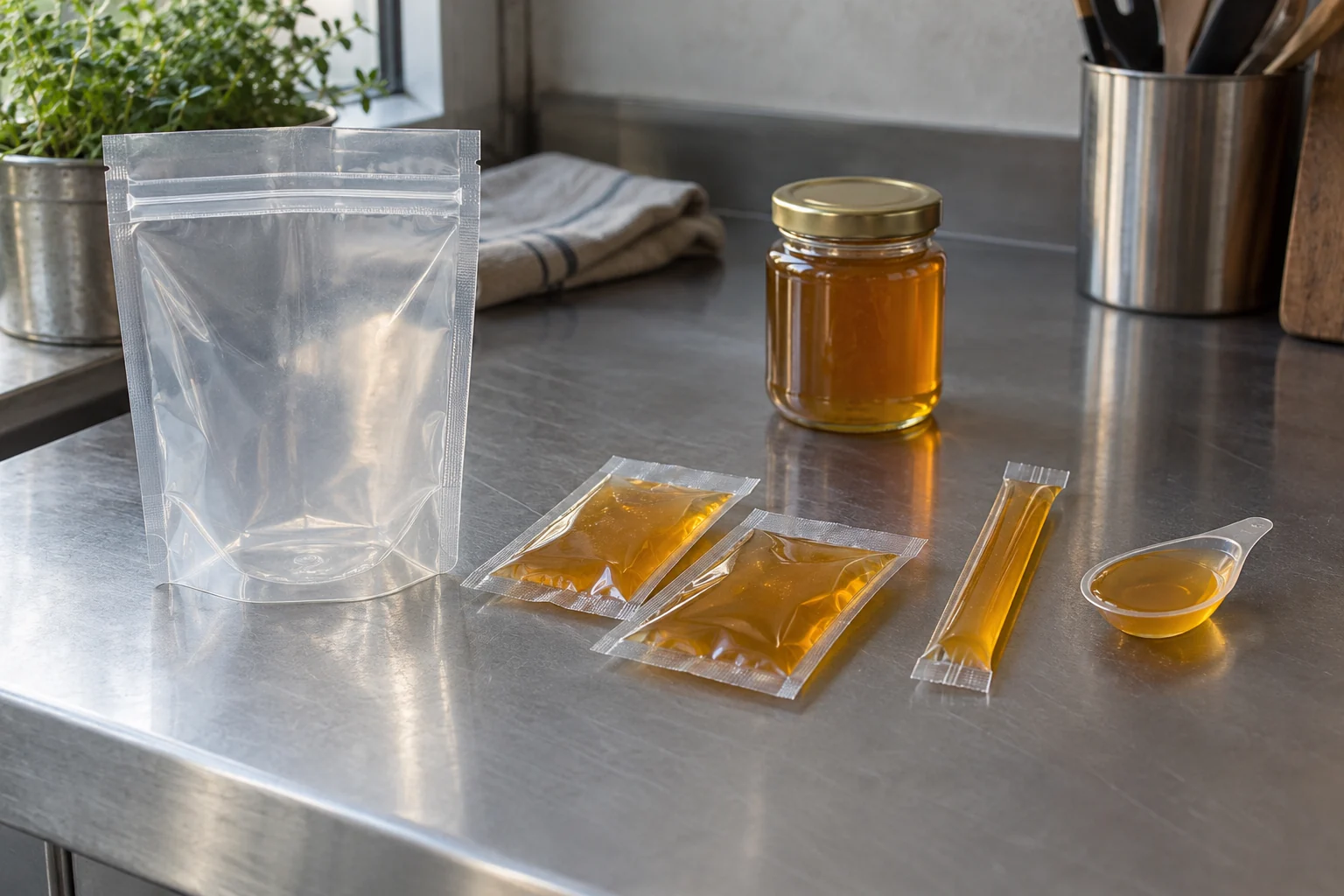
A filler that leaves honey across the sealing margin can waste an otherwise correctly dosed pack. Start with the package drawing, then follow the dose until the package is closed. The route matrix and blank trial card below keep that decision separate from a supplier’s headline speed. They cover package selection and observations to record; processing temperatures and machine settings require separate product and equipment instructions.
Choose the package route before the filling device
“Pouch” can describe several different packages. Write down what enters the machine and where the honey enters the package. A ready-made pouch needs handling and opening; roll film needs forming as part of the packaging process. A spoon container belongs in a separate equipment comparison.
Landpack’s honey zipper-pouch application page links to its liquid/paste rotary premade-pouch machine. The linked machine description lists flat and stand-up pouches, with or without a zip. That establishes a publicly documented candidate route for honey; it does not demonstrate performance with your honey or pouch.
Swipe sideways to see the other columns. The first column stays visible.
| Package on the drawing | Material supplied to the line | Route to assess | Evidence to bring to a trial |
|---|---|---|---|
| Open-top premade pouch | Individual finished empty pouches | Pick up, open, fill through the mouth, then close the top | Actual pouches, opening clearance, zipper position if fitted, and top-seal area |
| Sachet or narrow stick packet made on the machine | Roll film | Form, fill and seal in the specified sachet or stick configuration | Finished-pack drawing, film specification, seal layout and opening feature |
| Premade spouted pouch | Pouch with a specified fitment | Confirm whether filling is through the spout or an open top; define capping or sealing separately | Pouch, fitment and closure drawings, plus the actual filling path |
| Spoon-shaped container | Formed container or material used to form it | Container filling and lidding route | Container and lid specifications; keep this outside the flexible-pouch shortlist |
The spouted row is a question to resolve with the equipment builder, not a statement that every premade-pouch machine handles every fitment. A zip also needs its position and opening sequence confirmed on the supplied pouch.
Use the VFFS and premade-pouch comparison for the wider material-supply choice. If the retail requirement is an individual honey portion, the stick-pack and sachet comparison helps define the pack geometry before machines are compared.
Record the honey as it reaches the filler
Keep the honey lot, its observed condition and the package material together in the trial file. Useful entries include whether the sample is liquid, creamed or visibly crystallized; the product temperature actually measured at filling; and any upstream conditioning used. If viscosity has been measured, attach the value, unit and measurement conditions. Otherwise leave it unknown.
Mentpack’s honey application page discusses changes in viscosity and crystallization, and describes piston filling with a shut-off nozzle. These are supplier descriptions that identify questions for the trial. They do not establish a universal viscosity limit, a suitable heating temperature or a guarantee that a nozzle will stop every honey thread.
Ask which metering principle is fitted to the quoted unit and how the dose is checked. If the requirement is expressed by mass, record measured pack masses rather than assuming that a volumetric setting proves the mass requirement. The piston and pump filling guide explains the separate dosing decision. This checklist sets no accuracy tolerance.
Follow one fill through opening, release and closure
For an open-top premade pouch, first establish that the mouth opens sufficiently for the installed nozzle and filling motion. Landpack describes an inhibit that prevents filling and sealing when a pouch is absent or incorrectly opened. Ask the supplier to demonstrate the fitted function using its approved procedure, with guards and safety systems in service. Record the observed response and how the affected pouch is handled. The feature description alone is not evidence that the quoted unit has passed this check.
Then observe where the nozzle sits relative to the mouth, zip and future seal area. Record any contact with the pouch and any honey on the nozzle exterior. After the dose stops, watch for a droplet or trailing thread and note where it lands. For roll-stock packs, record the corresponding filling-tube and sealing-area observations; the premade opening check does not transfer unchanged to that route.
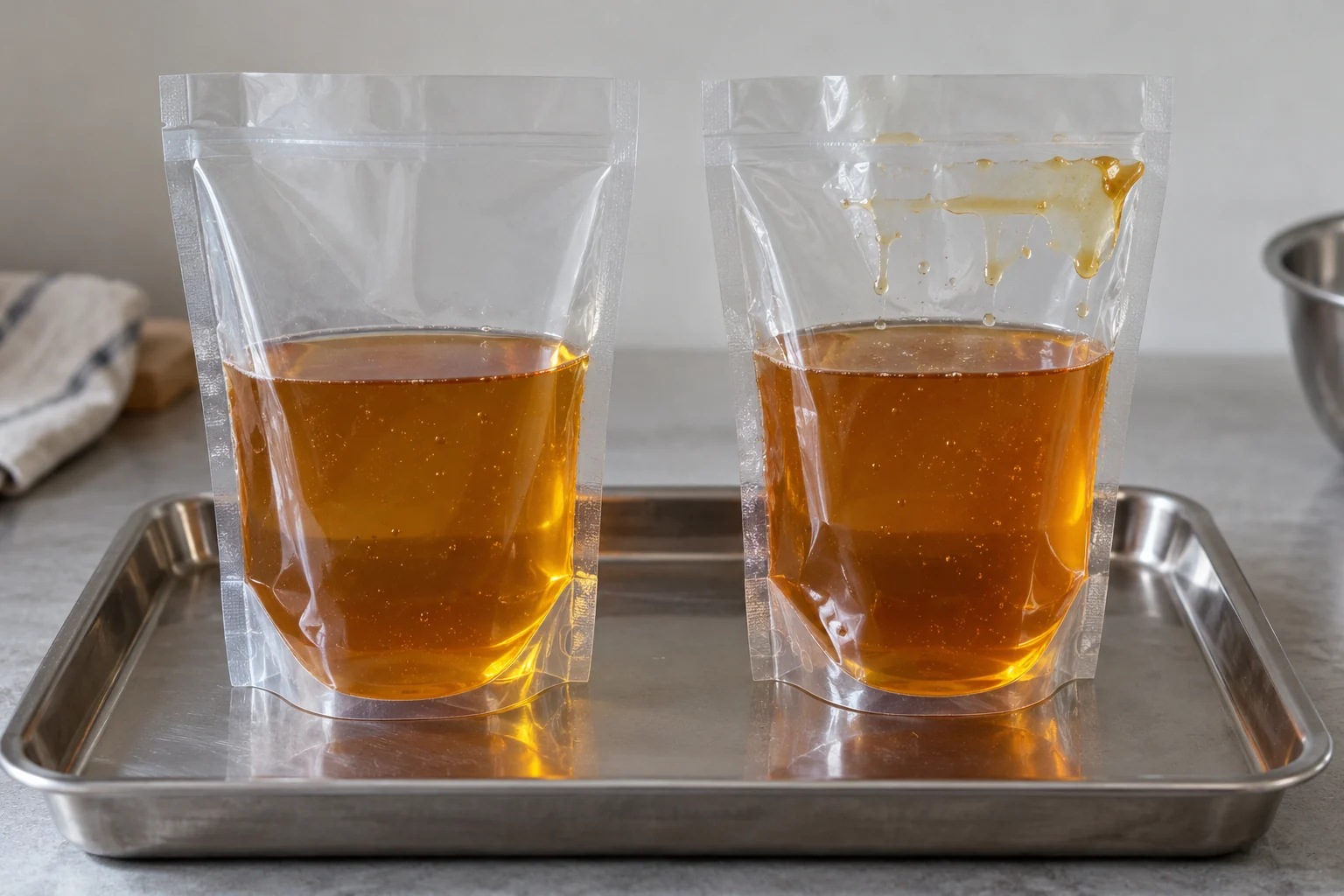
Keep seal-area contamination and seal-test results in separate fields. A clear-looking margin does not prove a sound seal, and a smear should be recorded even when a pack has not visibly leaked. Agree the inspection method and acceptance criteria with the project team before the trial. Use the seal-defect investigation guide when observations need to be traced to a failure mechanism.
Check cleaning access on the offered configuration
Ask the supplier to identify the product-contact path from the feed connection to the nozzle outlet. Under the equipment’s approved isolation and cleaning procedure, establish which parts are removable, which surfaces can be inspected, and how hoses, valves and seals are accessed. Keep the supplier’s instructions with the trial record.
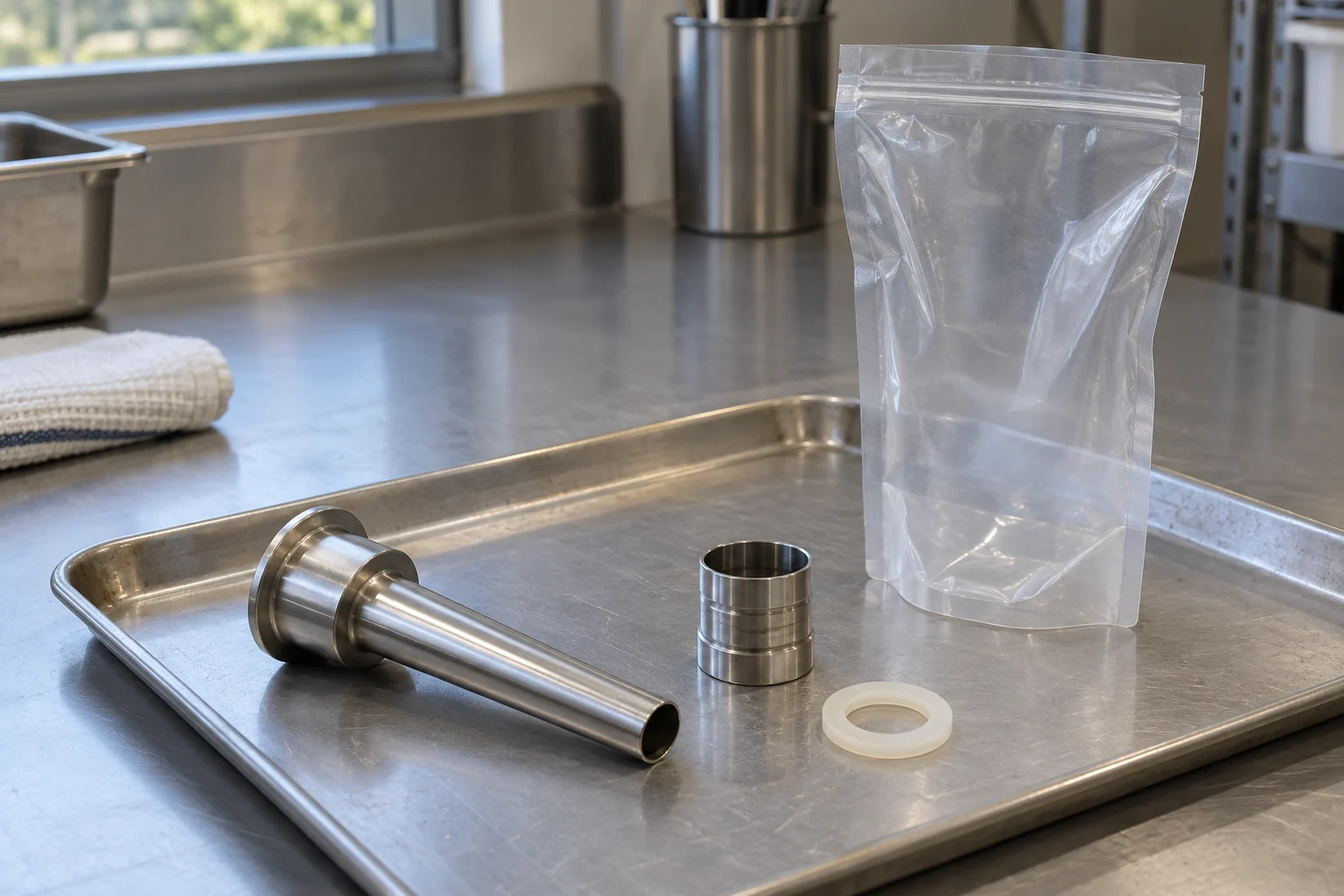
A photograph of separate parts does not establish the cleaning method for an assembled machine. Record the parts and access on the configuration being offered. Confirm the cleaning procedure, material documentation and any required validation separately; a general hygienic-design statement cannot complete those fields.
Copy the fill-to-seal trial card
Use one record for each honey lot, package material and configuration combination. Copy this table or download the blank honey filling trial card as CSV. Blank cells are deliberate: enter an observation or “Unknown / verify on the unit,” rather than a typical value from another machine.
Swipe sideways to see the other columns. The first column stays visible.
| Record field | Entry from this trial | Supporting record |
|---|---|---|
| Date, honey lot and observed condition | ________ | Product identification |
| Measured temperature at filling; viscosity and conditions if measured | ________ | Measurement record |
| Package route and drawing revision | ________ | Pouch, film or container specification |
| Material lot, closure and zip/fitment details | ________ | Sample and drawing |
| Machine configuration and metering device | ________ | Offered configuration |
| Target dose, unit and agreed acceptance criteria | ________ | Project requirements |
| Opening and incorrect-opening response, if applicable | ________ | Supplier-led demonstration |
| Nozzle clearance and any contact with the package | ________ | Observation or permitted close-up |
| Drip or trailing thread after shut-off; landing location | ________ | Observation |
| Honey in the sealing area before closure | ________ | Observation |
| Measured doses or pack masses | ________ | Individual readings and units |
| Closure inspection method and results | ________ | Test record |
| Run duration, attempted packs, accepted packs and stops | ________ | Run log |
| Product-contact parts, removal and inspection access | ________ | Configuration and cleaning instructions |
| Unresolved issue, responsible person and next check | ________ | Follow-up record |
Before running, agree who provides the honey and packaging, who operates the machine, who takes measurements and who reviews the closed packs. Record any change of material, product condition or configuration as a separate run. If a comparison uses different honey lots or different pouch materials, keep those differences visible rather than assigning every change in the result to the filling device.
Keep stops, rejected packs and manual interventions alongside any output count. A supplier’s catalog rate and a run on your honey are different evidence. The factory and site acceptance guide helps carry the agreed criteria into a formal acceptance plan.
The next decision is whether the candidate route can be evaluated with your specified material and honey. Where the trial leaves opening, nozzle release, closure or cleaning unresolved, assign that issue before treating the comparison as complete.
Method and sources
Updated October 2026. This is an editorial worksheet compiled from public manufacturer descriptions and package-interface questions. We did not run a honey filling trial. It sets no heating process, speed, viscosity limit, shelf life, food-contact compliance conclusion or machine ranking.
- Landpack, Honey Zipper Pouch With Butterfly Hole Packing Solution, accessed 15 October 2026. Links the honey application to the liquid/paste premade-pouch machine.
- Landpack, liquid/paste rotary filling machine for premade pouches, accessed 15 October 2026. Describes pouch formats and an incorrect-opening inhibit; these remain manufacturer statements to verify on the unit.
- Mentpack, Packaging Machines for Honey, accessed 15 October 2026. Describes honey portion formats and piston/shut-off-nozzle filling. Its performance and zero-drip claims are not adopted as trial results.
Update history
- : First published.
Next steps
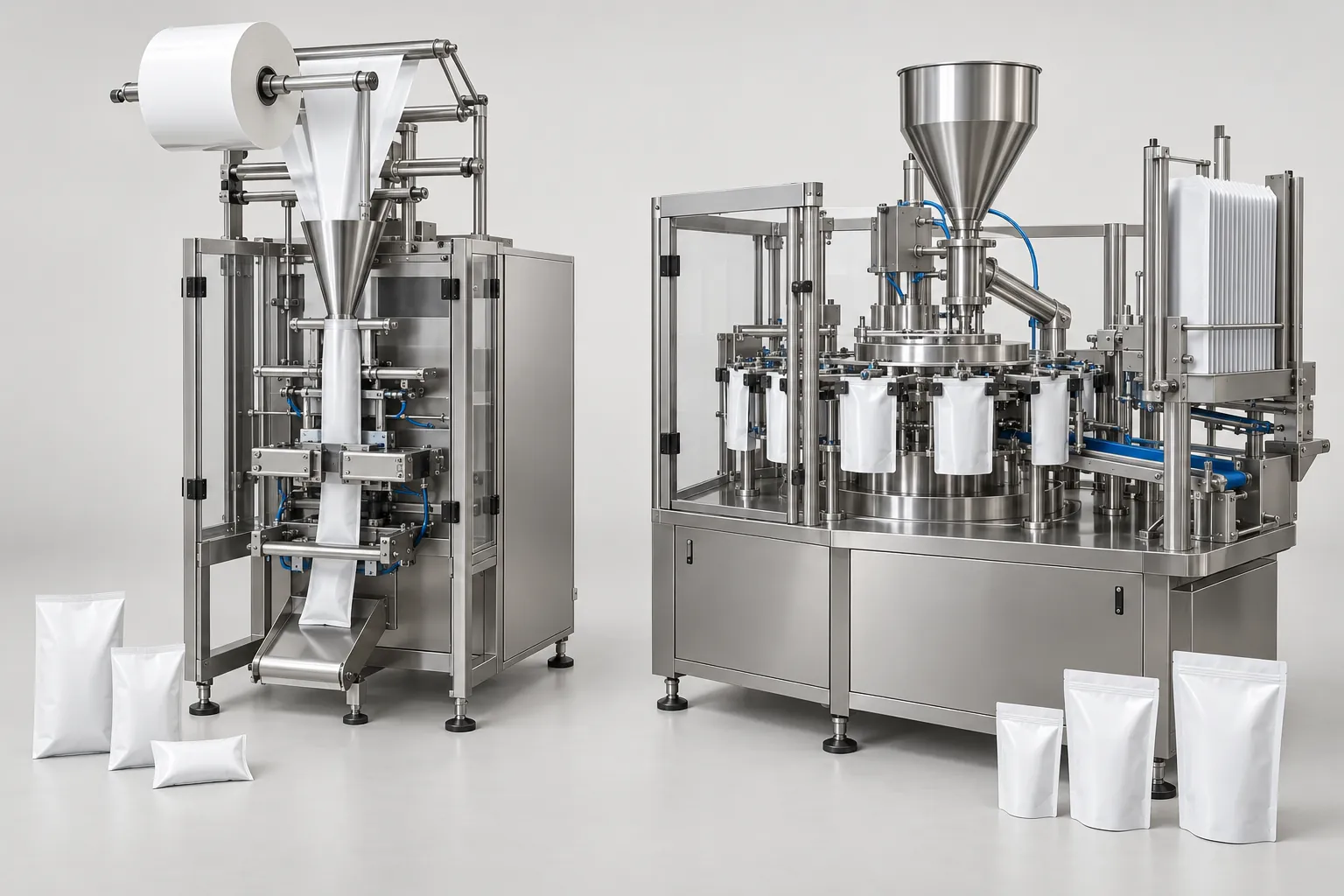
VFFS vs. Premade Pouch Machines: How to Choose
Compare VFFS and premade pouch machines by bag style, product, changeover, film or pouch supply, appearance, footprint and staffing, with questions for suppliers.
Read guide
Piston vs. Pump Filling: Questions to Ask Before Choosing
Compare piston and pump filling systems by viscosity, particulates, shear, cleaning, product changes, containers and metering method, with supplier questions.
Read guide
FAT vs. SAT for Packaging Equipment: Defining Acceptance Criteria
Compare factory and site acceptance tests for packaging machines, and learn how to write acceptance criteria that both buyer and supplier can verify.
Read guide